



By Asif Baloch
Whenever Balochistan’s politics and current situation are discussed, one name repeatedly emerges: the Baloch Yakjehti Committee (BYC). From members of the provincial assembly to ministers and even the Chief Minister of Balochistan, various political and governmental figures frequently refer to the organisation in speeches, statements and press conferences. On the other hand, Baloch political activists and human rights circles argue that the organisation’s growing public influence has become a source of concern for state institutions, resulting in increasing narrative and political confrontation against it on multiple fronts.
The question is: what exactly is the Baloch Yakjehti Committee? What role does it play in Balochistan’s political and social landscape? And what factors have made it one of the central subjects of political debate in Balochistan today?
In this feature report, we attempt to answer these questions. We examine the circumstances under which the Baloch Yakjehti Committee was formed, its objectives and demands, and the nature of its impact on Balochistan’s politics. We also explore the basis of the concerns expressed by state institutions and government circles regarding the organisation, and consider its possible significance in the future politics of Balochistan.
BYC: Background and Origins
On the night of 26 May 2020, an incident occurred in Dannuk, an area of Turbat, the main town of Balochistan’s Kech district, that would later have a profound impact on Balochistan’s recent political history. In the context of Balochistan’s prevailing circumstances, it appeared at first to be an ordinary incident, but the reaction it generated gave rise to a popular movement that gradually evolved into an organised political and social force.
That night, unidentified armed men stormed a house in Dannuk. According to local sources and the affected family, the assailants had entered with the intention of committing theft. However, resistance from the occupants led to an exchange of gunfire in which a woman named Malik Naz was killed and her young daughter, Bramsh, was injured. As news of the incident spread across social media, public outrage intensified, and within a short time the matter became a topic of discussion throughout Balochistan.
Within days, protests began in various areas, including the coastal city of Gwadar. Speakers at these demonstrations described the incident as an attack on Baloch social traditions, honour and dignity. The protests soon developed into a broad public campaign. Rallies and demonstrations were held across cities, towns and villages throughout Balochistan, while the issue gained considerable traction on social media. At that stage, the movement had no clear leader or organisational structure; rather, people mobilised independently. The campaign was later named the Brahmsh Yakjehti Committee, whose primary demand was the arrest and punishment of those responsible for the attack.
Protesters argued that the attackers belonged to armed groups allegedly supported by the state in Balochistan. Baloch nationalist circles commonly refer to such groups as “death squads”, accusing them of involvement in theft, robbery, drug trafficking and other criminal activities. According to Baloch political and nationalist circles, these groups were either established or supported to counter resistance movements operating in Balochistan. These circles further allege that members of such groups have been involved in criminal activities but are rarely subjected to effective action and continue to enjoy protection from state institutions.
Before the effects of the Dannuk incident had subsided, another event occurred in Turbat a few months later, providing further momentum to this emerging public movement.
On 13 August 2020, while the world was grappling with the Covid-19 pandemic and educational institutions remained closed, Karachi University student Hayat Baloch was in his native Turbat. He was working with his father during the harvest season when a bomb attack targeted a convoy of Pakistani forces in a nearby area. Security forces subsequently launched a search operation.
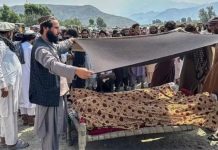
According to eyewitnesses and family members, Hayat Baloch was detained in front of his parents and later shot dead with eight bullets. A photograph showing Hayat’s body in his mother’s lap went viral on social media. The image and the incident sparked widespread reaction across Balochistan and beyond.
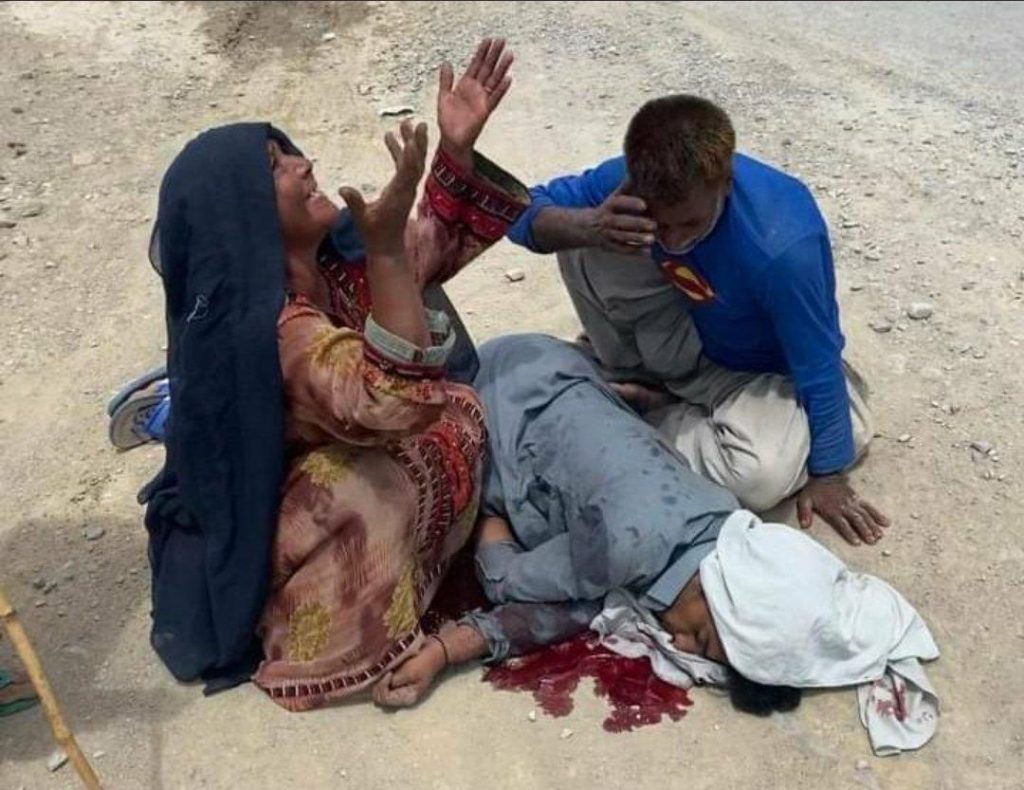
Many observers regard this as the moment when the public movement that had begun as the Brahmsh Yakjehti Committee started transforming into the Baloch Yakjehti Committee (BYC). Protests against Hayat Baloch’s killing were held throughout Balochistan, and the movement expanded further around demands for justice and human rights.
In December 2020, the death of Baloch political activist and former student leader Karima Baloch in Canada also became a major subject of discussion in Balochistan. Baloch political circles expressed serious concerns regarding the incident and organised protests in various cities. These developments further increased public support for the Baloch Yakjehti Committee.
Thereafter, the organisation continued to raise its voice against enforced disappearances, extrajudicial killings, military operations and human rights violations in Balochistan. Gradually, it came to symbolise resistance against state repression and a source of hope for a large section of the Balochistan’s population.
The organisation’s popularity increased significantly when it launched a protest campaign over the killing of Balach Baloch, a resident of Turbat. BYC first organised protests in Turbat and later launched a long march that began in Turbat, passed through Quetta and ultimately reached Islamabad. During the march, the caravan was welcomed in both Baloch and Pashtun areas, and numerous public gatherings were held along the route.
Upon reaching Islamabad, tensions emerged between protesters and the police. BYC activists were subjected to what the organisation described as harsh treatment. Arrests and the government’s response attracted national attention.
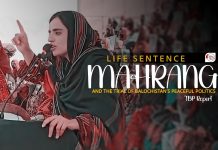
As a result of these events, BYC’s popularity grew dramatically, while Dr Mahrang Baloch emerged as a prominent public figure. Following the Islamabad sit-in, the organisation adopted a more structured framework and elected Dr Mahrang Baloch as its organiser.
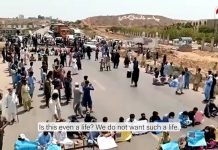
Subsequently, BYC announced plans for a major public gathering in the coastal city of Gwadar, named the Baloch Raji Muchi. Following the announcement, thousands of people from various districts of Balochistan began travelling towards Gwadar in convoys. However, tensions escalated on the day of the gathering amid reports of security restrictions and road closures in different areas.
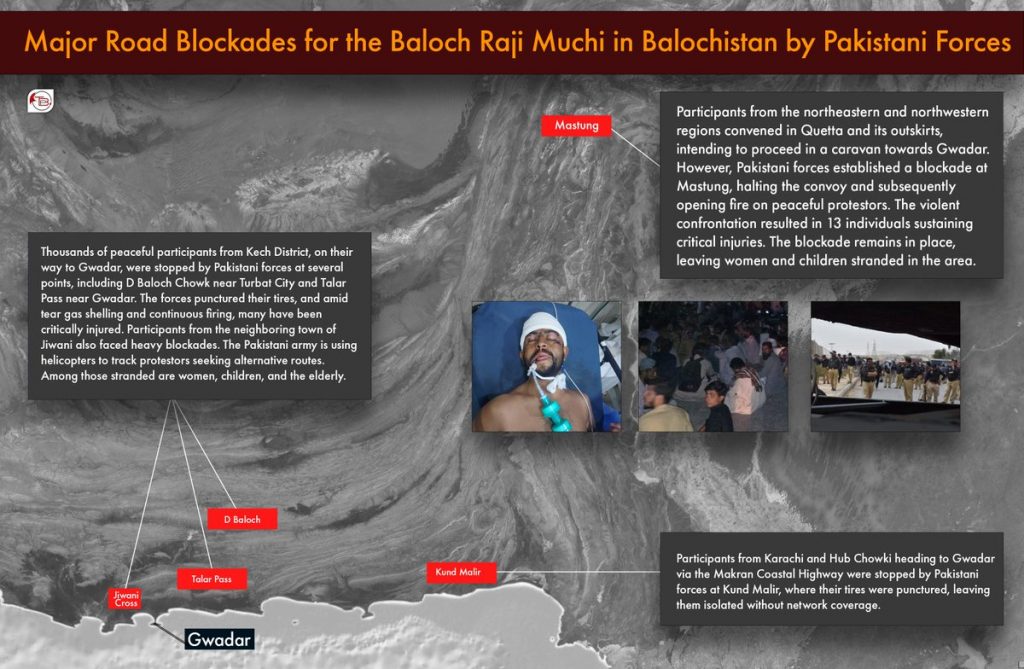
According to BYC and local sources, convoys heading towards Gwadar were stopped at multiple points, while clashes occurred between demonstrators and security forces in some areas. The situation remained particularly tense at Talaar, an entry point into Gwadar, where protesters and security personnel faced each other throughout the day. The organisation alleged that protesters were subjected to baton charges and gunfire, and reports of casualties also emerged.
State Crackdown on Baloch National Gathering ‘Extremely Concerning,’ Says Greta Thunberg
During the same period, complaints were raised regarding the suspension of mobile phone and internet services in various parts of Balochistan, limiting the flow of information. Although many people were prevented from entering Gwadar, the BYC leadership already present in the city proceeded with the gathering alongside local participants.
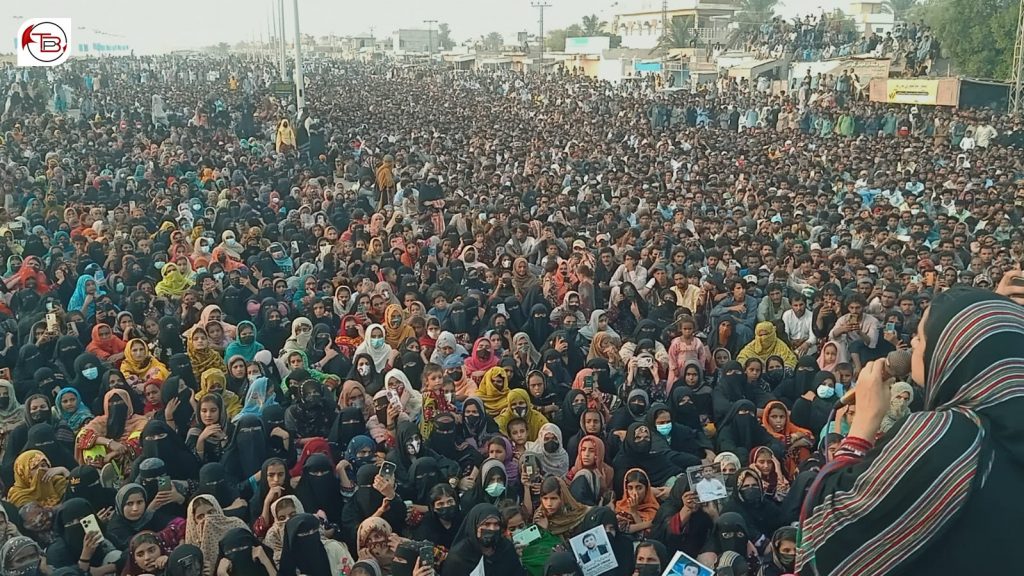
Following the tense situation, negotiations began between the government and BYC. As a result, some of the blocked routes leading to Gwadar were reopened, while discussions continued on other demands and issues.
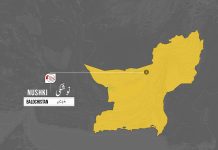
Later, under the leadership of Dr Mahrang Baloch, a public outreach campaign and convoy departed from Gwadar and travelled through Turbat, Panjgur, Nag, Nal, Khuzdar, Surab, Kalat, Mastung and Nushki before reaching Quetta. Public meetings and gatherings were held in various towns and cities throughout the journey, attracting thousands of participants, including women, young people, elders and children.
BYC subsequently organised another major public gathering in Dalbandin, which was widely viewed as evidence of the organisation’s growing influence and popularity across different regions of Balochistan.
At the same time, criticism of BYC from governmental and state circles continued. The Chief Minister of Balochistan, provincial ministers and several federal officials increasingly discussed the organisation in assemblies, press conferences and television programmes. Pakistan’s Defence Minister Khawaja Asif and other government figures also repeatedly criticised the organisation on various occasions.
Thus, what began in 2020 as a spontaneous public response to an incident in Dannuk evolved within a few years into a significant political force situated at the centre of debates surrounding politics, human rights and state narratives in Balochistan.
Balochistan’s Politics and BYC
To understand the current political situation in Balochistan, it is necessary to take a brief look at its historical background. Following the Second World War, major political, geographical and economic transformations took place across the world, leading to the emergence of new international systems and state structures. These global developments also had a profound impact on Balochistan’s political history and future trajectory.
As a result of the partition of the Indian subcontinent, Pakistan and India emerged as two separate states in 1947. Following Pakistan’s creation, Balochistan became part of the country. However, differing interpretations exist regarding this process. Baloch nationalist circles describe it as a forcible occupation or annexation, while the Pakistani state presents it as a legal and constitutional accession.
This difference in interpretation has contributed to recurring political unrest and various forms of resistance in Balochistan. From 1948 to the present day, Balochistan’s history has been marked by political movements, protest campaigns and armed resistance activities. These movements have emerged at different times and with varying levels of intensity, encompassing political, social and practical forms of resistance. These historical factors remain central to understanding Balochistan’s current political landscape.
On 26 August 2006, veteran Baloch leader Nawab Akbar Bugti was killed during a military operation in the Tatrani area of Dera Bugti under the government of then military ruler General Pervez Musharraf. Prior to this incident, a comparatively limited and low-intensity resistance movement was active in Balochistan. However, Akbar Bugti’s killing marked a turning point, acting as a spark that transformed existing grievances into a broader public reaction whose effects were felt throughout Balochistan.
The subsequent enforced disappearances and alleged extrajudicial killings of leaders of the Baloch National Movement (BNM), including Ghulam Mohammad Baloch, Lala Munir Baloch and Sher Mohammad Baloch, further intensified the situation. These incidents had a profound impact on Balochistan’s political landscape and laid the foundations for a significant shift in Baloch politics.
As a result, Baloch armed organisations gained renewed strength and support, while large numbers of young people and others became involved in these movements. These events became major milestones in the history of Balochistan’s ongoing political and resistance struggles and significantly influenced the region’s political direction in the years that followed.
At the same time, the state adopted a range of policies aimed at countering the growing resistance movement in Balochistan. According to Baloch nationalist circles and human rights organisations, thousands of people were affected by these policies, including political activists, students, intellectuals, social leaders and members of various segments of society. These groups argue that enforced disappearances, extrajudicial killings and the recovery of mutilated bodies increasingly became a persistent feature of political and social life in the region.
These developments had a severe impact on political activity in Balochistan. Numerous leaders of political parties and organisations were either disappeared or compelled to curtail their activities. Many activists and leaders reportedly went underground out of fear of disappearance or extrajudicial killing. During this period, demands for justice regarding enforced disappearances, extrajudicial killings and the plight of affected families remained a prominent feature of Balochistan’s political and public discourse.
In such an environment, many people were searching for an organised and effective voice capable of highlighting their concerns. Against this backdrop, the emergence of the Baloch Yakjehti Committee (BYC) was viewed by many as a significant development.
The organisation raised issues that many about the genuine grievances of the Baloch people, including enforced disappearances, human rights concerns and political representation. It pursued these demands through peaceful protest and public mobilisation, maintaining that its objectives fell within the framework of Pakistan’s constitution. While BYC openly criticised state policies and security practices in Balochistan, it differed from organisations such as the BSO-Azad, the BNM and various Baloch armed groups in that it did not adopt a radical political approach. Nor did it advocate the independence of Balochistan, instead presenting itself as a movement seeking accountability, justice and constitutional rights through non-violent means. For many Baloch who had spent years facing various forms of pressure, fear and insecurity, the platform came to be seen as a means of representation and a medium for expressing their grievances.
Consequently, BYC quickly gained remarkable public support. Large numbers of people began participating in its activities and protest campaigns. This support became particularly evident when the organisation called for a major public gathering in Gwadar, which drew thousands of participants. The scale of this public backing and the organisation’s rapidly growing popularity presented what many viewed as a significant challenge for state institutions, giving rise to a new political debate within Balochistan.
Government Institutions and BYC
The political landscape of Balochistan changed significantly following the killing of Nawab Akbar Bugti and the deaths of Baloch National Movement leaders Ghulam Mohammad Baloch, Lala Munir Baloch and Sher Mohammad Baloch. These incidents not only affected the resistance movements operating within Balochistan but also altered the broader political atmosphere.
During this period, while armed resistance and security operations intensified, the space for mainstream political activity gradually narrowed. Leaders and activists from nationalist parties and student organisations faced various forms of pressure. Some political activists were reportedly disappeared, some were forced into exile, while others curtailed their activities. As a result, the political and social environment in which public issues could be discussed in an organised manner appeared to shrink considerably.
At the same time, enforced disappearances, extrajudicial killings and other human rights concerns increasingly became central subjects of political debate in Balochistan. Affected families and human rights activists argued that thousands of families were struggling to secure the recovery of their loved ones, yet lacked a strong platform capable of effectively presenting their demands at the national level. Relatives of missing persons were frequently seen outside protest camps, rallies and press clubs, but their voices often failed to reach beyond limited circles.
Against this backdrop, the rise of the Baloch Yakjehti Committee was regarded by many observers as a significant political development. From its inception, the organisation placed enforced disappearances, human rights violations and the concerns of affected families at the centre of its campaign. BYC directly criticised policies which it argues are responsible for the ongoing humanitarian crisis in Balochistan. According to the organisation, state policies pursued over the past two decades have caused severe damage to Baloch society.
Many analysts believe that one of the main reasons for BYC’s popularity was its emergence at a time when traditional avenues of political representation and public protest in Balochistan had become considerably weakened. Consequently, large numbers of families of missing persons, students, young people and social activists increasingly rallied around the organisation.
State and government circles, however, expressed concerns regarding BYC’s growing influence. Over the past several years, representatives of the military’s media wing, Inter-Services Public Relations (ISPR), have criticised the organisation during various press conferences. Similarly, the Balochistan government and federal ministers have repeatedly questioned BYC’s role. The official position has been that the organisation directly or indirectly reinforces the narrative of Baloch armed groups and, in certain cases, appears to operate in ways that align with their interests.
BYC and its supporters reject these allegations. They maintain that the organisation is a peaceful public platform advocating for human rights, addressing enforced disappearances and demanding constitutional rights. Supporters also argue that government circles have yet to present evidence publicly that substantiates such claims.
A review of Balochistan’s political history reveals a recurring pattern: whenever crackdowns have been launched against Baloch nationalist parties, student organisations or resistance movements, they have often begun by targeting their central leadership. Baloch political circles frequently cite the killings of Nawab Akbar Bugti, Ghulam Mohammad Baloch, Lala Munir Baloch and Sher Mohammad Baloch, as well as the arrests and enforced disappearances of Zakir Majeed Baloch, Sangat Sana and other political activists, as examples. These circles argue that weakening political movements in Balochistan has historically involved first targeting their leadership.
Supporters of the Baloch Yakjehti Committee contend that recent actions against the organisation follow the same pattern. According to them, once state and government institutions began viewing BYC’s growing influence as a challenge, their initial focus turned towards its leadership.
In this context, on 22 March 2025, BYC’s central organiser, Dr Mahrang Baloch, along with central committee member Sibghatullah Shah Jee, Gulzadi Baloch, Bebagar Baloch, Beebow Baloch and several other leaders, were taken into custody in Quetta. The organisation and its supporters maintain that the leaders were initially detained under the Maintenance of Public Order (MPO) ordinance. They further claim that once the period of detention expired, the individuals were re-arrested in connection with other cases. Many other leaders and prominent members’ names have also been put in Fourth Schedule.
BYC and some human rights groups describe these cases as politically motivated and argue that legal proceedings have been initiated in an effort to restrict the organisation’s political activities. Government officials, however, maintain that all actions have been carried out in accordance with the law and that the detainees face legally substantiated charges.
Following the arrests, BYC and its supporters organised protest demonstrations, rallies and solidarity campaigns in various parts of Balochistan. The organisation argues that the detention of its leadership is part of an attempt to curtail its political activities.
BYC and the Future of Politics
Today, the Baloch Yakjehti Committee stands at a stage in its political journey where numerous questions are being raised about its future. Supporters of the organisation believe that the state now seeks to employ against BYC the same strategy that, in their view, was used in the past against Baloch nationalist organisations and student movements, whose leaders were either killed, disappeared or subjected to such intense pressure that their political activities were effectively curtailed.
According to these circles, there have been numerous examples over the past two decades in which political resistance and public movements in Balochistan were constrained through various state measures. For this reason, supporters of the Baloch Yakjehti Committee view the current situation as part of that historical continuum and argue that the narrative-building, legal cases, arrests and other measures directed against the organisation should be understood within this broader context.
However, they also argue that there is a fundamental difference in the case of BYC. While many nationalist parties and organisations in the past enjoyed public support, their activities were often perceived as being largely confined to specific political circles, student organisations or nationalist activists. By contrast, the Baloch Yakjehti Committee has linked its politics to issues of human rights, enforced disappearances and the concerns of affected families, enabling it to reach much broader sections of society. The participation of women, students, young people, elders and the relatives of missing persons in its activities suggests that its social base extends beyond traditional political activists.
When viewed in the context of Balochistan’s earlier political movements, one of the most distinctive features of the Baloch Yakjehti Committee has been the prominent role played by women. Balochistan has a long history of nationalist politics and student activism, yet leadership and decision-making positions within these movements have traditionally been dominated by men. Although women have participated in political activities during different periods, they have rarely emerged as the central face or driving force of a movement.
The Baloch Yakjehti Committee has, to some extent, altered this pattern. From the outset of its rise, women not only became highly visible in the organisation’s activities but also assumed key leadership positions. Figures such as Dr Mahrang Baloch, Dr Sabiha Baloch, Sammi Deen Baloch and Gulzadi Baloch have played leading roles in shaping the organisation’s political narrative, protest campaigns and public outreach efforts.
Many observers believe that one reason for BYC’s popularity is that it has moved beyond merely symbolic representation of women and provided them with opportunities for practical leadership. As a result, women have been unusually prominent in the organisation’s rallies, demonstrations, long marches and protest camps. For perhaps the first time in Balochistan’s political history, thousands of women have not only participated in protest activities but have also been seen leading them on various occasions.
Women from families affected by enforced disappearances have played a particularly significant role within BYC. Mothers, sisters and daughters of missing persons have become an integral part of the organisation’s protest politics. This development has transformed the Baloch Yakjehti Committee from being solely a political organisation into something that increasingly resembles a broader social movement, with roots extending across different sections of society.
Political observers argue that this strong female presence has distinguished BYC from other political organisations in Balochistan. In a society where politics has long been dominated by men, the emergence of women in central leadership roles is viewed as a significant social and political transformation in its own right.
Perhaps this is why debates surrounding the Baloch Yakjehti Committee are not confined solely to its political demands. Discussions about the organisation often extend to broader questions regarding the changing role of women in Baloch society, political consciousness and new forms of public participation. In this sense, BYC has not only introduced a new political narrative into Balochistan’s politics but has also challenged traditional notions of leadership and representation.
For this reason, some observers believe that completely removing the Baloch Yakjehti Committee from the political landscape or dismantling it may not be as straightforward as it was with certain organisations in the past. According to this view, the organisation’s real strength lies less in its leadership than in the social base that has emerged across different parts of Balochistan over the past several years. This base consists of families, young people and social groups who feel unrepresented within the existing political system and view BYC as a platform through which their concerns can be expressed.
The organisation’s critics and government circles, however, hold a different view. They argue that BYC’s activities pose a threat to national security or public order. Some political observers believe that the organisation’s future will largely depend on whether it can transform its current public support into a sustainable political and social force.
Conclusion
The rise of the Baloch Yakjehti Committee is widely regarded as an extraordinary development in Balochistan’s politics because it has not only become a voice for affected families, students, women and young people, but has also succeeded in bringing issues that have long been overlooked in Balochistan into national and international discussion.
Consequently, the future of the Baloch Yakjehti Committee is not merely a question of the success or failure of a single organisation. Rather, it is closely connected to the nature of the relationship between the state and society in Balochistan. If fundamental issues such as enforced disappearances, political representation, human rights and public participation remain unresolved, then the emergence of movements such as BYC will be viewed not simply as political developments but as social and historical responses to those conditions.
For this reason, the central question is not whether the Baloch Yakjehti Committee will continue to exist in the future, but rather to what extent the issues that gave rise to the movement are addressed. As long as these questions remain unresolved, BYC and similar popular movements will continue to hold significance and remain an important part of political debate in Balochistan.