















By Fareed Baloch
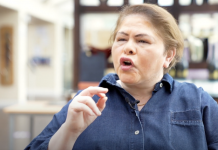
Years before she became one of Balochistan’s most prominent rights activists, Mahrang Baloch stood among women and children at a small roadside protest in Quetta, calling for her father’s release.
Her voice, caught between anger and grief, breaks in the footage.
“Why did you people take him away?” she asks.
The crowd then begins chanting: “Release Mir Ghaffar Langove.”
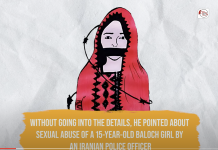
Her father, Abdul Ghaffar Langove, a Baloch political activist, had allegedly been forcibly disappeared by Pakistani forces in 2009. His family, like many others across Balochistan, asked for the most basic answer the law could offer: if he was accused of a crime, produce him before a court.
He was later found dead.
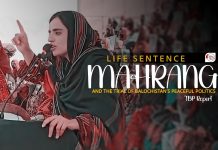
More than a decade later, that young girl had become Dr Mahrang Baloch — a physician, the chief organiser of the Baloch Yakjehti Committee (BYC) and one of the most internationally recognised voices against enforced disappearances and alleged state violence in Balochistan.
She had been named in TIME magazine’s TIME100 Next list and the BBC’s 100 Women list in 2024. She was later reported to have been nominated for the Nobel Peace Prize for a second consecutive year in 2026.
Now, she is a prisoner herself, sentenced to life imprisonment by an anti-terrorism court.
The Sentence
On 22 June 2026, an anti-terrorism court in Quetta convicted Dr Mahrang Baloch and Sibghatullah Shahji, another leader of the BYC, under sections 302(b), 147 and 148 of the Pakistan Penal Code.
Special Judge Muhammad Ali Mobeen said both had taken part in what the court called an “unlawful assembly” of the BYC and had shared a “common objective” in the killing of Frontier Corps Sepoy Shabir Ahmed during a protest in Gwadar.
“The accused persons Dr Mahrang Baloch d/o Abdul Ghaffar and Sibghatullah s/o Abdul Haq were active participants of the unlawful assembly of Baloch Yakjehti Committee and shared common objective of committing the murder of deceased FC official Shabir Ahmed s/o Muhammad Usman,” the verdict read.
The judge sentenced both to life imprisonment.
“I hold both the accused guilty of murdering Shabir Ahmed under section 302(b) read with 147 and 148 of Pakistan Penal Code, each of them is sentenced to imprisonment for life,” the verdict said.
According to the ruling, an official alleged that Dr Mahrang had been delivering a “very provocative speech” during the Gwadar protest, after which 30 to 40 people attacked vehicles carrying paramilitary personnel with sticks and stones. The official alleged that Ahmed later became separated from other soldiers and was killed by the crowd.
The verdict also cited an anonymous witness who alleged that Ahmed was brutally assaulted and that “his body was thrown into a garbage heap by the attackers”.
Balochistan government officials defended the verdict, saying the trial had been fair and the evidence “undeniable”.
Balochistan Chief Minister Sarfaraz Bugti said justice had been served for Sepoy Shabir, who he said was killed by protesters while on duty in the port city of Gwadar.
“Those who take the law into their own hands under the guise of peaceful protest, promote violence, and target state officials are in fact facilitators of terrorism,” Bugti said.
A ‘Faceless’ Trial
But the defence and family’s account of the case tells a different story: one in which Dr Mahrang Baloch’s conviction was not the outcome of an open and transparent trial, but of a process her legal team says was repeatedly shifted, restricted and placed beyond meaningful scrutiny.
Dr Mahrang was first arrested on 22 March 2025 and detained under the Balochistan Maintenance of Public Order for 30 days. The detention was extended twice for further 30-day periods, and before the expiry of the third order, she was taken into custody in another case. Cases were later registered against her and other BYC leaders under different sections of the Anti-Terrorism Act and the Pakistan Penal Code.
Nadia Baloch, Dr Mahrang’s sister and a member of her legal team, said the defence would appeal the verdict before the superior courts. She said the case had first been shifted from an open court to a jail trial, and then from a jail trial into what she described as a “faceless trial”.
“We do not know where the judge is sitting and running the case from, we do not know where the prosecutor is running it from, we do not know who the witnesses are and who is giving testimony,” she said after the verdict.
Nadia said the defence had refused to accept the verdict, adding that if the state wanted to try Dr Mahrang, it should grant her a fair trial.
“It was not transparent,” she said separately. “Her lawyers were changed as we went on a protest demanding an open court trial; she was assigned state lawyers; she was not given access to witnesses’ accounts or their details. She was not given a chance to a fair trial.”
The legal team also said the defence had been unable to properly cross-examine eyewitnesses who testified via video link.
Lawyer Jadain Baloch, speaking to The Contrapuntal, said the allegations against the BYC leaders were “originally of an ordinary criminal nature” and did not attract the provisions of the Anti-Terrorism Act. He said ATA provisions were added at a later stage, raising “serious concerns regarding the legality and bona fides of the prosecution”.
According to Jadain, the case in which the BYC leaders were sentenced had been revived, while the prosecution sought a day-to-day trial to secure a conviction in a case the defence believes suffered from “serious legal and factual deficiencies” and was supported by “weak and insufficient evidence”.
“We firmly believe that grave miscarriages of justice have occurred during the proceedings,” he said.
Balochistan Reacts to the Verdict
In Balochistan, the life sentences were received across political, student, legal and rights circles as a ruling against peaceful political mobilisation.
The Baloch Yakjehti Committee rejected the sentences, describing them as an expression of Pakistan’s “hatred against the Baloch nation”.
BYC leader Sammi Deen Baloch said the outcome had become clear when the case was moved to a “faceless trial” and the prosecution pushed for the proceedings to be accelerated. She said the conduct of the case showed that the BYC leaders were not awaiting justice, but “pre-decided sentences”.
BNP President Sardar Akhtar Mengal questioned the legitimacy of the proceedings, saying the verdict had further undermined confidence in the legal system.
“When decisions are made behind closed doors, without judges, the accused, or their lawyers present, what remains of law, justice and the Constitution?” he said.
BYC leader Dr Sabiha Baloch said the verdict was “not about justice” but about “making a peaceful struggle criminal”. She contrasted the convictions with the absence of accountability over the deaths and injuries of participants during the “Baloch Raaji Muchi,” saying that instead of justice for the victims, “the victims of state brutality are being held accountable through staged trials”.
Student, political and rights groups issued similar condemnations, framing the verdict as part of a wider effort to suppress peaceful Baloch political voices.
The Baloch Students Action Committee (BSAC) said detained Baloch political workers had been denied a fair hearing, transparent investigation and the right to defend themselves in an open court, describing the sentences as a “black stain” on the justice system.
The National Democratic Party (NDP) said sentencing peaceful political and human rights leaders in anti-terrorism cases amounted to the “murder of justice”. It said Dr Mahrang Baloch and her colleagues had been raising their voices against enforced disappearances, extrajudicial killings and the exploitation of Balochistan’s resources, and that labelling peaceful protest as terrorism showed the state wanted to answer political questions through force and imprisonment.
The National Party also expressed concern over the verdict and called for a fair trial, saying Dr Mahrang and other BYC leaders had been demanding their constitutional right to transparent proceedings under Article 10-A.
The Balochistan Bar Council said Dr Mahrang Baloch and Sibghatullah Shah had been deprived of representation by their chosen lawyers, describing the matter as contrary to the basic principles of justice, the right to a fair hearing and fundamental human rights.
The council said the case had raised serious questions about public confidence in the judicial system, adding that “justice should not only be done, but should also be seen to be done”.
The Baloch Women Forum (BWF) said the “faceless trial” and the sentences showed that the state was using different methods to silence Balochistan’s peaceful and democratic voices. The Baloch National Movement (BNM) said the verdict was aimed at frightening Baloch national activists and suppressing Balochistan’s young political leadership.
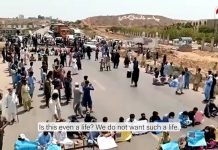
The verdict was also followed by a shutter-down strike across Balochistan. Markets and business centres remained closed in Quetta, Gwadar, Khuzdar, Kech, Hub Chowki, Kharan, Panjgur, Dalbandin, Kalat, Washuk, Mastung, Noshki and other areas.
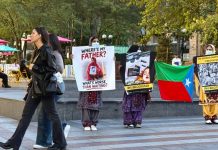
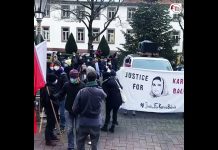
Baloch activists also protested abroad against what they called the “unfair trial” and life sentences given to Dr Mahrang Baloch and Sibghatullah Shahji.
Demonstrators gathered outside the Pakistani consulate in Glasgow, while a Baloch human rights activist began a hunger strike outside 10 Downing Street in London. BNM Germany said it held demonstrations in Hanover and Berlin, calling for international attention to rights violations in Balochistan and protection for peaceful political activists.
A Verdict Under International Scrutiny
Internationally, UN experts, rights organisations and public figures framed the sentences as a fair-trial violation, a blow to human rights defenders and part of a wider pattern of criminalising Baloch political advocacy.
Amnesty International called for the immediate release of Dr Mahrang Baloch and Sibghatullah Shahji, describing the verdict as “an affront to the right to a fair trial”.
“This verdict, which is an affront to the right to a fair trial, demonstrates how Pakistan’s anti-terrorism laws are being cynically misused to silence peaceful dissent,” Amnesty said.
The group said the convictions followed an expedited secret trial inside jail premises and added that “no direct evidence” had been presented linking Dr Mahrang and Shahji to the alleged violence.
Front Line Defenders also condemned the convictions, saying Dr Mahrang and Sibghatullah had been “falsely charged and sentenced” in connection with the death of a Frontier Corps official during the Gwadar protest. It said the use of jail trials and video-link hearings raised concerns over “transparency, public accountability, and fair trial standards”.
PEN Norway and the Narges Foundation said closed prison proceedings and video-link hearings raised serious questions over “judicial transparency, due process and compliance with domestic and international fair-trial standards”.
PEN International said Dr Mahrang’s arrest exposed “the deep crisis in free expression” and the “grave dangers faced by women who dare to speak truth to power in Pakistan”.
The case also drew criticism from prominent international figures.
Malala Yousafzai said Dr Mahrang “should not be in prison”. She said women and girls in Balochistan had suffered for years as male family members were “routinely arrested and forcibly disappeared”.
“Rather than addressing the horror of forced disappearances, the anti-terrorism court is targeting those who speak out against the oppression,” she said.
Swedish activist Greta Thunberg described the trial as a “mockery of justice” and a “blatant attempt to silence the legitimate voices of the Baloch people”.
“Dr Mahrang never carried a weapon. Her weapons were peaceful protests, long marches, and the undeniable truth,” she said.
Thunberg accused the Pakistani state of criminalising dissent and using anti-terrorism laws to imprison peaceful activists and portray them as enemies of the state.
UN Special Rapporteur on the situation of human rights defenders Andrea Bolaños Vargas expressed “grave concern” over the life sentences. She said the case involved “denial of fair trial”, “abuse of antiterrorism laws” and the “criminalization of peaceful assembly”, and urged Pakistan’s superior judiciary to overturn what she called “manifestly unjust convictions”.
Former UN Special Rapporteur on Human Rights Defenders Mary Lawlor also called for the sentence to be quashed, describing Dr Mahrang as a “peaceful and steadfast defender” of the Baloch people against “the cruelty of disappearances”.
The Message to Peaceful Politics
Analysts and activists argue that the verdict matters beyond the sentence because it raises a question older than this case: whether peaceful Baloch politics is tolerated only until it becomes organised, internationally visible and politically difficult to contain.
For decades, Baloch activists and rights groups have accused the Pakistani state of dealing with political mobilisation in Balochistan through a narrow legal and military lens. Nationalist leaders have been jailed, exiled or pushed out of formal politics. Student organisers have disappeared. Rights activists have faced prosecution. Families of the missing have been allowed to protest only within limits, until their demands became too visible to ignore.
The BYC emerged from that shrinking political space. Led largely by Baloch women, it built its campaign through public testimony, documentation, advocacy and protest, bringing wider attention to enforced disappearances, extrajudicial killings and the absence of accountability in Balochistan.
But critics say the state’s response followed a familiar pattern: shifting peaceful mobilisation out of the political sphere and into the legal and military framework used to contain dissent.
Sammi Deen Baloch said the state was trying to break the belief of those who still believed in peaceful activism.
“The state is trying to break the belief of those who believe in peaceful activism,” she said, adding that criminalising peaceful dissent, dialogue and activism would push people “towards violence as a means of resistance”.
That warning was echoed by Norway-based journalist Kiyya Baloch, who said sentencing a peaceful activist to life imprisonment for campaigning against enforced disappearances sent “a chilling message” that peaceful activism would not be tolerated.
“If peaceful dissent is criminalized, what alternatives are people left with?” he asked, adding that the verdict appeared intended to tell young people there was no space for peaceful political struggle.
Abdul Basit, a senior associate fellow at the International Centre for Political Violence and Terrorism Research in Singapore, said the verdict would further damage trust between the state and ethnic Balochs, who already feel marginalised.
“This will definitely deepen the crisis, and it’s counterproductive for the state,” he told DW, warning that the ruling could “push peaceful protesters towards insurgency” and “quickly shrink the distance between peaceful protest and militancy”.
Even within Pakistan’s parliamentary space, similar warnings have been voiced.
Speaking in the Senate, PPP senator Sardar Umar Gorgaij said Balochistan had lived under military operations for as long as he could remember, and that young people with degrees in their hands were taking the path of rebellion.
He claimed that more than 100,000 people were already in Balochistan’s mountains, while many more were moving in that direction every day. Those still using peaceful and political means, he said, should be heard instead of being pushed towards the mountains.
Read More: BYC and the State: Causes of the Confrontation — TBP Report
Conclusion
The question Mahrang Baloch asked as a child was never complex.
If her father was accused of a crime, why was he not brought before a court?
It is the same demand thousands of Baloch families still make for their disappeared sons, brothers, sisters, husbands and fathers: if they are accused of a crime, produce them before a court.
Years later, she reached a court herself, not as a daughter seeking an answer, but as the accused in a case her lawyers, supporters and rights groups say was closed, opaque and stripped of fair-trial safeguards.
The court did not answer the question that shaped her childhood.
It sentenced the woman who had carried that question into a movement, leaving others to decide what answer remained for those still being asked to believe in courts, dialogue and nonviolent struggle.