















By Saba Jameel
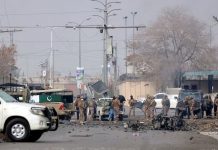
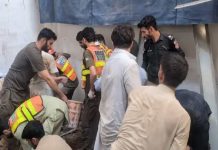
In recent months, highways stretching across Balochistan have witnessed a series of attacks on trucks transporting minerals and commercial cargo. From Noshki and Chagai to Panjgur and Mastung, dozens of vehicles have reportedly been damaged, seized or set ablaze, causing millions of rupees in losses and prompting transporters to stage strikes across the province.
Transport sector representatives say the attacks have reached an unprecedented scale. Noor Muhammad Shahwani, a transporter leader, stated that in one week alone 12 trucks were attacked, eight of which were completely destroyed. According to him, transporters suffered losses amounting to approximately Rs180 million from those vehicles alone. Similar incidents have continued to be reported along the Quetta-Taftan Highway and other routes linking western Balochistan to Karachi.
The attacks have largely targeted vehicles involved in transporting minerals and natural resources from Balochistan, according to claims made by pro-independence Baloch armed groups, particularly the Baloch Liberation Army (BLA). Pakistani authorities reject these claims and maintain that a range of commercial vehicles, including those carrying food and agricultural products, have also been affected.
The incidents have occurred as Islamabad seeks to accelerate investment in Balochistan’s mineral sector. The federal government has announced additional security measures, including the establishment of a new Frontier Corps West headquarters tasked with protecting strategic projects and transportation routes. Prime Minister Shehbaz Sharif has described the initiative as part of efforts to create a secure corridor for investment linked to Balochistan’s mineral wealth.
The increasing attacks on transport vehicles have generated concern not only because of the immediate losses incurred by transporters but also because they are taking place at a time when Pakistan’s trade geography is undergoing a significant transformation.
For decades, Pakistan relied on three major overland corridors to connect with neighbouring markets and regional trade networks. The eastern corridor linked Pakistan to India, one of the largest consumer markets in the world. The north-western corridor through Afghanistan provided access to Afghan markets and served as Pakistan’s gateway to the five Central Asian republics. The western corridor through Balochistan connected Pakistan with Iran but traditionally played a secondary role compared to the other two routes.
Today, that equation is changing.
Pakistan’s total international trade is estimated at approximately $133 billion annually. Exports account for roughly $32 billion to $36 billion, while imports range between $56 billion and $78 billion. Sustaining this trade requires access to reliable transit routes connecting Pakistan with regional and global markets.
However, developments over the last several years have significantly narrowed Islamabad’s options.
The Closure of the Eastern Route
Trade between Pakistan and India once represented one of the most important components of regional commerce in South Asia. During the 2017-18 financial year, total bilateral trade stood at approximately $2.41 billion. India exported goods worth $1.92 billion to Pakistan while importing products valued at $488.5 million.
The relationship deteriorated sharply in 2019 following the Pulwama attack and the subsequent escalation between the two countries. India revoked Pakistan’s Most Favoured Nation (MFN) status and trade relations entered a prolonged period of decline.
The impact was dramatic. Between 2018 and 2024, bilateral trade fell from $2.41 billion to approximately $1.2 billion. Pakistani exports to India declined from $547.5 million in 2019 to only around $480,000 in 2024, effectively eliminating Pakistan’s access to a neighbouring market of more than 1.4 billion people.
Official figures from India’s Ministry of Commerce indicate that Indian exports to Pakistan between April 2024 and January 2025 amounted to approximately $447.7 million. During the same period, Pakistan’s exports to India were valued at just $420,000.
Despite the collapse in official trade, commercial activity did not disappear entirely. Traders increasingly routed goods through third countries such as the United Arab Emirates (UAE) to bypass restrictions and maintain business links.
According to the India-based Global Trade Research Initiative (GTRI), unofficial Indian exports reaching Pakistan through third-country channels may be worth as much as $10 billion annually.
Yet even these alternative arrangements faced growing uncertainty following the military confrontation between India and Pakistan in 2025. The four-day conflict, which involved drone and missile strikes before ending with a ceasefire on 10 May, resulted in further restrictions, diplomatic tensions and the suspension of several cross-border mechanisms.
For Islamabad, the result was clear: the eastern land corridor had effectively ceased to function as a reliable route for long-term regional trade planning.
Afghanistan: Gateway to Central Asia
If India represented Pakistan’s eastern commercial gateway, Afghanistan historically served as its bridge to Central Asia.
The Afghanistan-Pakistan border extends for approximately 2,640 kilometres and includes several key crossing points. Torkham connects Pakistan with Jalalabad and Kabul and handles a significant share of bilateral trade. Chaman links Balochistan with Kandahar and serves as an important route for southern Afghanistan. Ghulam Khan provides an additional connection to eastern Afghan markets.
In 2024, Pakistan exported approximately $1.51 billion worth of goods to Afghanistan. The largest exports included rice valued at around $390 million, raw sugar worth approximately $220 million and pharmaceutical products valued at roughly $171 million.
However, Afghanistan’s significance extended beyond bilateral trade. For decades, Pakistani policymakers viewed Afghan territory as the most direct route to the Central Asian republics of Kazakhstan, Kyrgyzstan, Tajikistan, Turkmenistan and Uzbekistan.
Pakistan’s annual trade with these countries has generally remained between $400 million and $500 million. Although relatively modest compared to Pakistan’s trade with larger markets, Central Asia has long been viewed as a region with substantial growth potential.
That strategy has faced growing challenges. Border closures, security incidents and tensions between Islamabad and Kabul have repeatedly disrupted transit traffic. Following clashes between the two countries in late 2025, trade volumes reportedly declined significantly, while uncertainty surrounding transit routes increased.
Official figures indicate that Pakistan’s exports to the five Central Asian republics fell by 8.62 percent during the first ten months of fiscal year 2025-26. Many analysts attribute the decline in part to difficulties associated with the Afghan route.
As a result, Islamabad increasingly began searching for alternatives.
Iran: Pakistan’s Alternative Corridor
As Pakistan’s eastern and north-western trade corridors became increasingly constrained, attention gradually shifted towards Iran.
Unlike India and Afghanistan, Iran shares a border with only Balochistan. Stretching from the coastal district of Gwadar to the deserts of Chagai, the Pakistan-Iran border has historically remained underutilised despite its strategic location. For decades, trade between the two countries remained limited due to sanctions, banking restrictions, infrastructure constraints and political considerations.
In recent years, however, both Islamabad and Tehran have sought to transform the relationship.
Annual trade between Pakistan and Iran is currently estimated at approximately $3 billion. Pakistan imports roughly $2.1 billion worth of goods from Iran, including liquefied petroleum gas (LPG), mineral fuels, bitumen, iron and steel products. Pakistani exports to Iran are considerably smaller, valued between $680 million and $700 million annually, consisting primarily of rice, sesame seeds, mangoes, meat and agricultural products.
Yet the significance of Iran for Pakistan extends beyond bilateral trade figures.
For Islamabad, Iran increasingly represents an alternative gateway to regional markets at a time when other land corridors face growing uncertainty. The importance of this route became even more apparent following disruptions across South Asia and the Middle East, which highlighted Pakistan’s vulnerability to geopolitical developments beyond its control.
Against this backdrop, Pakistan began developing a westward trade strategy centred on Balochistan and Iran.
A significant step came on 25 April 2026 when Pakistan’s Ministry of Commerce issued the “Transit of Goods through Territory of Pakistan Order 2026.” The order permitted third-country cargo to move through Pakistan before entering Iran, creating a new framework for regional transit trade.
The arrangement effectively operationalised six overland corridors connecting Pakistan’s major ports with the Iranian border.
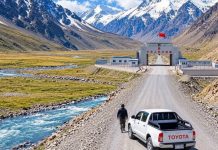
Cargo arriving at Karachi Port, Port Qasim and Gwadar Port can now travel through Balochistan before crossing into Iran through the border points of Taftan and Gabd. The designated routes pass through districts including Turbat, Panjgur, Khuzdar, Quetta and Dalbandin, making Balochistan the centrepiece of Pakistan’s emerging westward trade strategy.
For the first time in decades, roads crossing Balochistan were no longer serving only domestic transportation needs; they were becoming part of a broader regional transit network linking South Asia, the Middle East and potentially Central Asia.
The Mineral Corridor
The growing focus on transport routes in western Balochistan is closely linked to the region’s mineral wealth, much of which is concentrated in Chagai district.
While mineral extraction takes place across Balochistan, Chagai accounts for some of Balochistan’s largest and most valuable mineral deposits. Geologists have often described the district as a “mineral museum” because of the diversity and abundance of its natural resources.
Besides Chagai, chromite is extracted from Qila Saifullah, lead and zinc from the Dudhar area of Lasbela district, and barite, marble and construction stone from Khuzdar. Large-scale coal mining is also carried out in Quetta, Kachhi, Harnai and Dukki districts.
Ali Raza Rind, a senior journalist from Balochistan who hails from Dalbandin, the headquarters of Chagai district, said Chagai hosts more mineral projects than any other district in the region, including several foreign-backed ventures.
Citing data from the Mines and Minerals Department, Rind said more than 280 mining leases have been allocated in Chagai, ranging from small-scale operations to some of Pakistan’s largest mineral projects.
Among the most significant is the Saindak Copper-Gold Project, operated by a Chinese company since 2002. Work on the Reko Diq project, regarded as one of the world’s largest undeveloped copper and gold deposits, resumed in 2022 after years of legal and political disputes. Additional exploration and development projects have also been launched in the Saindak region in recent years.
According to Rind, minerals covered by mining leases in Chagai include copper, gold, iron ore, chromite, granite, zinc, quartzite, gemstones, manganese, mica, calcite, galena, antimony, marble, sulphur, pumice and several other commercially valuable resources.
Despite the scale of extraction, most minerals leave Balochistan in raw form because the region lacks sufficient processing facilities and industrial infrastructure.
“There is no major processing facility in Chagai where raw minerals can be refined or converted into finished products,” Rind said in remarks previously cited by BBC Urdu. “Most of the material is transported to Karachi, which is one reason why mining has had limited economic impact at the local level.”
According to Rind, copper and gold concentrate produced at Saindak is transported by road from Chagai to Karachi before being exported to China for further processing. Production at Reko Diq has not yet begun, but company officials have repeatedly stated during media briefings that extracted material will be transported to Karachi, largely through rail and road networks, before being shipped abroad for processing.
A similar pattern exists elsewhere in Balochistan. Chromite extracted from Qila Saifullah, gemstones and other minerals from Khuzdar, and lead concentrate from the Dudhar project in Lasbela are all transported to Karachi before being exported or processed.
Coal follows a different route. Coal mined in Quetta, Harnai, Dukki and Kachhi is primarily transported by road to industrial centres in Punjab. Following repeated attacks on coal convoys in recent years, authorities have at times arranged security escorts for vehicles travelling from northern Balochistan to Punjab.
The concentration of mineral extraction in Chagai and the dependence on road transport help explain the strategic importance of highways linking Dalbandin, Noshki, Quetta and Karachi. These routes serve as the primary arteries through which much of Balochistan’s mineral wealth leaves the area.
It is these same corridors that have increasingly come under attack in recent years.
Why Balochistan Matters
The strategic importance of Balochistan is rooted in geography.
Pakistan possesses only two practical land connections with major neighbouring states capable of facilitating regional trade: Afghanistan and Iran.
With Afghanistan increasingly affected by political tensions and border disputes, Iran has become Islamabad’s most viable western alternative. Yet every significant road leading from Pakistan into Iran passes through Balochistan.
Whether cargo originates in Karachi, Port Qasim or Gwadar, it must travel hundreds of kilometres across Balochistan before reaching Taftan or Gabd.
The Karachi–Quetta–Taftan corridor remains one of the principal routes linking Pakistan with Iran. Another route connects Karachi with Chagai through Khuzdar and Kharan before reaching the border. Additional roads connect Gwadar and Makran with Iranian territory through the coastal crossing at Gabd.
Consequently, securing Balochistan’s highways has become a matter of national economic significance.
The importance of these routes has increased further as Pakistan seeks access to Central Asian markets through Iranian territory.
For years, Islamabad viewed Afghanistan as the most direct gateway to Central Asia. However, repeated disruptions along that route have encouraged policymakers to explore alternatives.
The Iran corridor offers access to transport networks extending into Turkmenistan and beyond. Although the distances involved are greater and transportation costs remain higher, officials increasingly regard the route as a necessary alternative amid regional uncertainty.
This shift has effectively transformed Balochistan from a peripheral trade zone into one of Pakistan’s most strategically important transit regions.
Attacks on Transport Routes
It is against this backdrop that the recent attacks on cargo vehicles have attracted growing attention.
Attacks on trucks are not new in Balochistan. Incidents targeting commercial vehicles have occurred throughout much of the current insurgency. Historically, many such attacks involved firing on vehicles, puncturing tyres or temporarily blocking highways.
Observers, however, point to a noticeable escalation in recent years.
One of the most significant incidents occurred in June 2023 when approximately 30 to 40 trucks transporting coal from the mining districts of Dukki and Harnai were reportedly set ablaze.
Since then, attacks targeting vehicles carrying minerals and other resources have become increasingly frequent.
According to transport associations and local reports, dozens of attacks have occurred during the past two months alone. Industry representatives estimate that more than 120 vehicles have been damaged or destroyed in incidents reported from Noshki, Mastung, Kharan, Chagai and Panjgur.
Many of the affected vehicles were reportedly transporting minerals extracted from different parts of Balochistan and destined for processing facilities, ports or markets elsewhere in Pakistan.
The financial impact has been substantial.
Transporters report losses amounting to hundreds of millions of rupees. Drivers increasingly express reluctance to travel along certain routes, while insurance costs and transportation risks continue to rise.
These developments have generated concern throughout the transport sector.
In response to the deteriorating security situation, transporters organised a region-wide wheel-jam and shutter-down strike, arguing that existing security measures had failed to ensure the safe movement of commercial traffic.
The strike reflected growing frustration among businesses that depend on Balochistan’s highways.
Competing Narratives
The attacks have also highlighted sharply different interpretations of events.
The “pro-independence Baloch” armed groups, particularly the Baloch Liberation Army (BLA), operating in Balochistan have repeatedly claimed responsibility for attacks on vehicles they allege are involved in transporting minerals and natural resources from the area.
In public statements, these groups argue that such operations are aimed at preventing what they describe as the extraction and transfer of Balochistan’s resources.
The Baloch Liberation Army (BLA) said that its ongoing campaign in Balochistan aims to target what it described as the economic foundations of Pakistan’s presence in the province. The group argued that resource projects such as Saindak, Reko Diq, Gwadar, Sui gas fields, and coal extraction operations financially sustain the state’s control over Balochistan. According to the BLA, making these economic interests costly and insecure is essential to its broader objective of national liberation.
The BLA further claimed that highways and infrastructure projects in Balochistan function as economic corridors facilitating the extraction of the region’s resources. The group defended attacks on supply routes, company vehicles, and infrastructure linked to investment projects, including CPEC, describing such actions as part of its resistance campaign. Citing international law and the principle of self-determination, the BLA maintained that disrupting these projects is a legitimate component of what it called the Baloch struggle for national liberation.
In a significant development, On 16 May, the Baloch Liberation Army (BLA) said that the Quetta–Taftan highway is under its control, stating that “economic blockade will continue until plunder ends”. The group warned companies involved in mining and mineral transportation to cease operations in Balochistan.
“We issue a final and stern warning to all local and non-local companies, as well as elements involved in transporting minerals, to immediately abandon all attempts to steal Baloch resources from the soil of Balochistan. Otherwise, the next strikes by BLA sarmachars [fighters] will be even more exemplary for them,” BLA spokesperson Jeeyand Baloch said.
Balochistan’s Government authorities reject these claims.
Officials argue that the attacks are acts of “terrorism” designed to disrupt “economic activity and create instability”. They maintain that vehicles carrying a wide range of goods, including food products and agricultural commodities, have also been affected.
The disagreement extends beyond individual incidents and reflects broader disputes regarding resource ownership, political representation and development policies in Balochistan.
The government announced several measures, including the establishment of a new “security force” at a cost of Rs25 billion to improve highway security, compensation for owners of burned vehicles, and the introduction of an insurance scheme for cargo transport vehicles operating in Balochistan.
Regardless of the competing narratives, however, one reality remains clear: attacks on transport routes have become an increasingly significant challenge for both commercial operators and government authorities.
Can Pakistan Secure Its New Trade Corridor?
The growing importance of Balochistan’s highways has prompted an extensive security response.
Authorities have expanded deployments along major roads, particularly the Quetta–Taftan Highway, which serves as a critical artery for mineral transportation and trade with Iran.
The federal government has also announced new measures aimed at protecting investment projects and transport corridors associated with the region’s mineral sector.
Yet the effectiveness of these efforts remains a subject of debate.
According to Balochistan’s budget figures, spending on law and order has increased dramatically over the past decade.
In the 2017-18 financial year, Balochistan spent approximately Rs30.79 billion on law and order. For the 2025-26 fiscal year, the figure has surpassed Rs100 billion.
Despite significant increases in security spending, attacks on transport vehicles continue to be reported across several districts of Balochistan.
For transporters, the issue is straightforward: can goods move safely and reliably from Balochistan’s mines, ports, and commercial centres to domestic and international markets? For Islamabad, however, the challenge is far broader. As Pakistan seeks to strengthen western trade routes through Iran amid shifting regional dynamics, the security of the highways linking these corridors has become a matter of growing strategic importance.
Conclusion
The recent wave of attacks on transport vehicles in Balochistan cannot be viewed solely through the lens of law and order. They are unfolding at a time when Pakistan’s regional trade priorities are undergoing a significant realignment. With trade with India largely suspended and access to Central Asian markets through Afghanistan facing continued uncertainty, Islamabad has increasingly turned its attention towards western connectivity routes linking Pakistan with Iran and beyond.
These routes pass through Balochistan, placing the region at the centre of Pakistan’s evolving economic and trade ambitions. Consequently, highways connecting Karachi and Gwadar to border crossings such as Taftan and Gabd have acquired unprecedented strategic value. Attacks on transport vehicles therefore have implications extending beyond immediate economic losses, affecting broader efforts to enhance regional connectivity, secure alternative trade corridors, and deepen commercial ties with neighbouring countries.
Several countries, including the United States and Australia, which designate the BLA as a terrorist organisation, as well as a number of Gulf states, have expressed interest in investing in Balochistan’s vast mineral resources. However, persistent attacks by Baloch militant groups, particularly the BLA, continue to present a major challenge. Security analysts note that the group’s operations increasingly combine traditional insurgent tactics with economic disruption and attacks on strategic infrastructure, reflecting an evolution from conventional guerrilla warfare towards a more complex form of hybrid conflict.
Ultimately, Pakistan’s ability to realise its regional trade ambitions may depend not only on diplomacy and investment but also on whether it can provide lasting security along the highways that have become vital to both its economic future and its broader regional connectivity strategy.
Sources:
- https://oec.world/en/profile/bilateral-country/irn/partner/pak
- https://www.dawn.com/news/amp/2006765
- https://oec.world/en/profile/bilateral-country/afg/partner/pak
- https://oec.world/en/profile/bilateral-country/ind/partner/pak
- https://www.aljazeera.com/news/2025/5/10/india-and-pakistan-agree-ceasefire-what-does-it-mean
- https://caspianpost.com/central-asia/new-pakistan-iran-road-routes-and-central-asian-trade
- https://www.bbc.com/urdu/articles/cq51elwx5q1o?at_campaign=Social_Flow&at_format=link&at_link_id=15880920-6491-11F1-88ED-AB8462D8D62A&at_link_origin=BBCUrdu&at_link_type=web_link&at_ptr_name=twitter&at_medium=social&at_bbc_team=editorial&at_campaign_type=owned