














The Baloch Liberation Army (BLA) said on Sunday that its fighters had carried out 26 attacks across Balochistan over 10 days, claiming to have killed 30 Pakistani military and police personnel while targeting highways and resource transport as part of an “economic blockade.”
In a statement, BLA spokesperson Jeeyand Baloch said the operations included attacks on military camps, checkpoints and convoys, as well as highway blockades, bridge demolitions and strikes on vehicles carrying minerals and fuel.
The group said some of its largest attacks took place on June 15.
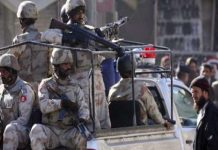
At Ahmed Wal in Noshki, it said an improvised explosive device struck a military vehicle before fighters ambushed the convoy, killing eight personnel and damaging several vehicles, including an armoured personnel carrier.
In Kech’s Balnigwar area, the BLA said three personnel were killed when two military vehicles were attacked near a camp at Taloheeg Bazaar. It also claimed that six personnel were killed in an attack on a convoy in Kardegap, Mastung, where it said its fighters shot down a military quadcopter.
The BLA said one of its fighters, Safar Khan, was killed during clashes near Mian Ghundi in Quetta on June 12. It claimed five Pakistani soldiers and one police officer were killed after Pakistani forces attempted to advance towards a highway blockade established by the group.
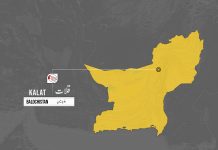
The statement also claimed attacks on military positions and patrols in Panjgur, Kalat, Mastung and Kech using rockets, mortars, grenade launchers and improvised explosive devices.
The group further claimed responsibility for killing a Counter-Terrorism Department (CTD) officer and two men it described as Pakistani intelligence operatives in separate attacks in Noshki. It accused them of involvement in raids, enforced disappearances and the recruitment of informants.
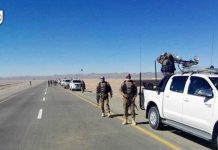
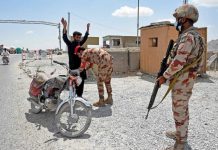
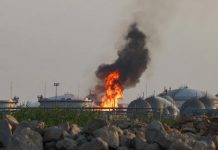
As part of what it called an “economic blockade,” the BLA said its fighters destroyed bridges in Surab and Noshki, stopped and searched vehicles on major highways, and disabled trucks and bowsers linked to mineral and fuel transport.
Jeeyand Baloch said the operations formed part of a broader strategy aimed at placing economic and military pressure on the Pakistani state, adding that attacks on military institutions, people the group described as local collaborators, and companies involved in extracting Balochistan’s resources would continue.
“Paralyzing the enemy state economically and militarily is a fundamental part of our strategy,” the statement said.
The group said its economic blockade would be expanded “with greater intensity” until what it described as the withdrawal of the Pakistani military from Balochistan and the “achievement of Baloch independence.”