







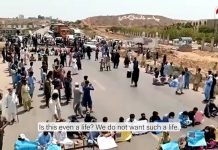
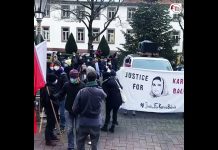
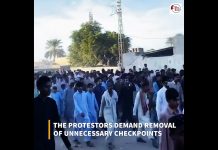


The Baloch Yakjehti Committee (BYC) has strongly condemned what it described as the use of state force, direct firing, arrests of political activists and the targeting of citizens during the ongoing public-rights movement in Kashmir.
In a statement, the BYC said the actions were part of a broader state policy aimed at suppressing public voices and political resistance through force.
“Responding to public demands with bullets, arrests and repression instead of a political process reflects the reality that the state of Pakistan prioritises the use of force rather than tolerating dissent,” the statement said.
The BYC said the popular movement continuing in Kashmir for the past 52 days was a clear expression that what it described as “subjugated nations” do not abandon their struggle for fundamental rights, resources, identity and political authority.
Instead of listening to these demands and seeking a political solution, the statement said, the state had chosen the path of force and was attempting to suppress the movement through direct firing, physical abuse, arrests and sieges.
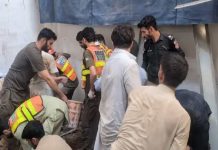
“Several citizens have lost their lives as a result of state firing, while a large number of people have been injured,” the statement said.
The BYC said the situation showed that the state had lost both the capacity and willingness to find political solutions to public demands, and was instead resorting to repression out of fear of “organised public consciousness, collective resistance and political awakening”.
The BYC said the situation in Kashmir was a continuation of the same policies pursued in Balochistan, Pashtunkhwa, Sindh and other regions, where demands concerning public rights, resources and political authority were suppressed through force rather than recognised as political questions.
It said a state founded on what it described as the seizure of the resources of “subjugated nations” and the silencing of their voices through repression makes “guns, violence and state force”, rather than dialogue and justice, the principal instruments of its rule.
The BYC called on international human rights organisations, relevant United Nations bodies and the international community to take serious notice of the use of force against public-rights movements in Pakistan, extrajudicial measures, unlawful arrests, restrictions on civil liberties and violations of the fundamental right to protest.
It demanded independent, impartial and transparent investigations into the incidents, accountability for Pakistan at international forums, and effective diplomatic and legal pressure on the country to fulfil its international human rights obligations.