












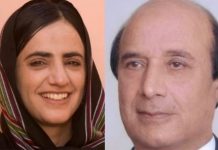






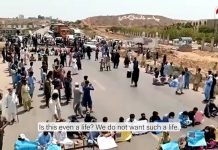
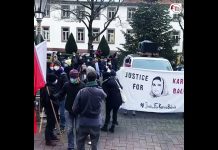




Baloch Yakjehti Committee leader Dr Sabiha Baloch has said enforced disappearances are an “unconstitutional, illegal and immoral” practice, as she condemned reported threats against Voice for Baloch Missing Persons (VBMP) to shut down its long-running protest camp in Quetta.
Her statement came after VBMP alleged that it was receiving threats aimed at forcing the organization to close its protest camp outside the Quetta Press Club and halt its campaign against enforced disappearances in Balochistan.
VBMP Chairman Nasrullah Baloch said the threats were intended to silence voices raising concerns over human rights violations, but said the organization would continue its peaceful struggle against enforced disappearances.
Dr Sabiha said Nasrullah Baloch’s statement reflected what she described as state conduct aimed at “silencing every voice that speaks of human rights, justice and life”.
She said enforced disappearances were themselves an “unconstitutional, illegal and immoral” practice, but that the same practice continued “in broad daylight” by state institutions.
She said those who raised their voices against enforced disappearances continued to face threats, harassment, arrests and repression.
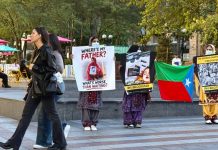
Dr Sabiha said the VBMP protest camp, which has continued outside the Quetta Press Club for 6,172 days, was “not merely a protest but a symbol of the pain, waiting and hope of thousands of families”.
“These are the mothers, sisters, children and elders who have been sitting on the roads for years for the recovery of their loved ones,” she said, adding that instead of healing their wounds, they were being threatened.
Dr Sabiha said the BYC leadership had also been imprisoned for the past year because it raised a peaceful voice against repression.
She described the alleged harassment and threats against VBMP leaders as an “extremely shameful act”, saying that if the state truly wanted a solution to the issue, it should stop the “heinous crime” of enforced disappearances instead of silencing peaceful voices.
Dr Sabiha said attempts could be made to suppress voices through “threats, prisons and repression”, but a mother could not be deprived of the memory of her child and a sister could not be stopped from searching for her brother.
“How can anyone give up the search for their loved ones? Can living human beings be forgotten? Can the desire for life be abandoned?” she said.
She said silence in the face of repression was not possible, adding that as long as enforced disappearances continued, the voice of resistance and justice would also remain alive.