






















By Saba Jameel
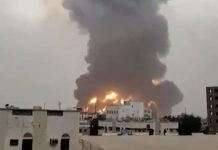
A powerful explosion rocked Quetta city on 24 May, with thick smoke visible across large parts of the city. Initial reports later confirmed that the blast had occurred near the Chaman Phatak railway line in Quetta.
Chaman Phatak, where the attack took place, is located some distance from Quetta Railway Station. The railway route does not directly connect to other regions from that point. One line moves towards Chaman via Quetta Railway Station, while another links to Quetta Cantonment.
Soon after the attack, Pakistani authorities stated that a civilian train had been targeted in the explosion. Provincial and federal officials, along with much of the Pakistani media, repeatedly described the incident as an attack on a passenger train carrying civilians. However, multiple officials later acknowledged that the train hit in the blast was in fact a military shuttle train operating from Quetta Cantonment. Pakistan Railways itself later confirmed that the shuttle train coming from Quetta Cantonment was struck near the railway crossing during the explosion.
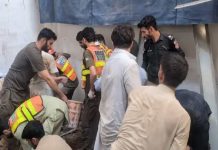
At least 24 people were initially reported killed on Sunday after a suicide bomber rammed an explosive-laden vehicle into the train. By Monday, two provincial officials, speaking anonymously because they were not authorised to disclose details publicly, told Reuters that the death toll had risen to more than 30.
Norway-based Baloch journalist Kiyya Baloch, citing security official sources, reported that the wagon targeted in the Quetta train bombing was carrying approximately 70 to 80 kilograms of explosives. According to him, three carriages, each carrying around 90 to 95 passengers due to the Eid rush, were blown apart in the blast. One carriage was reportedly thrown nearly 30 feet away, while two others sustained partial damage. The explosion created a crater roughly 10 feet deep and three to four feet wide. Around 40 nearby vehicles were completely destroyed, windows of nearly 100 houses were shattered, and three commercial buildings sustained partial structural damage. The blast also left at least 156 people injured.
The Baloch Liberation Army (BLA), one of the most organised and active armed groups operating in the region, claimed responsibility for the attack. In its statement, the group asserted that 82 Pakistani military personnel were killed and more than 121 injured in Sunday’s attack on a military shuttle train near Chaman Phatak, on the outskirts of Quetta Cantonment railway station.
In a detailed statement, BLA spokesperson Jeeyand Baloch said the attack was carried out through what the group described as a “highly complex, organised and joint operation” involving the Majeed Brigade, its fidayee unit, and its intelligence wing ZIRAB.
According to the statement, ZIRAB had conducted long-term reconnaissance of the altered security network, train schedules, and covert internal communications before the attack. The group claimed that the operation demonstrated the intelligence wing’s “deep access inside secure military zones and decision-making structures”.
“The operation was designed with such meticulous precision in terms of military science and timing that if there had been a variance of even five minutes earlier or later in its planning and execution, targeting the enemy forces would have been impossible,” the statement said.
The BLA identified the attacker as 26-year-old commander Bilal Shahwani, a resident of Quetta. According to the group, he crossed multiple military and security cordons before carrying out the attack at approximately 8 a.m., when the military shuttle train crossed Koila Phatak and reached Chaman Phatak.
The group further stated that over the past six months, Bilal Shahwani had directly commanded several major attacks, including “Operation Herof 1”. During “Operation Herof 2”, he reportedly led fidayee units in Quetta’s highly sensitive Red Zone and was involved in breaching the city’s security perimeter.
The timing of the attack is particularly significant, coinciding with Pakistani Prime Minister Shehbaz Sharif and army chief Asim Munir’s visit to Beijing aimed at deepening bilateral relations. Baloch separatist groups have consistently opposed Chinese investments in Balochistan under the China-Pakistan Economic Corridor, arguing that the projects exploit the region’s natural resources while excluding local populations.
The train targeted in the attack was reportedly carrying 336 Pakistani military personnel when the explosion struck, causing one of its three carriages to overturn. According to reported details, those on board included 11 JCOs, 165 army personnel, 109 recruits, 14 NCBs and staff members, and 37 AFMs. The train was also reportedly transporting 74 weapons and 7,320 rounds of ammunition.
Why Are Trains Being Targeted?
What makes the attack particularly significant is the choice of target. Trains are generally considered safer than road convoys for troop movement, especially in conflict-prone areas. However, Baloch “pro-independence” armed groups have increasingly focused on rail infrastructure and military transportation systems.
ACLED, the independent conflict monitoring organisation that collects and maps global data on conflict and protest, has recorded around 50 attacks by Baloch armed groups targeting trains, railway infrastructure, and track-clearance units since 2023.
Sunday’s blast marks the third major deadly attack claimed by the BLA against trains or railway facilities allegedly used by Pakistani military personnel.
On 9 November 2024, the group claimed responsibility for a suicide attack at Quetta Railway Station, saying that its Majeed Brigade had targeted military personnel who had completed training at the Infantry School in Quetta.
Abdul Sayed, an independent researcher focused on jihadism and the Af-Pak region who holds a master’s degree in political science from Lund University in Sweden, described the attack as potentially the second-deadliest suicide attack in Pakistan Army history in terms of military fatalities. According to initial reports cited by him, at least 20 non-commissioned officers were among those killed. The deadliest comparable attack occurred in 2006 in Dargai, Malakand, when militants later associated with Tehrik-i-Taliban Pakistan carried out a suicide bombing that killed more than 42 soldiers.
In March 2025, BLA fighters hijacked the Jaffar Express in Bolan, taking hundreds of passengers hostage. The group later claimed that more than 200 Pakistani military personnel were killed during the operation after Pakistan allegedly refused a proposed prisoner exchange.
What We Need to Know
Following earlier train-related attacks, the Pakistan military reportedly introduced a new clandestine travel protocol aimed at concealing troop movements from Baloch fighters.
Under this arrangement, four to five railway carriages were reportedly moved into the high-security zone of Quetta Cantonment under cover of darkness several hours before the departure of the Jaffar Express. Military personnel going on leave or heading for new deployments would board these carriages within the cantonment perimeter. The carriages were then assembled into a military shuttle train using a separate locomotive and transported to Quetta Railway Station approximately 30 minutes before the departure of the passenger train, where they would be attached.
According to accounts describing the protocol, the military believed that operating within the cantonment’s internal infrastructure would shield troop movements from surveillance by Baloch “Sarmachaars”.
At the same time, security measures along the route were reportedly intensified. Authorities had begun constructing high-security walls along both sides of the railway track between the cantonment and Quetta Railway Station, intending to isolate the military shuttle route from external access and prevent ground infiltration. In addition, the military’s Quick Response Force was reportedly deployed daily with heavy weaponry at Koila Phatak and the Pishin Stop bridge before the train’s movement, while foot patrol units from the permanent military post at Chaman Phatak secured the surrounding area.
Despite these extensive precautions, the attack was still successfully executed, raising serious questions about intelligence failures and vulnerabilities within Pakistan’s security apparatus.
Strategic Significance
Pakistan-based analysts and security officials have described the attack as a major intelligence and counterterrorism failure, particularly given its occurrence in Quetta, the capital city of Balochistan and arguebaly the most heavily militarised city in the region.
Dr Farzana Shaikh, a political analyst associated with Chatham House, has previously described attacks on trains and railway infrastructure in Balochistan as a “watershed” moment, arguing that railways symbolise state authority, territorial control and military mobility in the region. Analysts believe the latest Quetta bombing represents a continuation of that broader strategy.
Mahain Akbar, associated with Baloch media circles in Quetta, suggested that the BLA may have possessed highly accurate intelligence regarding the train’s movements and recent personnel transfers. Observers argue that such a coordinated operation would have been extremely difficult to execute without insider information, long-term reconnaissance or access to sensitive security details.
The Quetta bombing highlights an evolving insurgent strategy in Balochistan, one increasingly focused on targeting military logistics, transport networks and symbolic state infrastructure rather than conventional battlefield engagements. It also underscores the growing operational sophistication of the BLA and raises pressing questions about the effectiveness of Pakistan’s current counterinsurgency approach in the region.
Conclusion
The Quetta train bombing represents more than a single act of violence. It reflects a widening gap between increasingly sophisticated insurgent capabilities and the state’s evolving security architecture in Balochistan. The ability of the attackers to penetrate layered security measures around one of the most sensitive military transport systems in the region points to serious intelligence vulnerabilities, whether structural, operational or both.
As competing narratives continue to shape public understanding of the event, the core strategic reality remains unchanged. Beyond the immediate casualties, the attack carries wider political and strategic implications. It demonstrates how the conflict in Balochistan is increasingly shifting towards high-impact operations aimed at military logistics, state infrastructure and symbols of authority. The bombing has also intensified questions surrounding Pakistan’s security strategy in the region, particularly at a time when Islamabad is seeking to project stability to international partners, including China. For many observers, the attack signals not only an escalation in insurgent operational capacity, but also the persistence of a conflict that continues to deepen despite years of militarisation and counterinsurgency operations.