











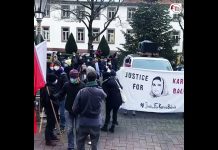



The arrest of a prominent activist in Pakistan-administered Kashmir has prompted criticism from the Baloch Yakjehti Committee (BYC), which has described the move as part of a broader pattern of restrictions on political activism and dissent.
Authorities in Pakistan-administered Kashmir arrested Joint Awami Action Committee (JAAC) leader Shaukat Nawaz Mir on 30 June. The arrest was confirmed by Muzaffarabad Deputy Commissioner Munir Qureshi, who said Mir had been detained in an area between Muzaffarabad and Bagh.
Senior Superintendent of Police (SSP) Muzaffarabad Riaz Mughal stated that Mir was wanted in connection with several cases and had been arrested during an operation in the Dhirkot area.
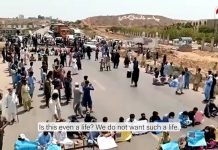
The arrest comes amid an ongoing government crackdown on the Joint Awami Action Committee, a movement that has organised protests over economic and public welfare issues in Pakistan-administered Kashmir. Authorities have declared the organisation banned and initiated legal proceedings against several of its senior members.
Under an official notification, authorities announced rewards of 10 million Pakistani rupees each for information leading to the arrest of four JAAC leaders: Shaukat Nawaz Mir, Umar Nazir Kashmiri, Khawaja Mehran Arshad and Sardar Aman Khan.
The Pakistani government maintains that Mir and several other activists face charges including sedition, incitement against state institutions, disturbing public order and interfering with government functions.
JAAC and its supporters reject the allegations, arguing that their movement is based on peaceful advocacy for public rights and constitutional demands. They contend that the legal action is politically motivated and intended to suppress dissent.
In a statement issued on Tuesday, BYC expressed solidarity with Mir and the wider movement in Kashmir. The organisation described his arrest as a continuation of what it called a state crackdown on popular political movements and argued that governments increasingly rely on arrests and coercive measures rather than political dialogue when confronted with public demands.
BYC further stated that activists advocating for political rights, economic justice and civil liberties in both Kashmir and Balochistan were facing increasing pressure. The group argued that such measures risk undermining democratic values and exacerbating political tensions and human rights concerns.
The organisation also criticised the ban on JAAC and the arrests of its leaders, describing the measures as harmful to political freedoms and calling on authorities to pursue dialogue instead of coercive policies.
BYC Condemns Detention of PTM Leader
In a separate statement, BYC criticised the detention of Zubair Shah Agha, a leader of the Pashtun Tahafuz Movement(PTM), who was reportedly taken into custody by police and intelligence personnel shortly after a press conference held by relatives of detained BYC leaders and members of an all-parties alliance.
According to BYC, authorities later confirmed that Agha had been detained under Section 3 of the Maintenance of Public Order Ordinance (3MPO), a preventive detention law that allows authorities to hold individuals without formal criminal charges for a specified period.
The organisation argued that the law is increasingly being used against political activists, human rights advocates and critics of state policies. BYC described Agha as a peaceful political activist and called for his immediate release, maintaining that his detention was linked to his political views and advocacy rather than any criminal offence.
Pakistani authorities have not publicly responded to BYC’s allegations regarding Agha’s detention.
The developments come amid continuing debate over the use of security and public-order legislation against political activists in various parts of Pakistan, with rights groups and activists expressing concern over restrictions on political freedoms.