













By Yaran Diyar
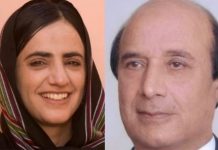
In the Brahui language, “Ghamkhwar” means “one who consumes sorrow” or “one who carries the grief of others.” It was the pen name of Professor Mohammad Khan, but for many across Balochistan, it also became a reflection of the man himself; a poet, teacher and intellectual whose writings carried the pain and endurance of his people.
Through poetry and prose, Ghamkhwar Hayat wrote about memory, dispossession, identity and loss. Those close to Brahui literature often described his work as deeply rooted in the emotional landscape of Baloch society, where grief is not only personal but collective. In many ways, the name “Ghamkhwar” came to symbolise a literary voice that absorbed the anxieties and suffering of a wounded land and transformed them into words.
That voice was silenced on 16 May 2026.
The killing of renowned Brahui-language scholar, poet and academic Ghamkhwar Hayat in Balochistan’s Noshki district has once again drawn attention to the deepening climate of fear surrounding intellectuals, educators, writers and activists in the region.
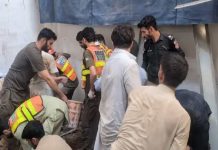
Ghamkhwar Hayat was shot dead on 16 May 2026 in the Killi Mengal area near his home after unidentified armed men opened fire, according to local sources. Rights groups, student organisations and political activists alleged that the attackers were linked to armed networks commonly referred to in Balochistan as “death squads” — groups widely accused by local activists, rights groups and families of operating with the backing or tolerance of the Pakistani military establishment. Pakistani authorities have not publicly commented on the allegations.
Ghamkhwar Hayat was widely regarded as one of the leading contemporary voices in Brahui literature. A teacher at Government Boys Degree College Noshki, he authored thirty books (8 of them to be published) and contributed extensively to poetry, fiction, translation and literary criticism. He was also among the founders of Raskoh Adabi Deewan and Hotan Culture Academy, institutions associated with the preservation and promotion of Brahui language and culture.
Some of Ghamkhwar Hayat’s literary work and writings can be accessed here.
“All the Fields in Our Language Were Empty”
Following Ghamkhwar Hayat’s killing, tributes emerged not only from political and rights circles but also from fellow writers, friends and literary colleagues who reflected on his role in Brahui literature.
In an essay, writer Abid Mir described Brahui literature as a deeply neglected literary sphere where, outside poetry, only a limited number of novels, criticism and research works existed. Against that backdrop, he wrote, Ghamkhwar Hayat emerged as a rare literary figure who attempted to fill those gaps almost single-handedly.
Recalling a conversation with Ghamkhwar, Mir wrote:
“Our language has empty spaces everywhere. Someone has to work. At least we should not leave those spaces vacant for the generations that come after us.”
The essay portrayed Ghamkhwar as an unusually committed literary worker who avoided factionalism and rivalries that often divide literary circles. Rather than becoming consumed by internal disputes, Mir wrote, Ghamkhwar focused on writing, teaching and strengthening his mother tongue.
The essay also strongly criticised attempts to portray Hayat’s literary work as criminal or extremist. Mir argued that if writing about one’s homeland, culture and people was considered a crime, then generations of Baloch poets and writers, including Gul Khan Naseer, Abdullah Jan Jamaldini, Ata Shad and Mubarak Qazi, would also stand accused.
Quoting Ata Shad, Mir concluded:
“You can cut off heads, but you cannot kill the ideas of life.”
In the days following his killing, condemnation poured in from literary circles, rights groups, student organisations and political parties across Balochistan. Many described the assassination not merely as the killing of an individual, but as an attack on language, memory, scholarship and critical thought itself.
The Human Rights Commission of Pakistan (HRCP) warned that attacks on teachers and academics carry consequences that extend beyond individual tragedies, while several Baloch organisations argued that the continued targeting of intellectuals reflects a broader pattern of intimidation in Balochistan.
Vigils and Marches
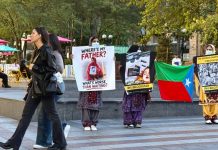
Students from Balochistan to Punjab organised candlelight vigils and memorial marches in honour of Ghamkhwar Hayat.
The Baloch Students Organizations Alliance comprising BSAC, BSO and BSO Pajjar — organised a condolence walk in Quetta to pay tribute to the slain academic. At the conclusion of the rally, students lit candles in recognition of Hayat’s literary contributions and lifelong commitment to education.
Participants stated that teachers, intellectuals and scholars form the foundation of society and that Hayat’s death represented a tragic loss for the literary and academic landscape of Balochistan.
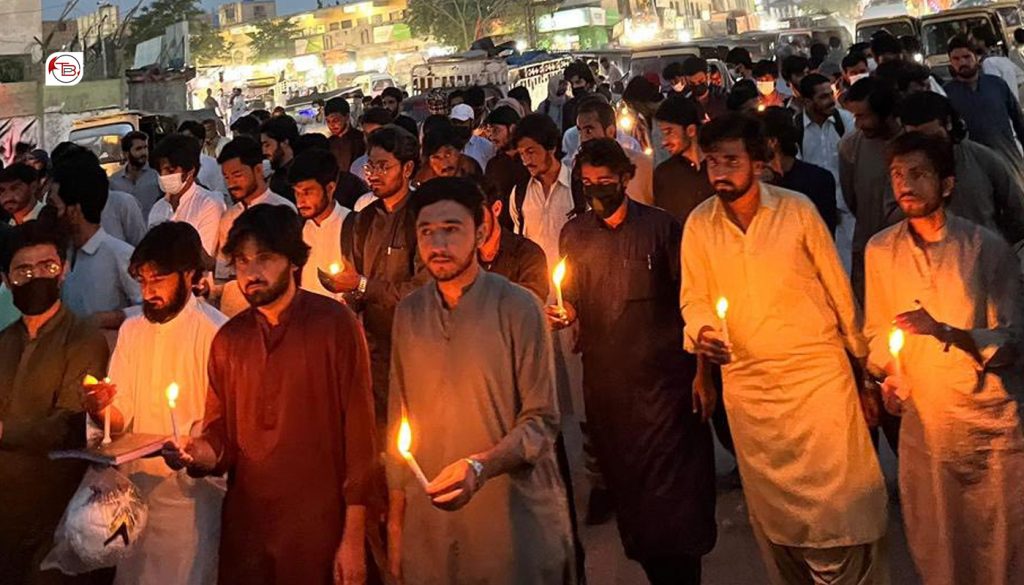
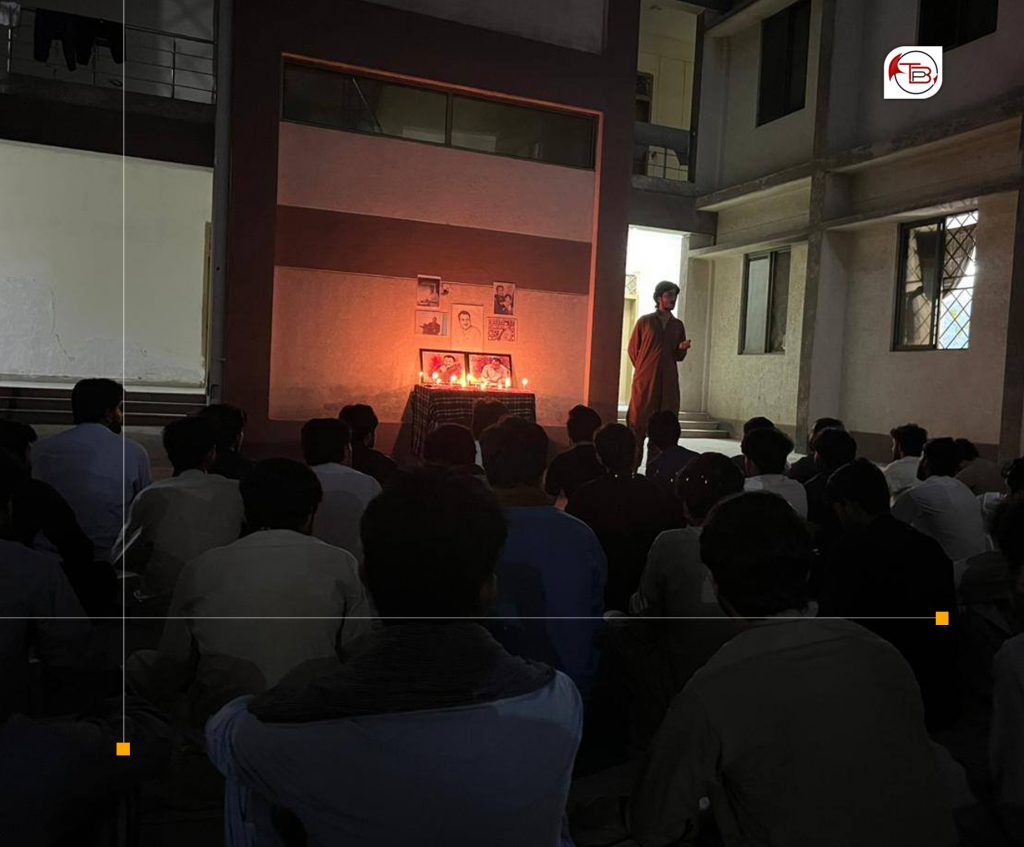
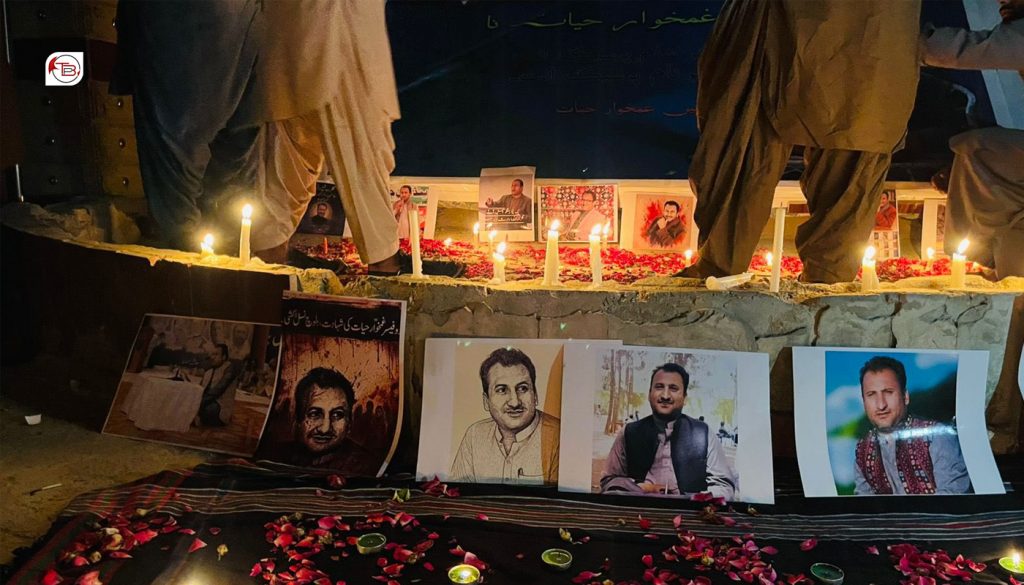
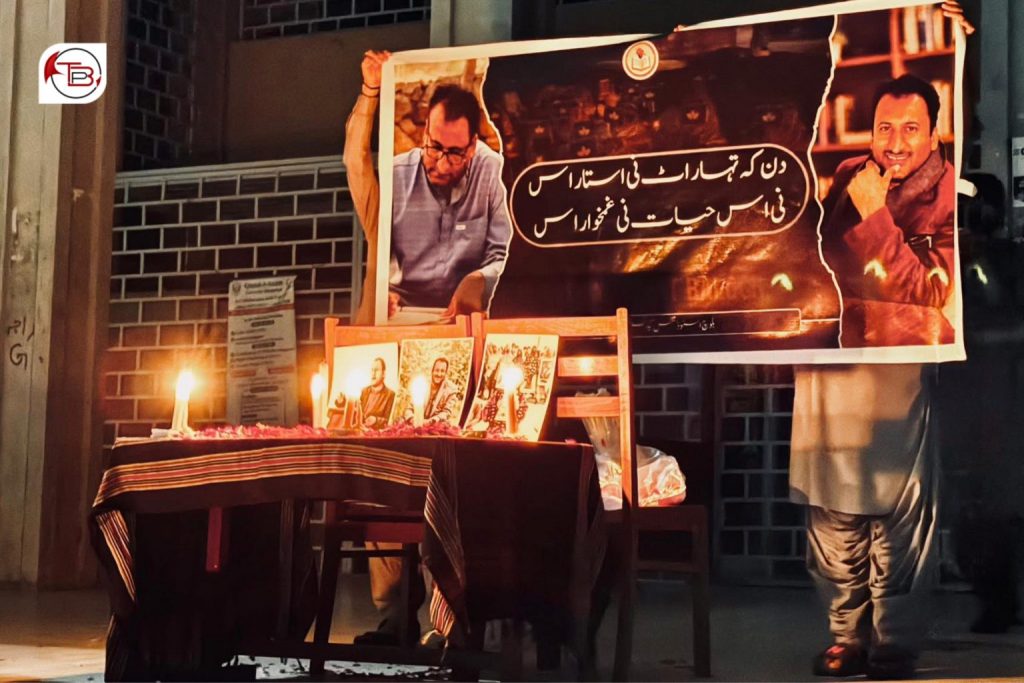
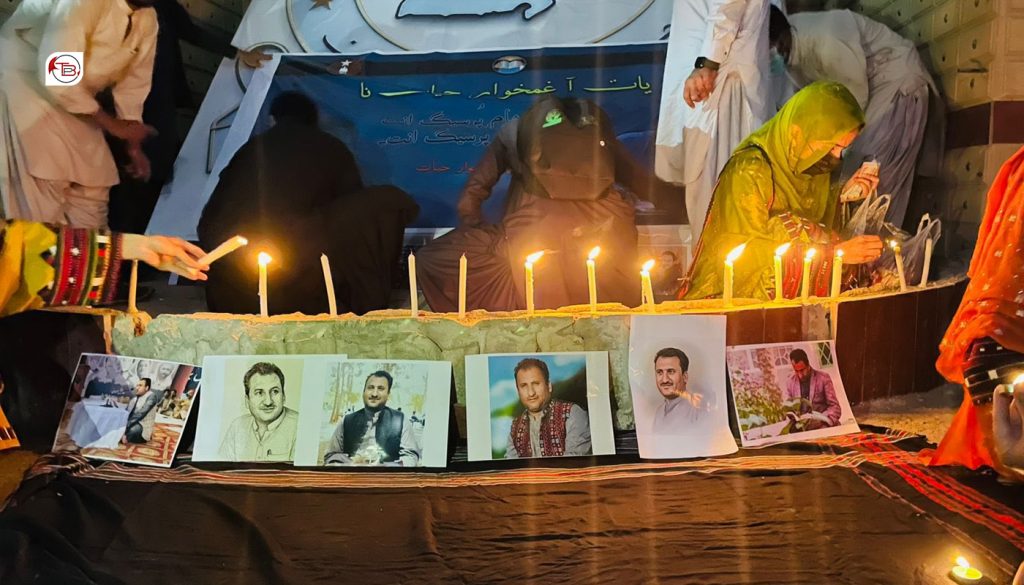

The Baloch Students Council Multan organized a reference event in tribute to the “martyred” Professor Ghamkhar Hayat, where candles were lit and tributes were paid to his invaluable contributions to Brahui literature.
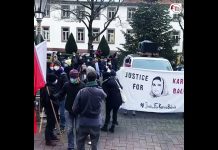
The BSC Islamabad held a memorial walk in honour of the renowned literary figure. At the conclusion of the walk, participants lit candles in his memory and paid tribute to his valuable contributions to Baloch literature, education and intellectual consciousness.
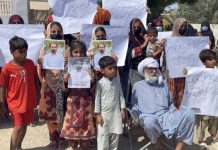
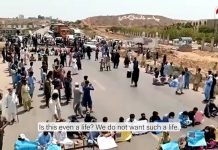
In Noshki, Ghamkhwar’s hometown, large numbers of students and local residents marched through the streets carrying his photographs and paying tribute to his services to Brahui literature. Protesters described his killing as an irreparable loss for the language, culture and intellectual life.
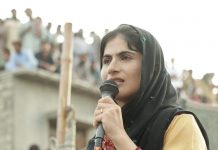
Dr Mahrang Baloch Calls Killing Part of “Intellectual Genocide”
On 19 May 2026, detained Mahrang Baloch, leader of the Baloch Yakjehti Committee (BYC), issued a statement from Huda Jail in Quetta strongly condemning Hayat’s killing.
Dr Mahrang described the murder as “not merely the killing of an individual” but “a direct attack on Baloch literature, intellectual consciousness and national identity.”
She alleged that Professor Ghamkhwar Hayat had faced years of harassment and restrictions before his death. According to her statement, his literary institution, Raskoh Adabi Diwan, had been dismantled, and his inclusion on Pakistan’s Fourth Schedule had subjected him to surveillance and restrictions aimed at silencing his intellectual voice.
Dr Mahrang further argued that the killing formed part of what she described as a broader and systematic policy of “intellectual genocide” in Balochistan, targeting teachers, poets, writers and academics who promote Baloch language, history and political consciousness.
She linked Ghamkhwar’s death to previous killings of intellectuals and educators in the region, including Saba Dashtyari, Professor Razzaq, Siraj Zahid Askani, Rafiq Oman and Abdul Rauf, describing the attacks as part of a long-running strategy intended to create fear within educational and literary circles.
Dr Mahrang stated that such violence was not solely physical but also psychological and cultural in nature, aimed at weakening Baloch intellectual identity and discouraging younger generations from engaging with literature, education and critical thought.
She called for an immediate, transparent and independent investigation into the killing and urged international human rights organisations to pay attention to what she described as systematic repression targeting Baloch intellectual and literary resistance.
A Climate of Fear for Intellectuals and Journalists
The grief surrounding Ghamkhwar’s death has also resonated on a deeply personal level. In an emotional essay published after the incident, writer Faheem Baloch reflected on the loss through memories of a strict but devoted schoolteacher who continued teaching even after the death of his son. Drawing parallels between that teacher and journalist Bahot Baloch — who reportedly continued reporting despite personal grief linked to the tragedy — the article portrayed both figures as symbols of professional responsibility amid suffering.
Yet behind the mourning lies a larger and more troubling question: why do killings of intellectuals in Balochistan repeatedly occur in an atmosphere where accountability remains elusive?
For nearly two decades, Baloch activists, journalists and rights organisations have documented allegations of enforced disappearances, extrajudicial killings and targeted attacks against students, academics, lawyers, journalists and political workers. Many of these incidents have been attributed by victims’ families and advocacy groups to Pakistani intelligence agencies or “death squads” allegedly operating under state patronage. Pakistani authorities have consistently denied involvement in unlawful killings or disappearances and maintain that security operations in Balochistan are conducted within the law as part of counterinsurgency efforts.
Nevertheless, the list of slain or disappeared intellectuals and public figures in Balochistan continues to haunt the region’s collective memory.
Among the most prominent cases was that of Saba Dashtyari, the celebrated Balochi linguist and academic who was shot dead in Quetta in 2011. His assassination sent shockwaves through literary and academic circles and remains unresolved.
Journalists have also repeatedly been targeted. Senior journalist Abdul Haq Baloch was shot dead in Khuzdar in 2012, while journalist Razzaq Gul was abducted and later found tortured and killed in Turbat the same year. Javed Naseer Rind disappeared in 2011 before his body was discovered weeks later. Haji Abdul Razzaq Baloch, another journalist linked to Daily Tawar, was found dead in Karachi months after his disappearance.
Documentation regarding attacks on journalists in Balochistan has also been compiled by the Committee to Protect Journalists (CPJ) and other international watchdog organisations.
Human rights organisations have repeatedly warned that such incidents form part of a broader environment where dissenting voices, especially those connected to Baloch political, cultural or intellectual movements, face intimidation and violence. A report published by PAANK described attacks on educators and intellectuals as part of a continuing pattern of repression and accused Pakistani security forces and affiliated armed groups of targeting critical voices in Balochistan.
The discourse surrounding “death squads” in Balochistan remains deeply controversial and politically charged. Local activists and many residents describe them as armed proxies of the state allegedly used to suppress nationalist sentiment and intimidate communities, while Pakistani officials have generally rejected such accusations or framed violence in Balochistan within the context of militancy and “separatist insurgency”.
Still, the recurring deaths of scholars, students, poets, journalists and lawyers have produced a pervasive sense of insecurity across Balochistan. For many families, the fear is no longer confined to political activists alone; it extends to teachers, writers and those associated with cultural expression.
Ghamkhwar Hayat’s killing has therefore come to symbolise more than the loss of a literary figure. To many in Balochistan, it reflects a deeper erosion of intellectual space, a reality in which books, classrooms and poetry increasingly exist under the shadow of violence.
As calls grow for an independent and transparent investigation into his assassination, rights advocates argue that accountability will remain impossible unless longstanding allegations of enforced disappearances, extrajudicial violence and attacks on civilians in Balochistan are addressed openly and credibly.
For now, Ghamkhwar Hayat joins a long line of voices whose deaths continue to raise unanswered questions about power, fear, oppression and silence in troubled Balochistan.