






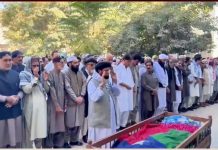

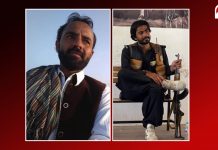











Rights groups, student organisations and Baloch political activists on Sunday strongly condemned the killing of Brahui-language poet, writer and academic Professor Ghamkhwar Hayat in Noshki, describing it as part of a wider pattern of attacks on Baloch intellectuals, academics and public voices.
Ghamkhwar Hayat, whose real name was Muhammad Khan, was shot dead on Saturday in the Killi Mengal area of Noshki. Rights groups and activists alleged that the killing was carried out by state-backed armed groups locally referred to as “death squads”.
The Human Rights Council of Balochistan (HRCB) said Muhammad Khan, widely known in literary circles by his pen name Ghamkhwar Hayat, had made significant contributions to Brahui literature, language and critical thought.
The organisation said Ghamkhwar Hayat had authored 15 books and played a significant role in promoting literature, language and intellectual engagement, adding that his killing was a “profound loss” for a region where “education and critical thought are increasingly met with repression”.
The Human Rights Commission of Pakistan (HRCP) said it was disturbed by the killing of Ghamkhwar Hayat, reminding the government that attacks on teachers and academics carry consequences beyond individual tragedies.
“When teachers and academics are abducted or shot dead, the consequences extend far beyond individual tragedies,” HRCP said.
The Baloch Yakjehti Committee (BYC) said the assassination of the Brahui-language intellectual exposed what it described as “brutal state repression,” adding that Ghamkhwar Hayat was not only a respected teacher and literary figure, but also a voice of “knowledge, culture, and national consciousness”.
The BYC said the targeting of intellectuals, writers and scholars was aimed at “silencing every voice that keeps society politically and intellectually alive”. It added that Balochistan had, for decades, witnessed the systematic targeting of students, political activists, journalists, poets and academics.
According to the BYC, Ghamkhwar Hayat’s killing was part of a “policy of fear” and “collective punishment” aimed at crushing intellectual resistance and silencing Baloch identity.
The BYC said his voice may have been “silenced physically”, but his ideas, writings and contributions to Brahui literature would continue to live among the people and “inspire future generations”.
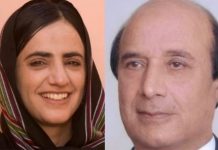
BYC central leader Sammi Deen Baloch said she was “deeply disturbed” by recent attacks targeting Baloch intellectuals, adding that the killing of Ghamkhwar Hayat came after the reported abduction of the vice chancellor and pro-vice chancellor of the University of Gwadar.
She said the continued targeting of scholars, academics and intellectual voices was alarming and would have serious consequences for the social and intellectual future of society.
‘An Attack on Knowledge, Consciousness and Literature’
Another BYC leader, Dr Sabiha Baloch, said the killing of Ghamkhwar Hayat by what she called state-backed “death squads” reflected “hatred not only against the Baloch nation, but also against its identity, language and consciousness”.
She said the Brahui language, which she noted had years ago been declared endangered by UNESCO, had survived through the collective struggle of writers such as Ghamkhwar Hayat, adding that attempts to silence such voices through “death squads” were “extremely brutal and barbaric”.
According to Dr Sabiha, the killing of a teacher or writer is not merely the elimination of an individual, but an attack on “knowledge, consciousness and literature”.
She said such wounds remain alive in the memory of society and are passed on to coming generations through the lessons of teachers and the intellectual contributions of writers.
“Even today, the martyrdom of my respected teacher Razzaq fills me with the feeling of how deeply hostile this state and its policies are, targeting the conscious and aware individuals of our society merely to protect its ego and power,” she said.
Dr Sabiha said the state may believe that Ghamkhwar Hayat’s words had been silenced, but his intellectual contributions and ideological struggle would remain alive in history, consciousness and public memory.
The Baloch Students Organisation (BSO) said Ghamkhwar Hayat’s killing was another “severe blow to Balochistan’s scholarly, literary and intellectual existence”, adding that writers who give language to human suffering, national consciousness and social pain are not merely individual losses when silenced, but represent “the mourning of an entire intellectual landscape”.
The BSO said Ghamkhwar Hayat was among those voices who gave new meaning to the Brahui language, Baloch culture and human emotions through his pen. His poetry, it said, was not merely an arrangement of words, but an intellectual expression of “deprivation, hope, resistance and the pains of life”.
As a teacher, the organisation said, he did not only educate the younger generation, but also transferred to them a sense of consciousness, questioning and social commitment.
The BSO said societies where people associated with books, pens and thought become unsafe gradually suffer a decline in collective consciousness, adding that people of knowledge are the “lamps of society” who keep hope, dialogue and intellectual warmth alive even in dark times.
The Baloch Students Action Committee (BSAC) also described the killing as a “collective attack” on Baloch intellectuals, saying peaceful people from different walks of life, including teachers, poets, political activists, writers, students and journalists, had long faced repression for spreading knowledge through the pen and the book.
The organisation said Baloch society was passing through a period in which peaceful expression and “the language of the pen were not tolerated,” adding that those who think and work for the betterment of society are either threatened, intimidated or killed.
It said Ghamkhwar Hayat was punished for “thinking, writing, teaching, promoting his mother tongue and showing students the path of knowledge”, describing his contribution to Brahui literature as that of a “saviour” who played his national role in developing the mother tongue.
Nida Kirmani, an academic and activist, described the murder of Baloch intellectuals as “deliberate” and “systematic”, saying Ghamkhwar Hayat was the latest in a long line.
Rights groups and activists demanded an “immediate, impartial and transparent investigation” into the killing and urged human rights organisations, journalists, civil society and the international community to demand accountability.