















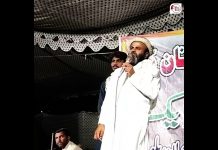



Renowned Brahui-language poet and academic Professor Ghamkhwar Hayat was shot dead near his home in Balochistan’s Noshki district on Saturday, local sources said, drawing condemnation from rights groups and political leaders.
Hayat was killed in the Killi Mengal area of Noshki after armed men opened fire near his residence, the sources said, adding that the attackers were allegedly members of a state-backed armed group locally referred to as a “death squad”.
Hayat, whose real name was Mohammad Khan, was an assistant professor at Government Boys Degree College Noshki. He was known as a Brahui fiction writer, translator, poet and essayist, and had authored 20 books.
He was among the founders of Raskoh Adabi Diwan and Hotan Culture Academy, two literary and cultural institutions associated with Brahui language and culture.
His name had also been placed on the Fourth Schedule some time ago, a list maintained under Pakistan’s Anti-Terrorism Act for “proscribed persons”, subjecting those listed to restrictions that can include frozen bank accounts, passport denial, and limits on arms licences and employment clearances.
Rights groups, political parties and literary figures described his killing as a serious loss to Brahui literature and Balochistan’s intellectual circles.
PAANK, the human rights department of the Baloch National Movement, said Hayat was a “prominent poet, literary scholar, and educator” whose killing reflected the worsening security and human rights situation in Balochistan.
The group said repeated attacks on intellectuals, educators, poets and civilians had created fear across the region, adding that his death was a tragedy for his family, colleagues, students and the wider literary community.
Baloch Voice for Justice said the killing reflected a dangerous environment in which critical voices and members of the intellectual community continued to face violence and intimidation.
“Attacks on scholars and writers are attacks on the collective memory, consciousness, and future of a people already enduring decades of repression and human rights violations,” the group said.
The Balochistan National Party said Hayat’s killing came days after the reported abduction of senior academics from Gwadar University and a raid on the house of BNP leader Rauf Mengal, where it said family members were harassed.
“Academics, politicians, students, and lawyers no one is safe in Balochistan,” the party said.
BNM Chairman Dr Naseem Baloch described Hayat’s killing as part of what he called the “ongoing Baloch genocide” and “collective punishment” imposed on the people of Balochistan.
He said intellectuals, teachers, students, poets and civilians had been “systematically targeted to silence the Baloch national voice and spread fear within society.”
Dr Naseem said Hayat’s assassination was “another painful incident of violence by state and its agents”, adding that targeting scholars and voices of awareness was aimed at destroying the “intellectual and cultural foundation of the Baloch nation”.