









Composed by Yaran Diyar
In Balochistan, there are few political names as enduring as the Baloch Students Organization (BSO).
Formed in 1967, nineteen years after what Baloch nationalists describe as Pakistan’s forcible annexation of Balochistan in 1948, the Baloch Students Organization (BSO) gradually evolved into far more than a student union. Over decades, it became a political nursery, a revolutionary classroom, a cultural movement and, for many Baloch nationalists, the backbone of modern Baloch politics itself.
Its influence spread gradually but deeply across Baloch society. In schools tucked into remote districts and thehsils, in colleges from Turbat to Khuzdar, in university hostels in Quetta and Karachi, generations of students passed through its circles. Some became writers and intellectuals. Others became politicians. Some were killed. Some disappeared. Some took up arms.
Among Baloch political spheres, BSO eventually earned a title barely any other organisation or party in the region could claim: “the Mother Organisation.”
But BSO’s own history has been fragmented, turbulent and deeply shaped by the wider fractures of Baloch politics.
As ideological disputes sharpened over the years, particularly over parliamentary politics, armed struggle and the question of complete independence, the organisation splintered into multiple factions. Yet among those factions, one emerged with a reputation for uncompromising politics.
That faction became known as BSO-Azad.
“Azad” meaning “Free”, was not merely a suffix. It represented a political line. Unlike groups willing to operate within Pakistan’s parliamentary framework, BSO-Azad openly aligned itself with the idea of an independent Balochistan.
The Azad faction is widely reported to have been named and consolidated in early 2000’s under its first chairman, Dr Allah Nazar Baloch, a gold medallist from Bolan Medical College in Quetta. He now leads the Balochistan Liberation Front (BLF), an armed organisation banned in Pakistan. According to multiple Baloch nationalist accounts, Dr Allah Nazar’s trajectory into militancy followed his enforced disappearance during his BSO-Azad chairmanship and subsequent detention in Quetta’s Hudda jail; events that together spanned roughly two years. Upon release, he was said to have “gone to the mountains”, taking up arms to oppose the state on a new front.
He was not the only high-achieving student to take that path. BSO-Azad’s second chairman, Bashir Zaib Baloch, is now the head of the Baloch Liberation Army (BLA), a group often described as the most powerful insurgent organisation not just in Balochistan or Pakistan, but across South Asia. His tenure too, activists argue, coincided with an intense crackdown on the organisation. Records, reports, and persistent allegations point to the enforced disappearance of many comrades, with some bodies later found mutilated and others still missing—among them the then–vice chairman, Zakir Majeed, who has been reportedly forcefully disappeared by Pakistani forces since 2009.
Then came the third chairman: Zahid Kurd Baloch, recalled by BSO students as brave, hardworking, and singular, who also remains missing since 2014. He was, as Karima Baloch publicly alleged, “forcibly disappeared by Pakistani security forces including the Frontier Corps (FC) and intelligence agencies”.
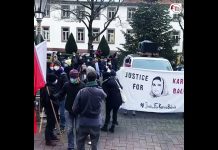
Karima herself is impossible to pass over lightly. After Zahid Kurd’s disappearance, she became BSO-Azad’s chairperson, the first woman in BSO’s history to hold the post, and was named to the BBC’s 100 Women list in 2016. Revered among Baloch nationalists as “Banuk”, an honorific in Balochi, Karima fled to Canada in 2015, fearing for her life amid her outspoken campaigning against enforced disappearances and extrajudicial killings allegedly carried out by the Pakistani military. On 22 December 2020, her body was found submerged at Toronto’s waterfront, under circumstances her family, several politicians, activists, and the Baloch Yakjehti Committee (BYC) described as suspicious, alleging Pakistani state involvement.
Pakistan’s official ban on BSO-Azad came in 2013, but activists insist the crackdown began at least five years earlier. Leadership had already gone either missing, killed or underground; after the ban, the surface architecture of BSO’s politics changed markedly, as it did for other nationalist organisations: gatherings, seminars, and especially the pivotal council sessions, where new chairpersons are chosen, shifted into secrecy.
That is what brings us to the newly elected chairman, because the question of what BSO-Azad is today cannot be separated from the pressures it has endured and yet, despite years of arrests, bans and disappearances, BSO-Azad has not vanished.
BSO-Azad’s New Chairman Zarrain Baloch
Recently, the organisation held its 24th council session and elected a new chairman: Zarrain Baloch.
In a conversation with The Balochistan Post, Zarrain spoke not simply about organisational politics, but about fear, ideology, repression, criticism, revolutionary discipline and the psychology of a movement that has spent years operating under intense pressure.
He traces the beginning of his political journey back to school.
“I was in ninth grade when I first became politically aware,” he recalled.
Those years, he said, coincided with a profound shift in the Baloch political landscape.
On one side, he described an expanding nationalist movement among Baloch youth. On the other, he spoke of intensifying military operations, enforced disappearances, bombardment in rural areas, restrictions on political activity and what he repeatedly described as a systematic attempt to destroy political consciousness.
“The purpose was to create fear,” he said. “To force people to abandon the struggle.”
Instead, he argues, repression itself became politicising.
He remembers meeting BSO activists as a school student at a time when the organisation was heavily invested in ideological education.
“They taught us about Baloch history, national slavery, revolutionary thought and the sacrifices of martyrs,” he said.
In his telling, BSO functioned less like a conventional student union and more like an intellectual network.
Political literature circulated through what he described as “cell systems”. Pamphlets and magazines moved quietly between students, schools and rallies. Even after the organisation’s ban in 2013, he insists the ideological infrastructure remained intact.
“The ban did not stop political education,” he said.
One event in particular shaped him deeply: the killing of former BSO-Azad general secretary Raza Jahangir.
“The martyrdom of Raza Jan changed many of us,” he said quietly. “Including me.”
He remembers participating in protests after the killing and slowly moving closer to the organisation.
Another turning point came after the devastating 2013 earthquake in Awaran.
BSO activists participated in relief efforts, collecting aid and organising assistance.
For Zarrain, the experience transformed politics from emotional attachment into ideological commitment.
“Working continuously with comrades during those days strengthened my connection to the movement,” he said.
Eventually, during the chairmanship of Zahid Baloch, he formally joined BSO.
“Since then,” he said, “the organisation has guided my life.”
For outsiders, perhaps the most striking question surrounding BSO-Azad is how an organisation banned for more than a decade still manages to survive.
Zarrain rejects the idea that the group exists merely as an “underground” structure.
“People use the word underground as if the organisation has disappeared from society,” he said. “But BSO is still among the people. It is still among students.”
In some ways, he argues, repression forced the organisation to become more disciplined.
According to him, years of crackdowns pushed BSO-Azad towards what he describes as “political maturity”.
The organisation, he says, studied its own failures, factionalism and internal rivalries.
“We had to confront our weaknesses,” he said. “That became necessary for survival.”
The history of BSO council sessions is littered with splits, rival factions and personal disputes.
Asked why such fragmentation repeatedly emerged within Baloch student politics, Zarrain answered with unusual bluntness.
“Our mistakes should not be hidden,” he said.
Then, invoking the Dagestani writer Rasul Gamzatov, he added: “If you shoot the past, the future will shoot you with a cannon.”
According to him, one of the deepest problems within Baloch politics has been what he called a “shelter culture” — a politics built around personalities, patronage and individual ambitions rather than collective discipline.
“When people fail to get the position or space they wanted, frustration begins,” he said.
That frustration, he argues, often transforms into factionalism.
For years, critics accused the organisation of emotional politics and intolerance towards dissent.
Zarrain dismisses the accusation.
“If BSO could not tolerate criticism, it would have collapsed long ago,” he said.
Instead, he describes criticism as essential to revolutionary survival.
“Criticism is not weakness,” he said. “Without criticism, organisations become hollow.”
Yet he also believes the movement still suffers from what he sees as shallow or performative criticism.
“Meaningless rhetoric and unserious debate often dominate,” he said.
For him, revolutionary politics demands seriousness, discipline and what he repeatedly calls a “scientific” approach.
That language, scientific politics, revolutionary discipline and ideological maturity, appears constantly throughout his conversation.
It reflects a broader intellectual tradition within BSO-Azad, one heavily shaped by anti-colonial literature, revolutionary theory and nationalist political education.
At several points, Zarrain returned to what he sees as the central battle facing Baloch youth today: not merely physical repression, but ideological absorption.
For him, the struggle is no longer confined to arrests, disappearances or military operations. The more dangerous threat, he argued, lies in what he describes as the gradual depoliticisation of Baloch society through bureaucracy, cultural engineering and the state’s educational structure.
Asked how BSO-Azad distinguishes itself from other student organisations operating in Balochistan, Zarrain framed the answer not simply in organisational terms, but in civilisational ones.
According to him, BSO-Azad sees itself as part of a broader process of “decolonisation” — one aimed at reshaping the intellectual, cultural and political consciousness of Baloch youth.
He described the organisation as “a strong pillar” of the wider Baloch national movement, claiming its politics extend beyond conventional student activism into what he repeatedly called “revolutionary training”.
For Zarrain, the organisation’s purpose is not only mobilisation, but transformation.
He spoke at length about what he described as the need to confront drug culture, “bureaucratic mentality”, political apathy, “slave-mindedness” and social decay among young people. BSO-Azad, he said, attempts to counter these through ideological education, revolutionary literature and political discipline.
Quoting the late Baloch intellectual Saba Dashtyari, he argued that Pakistan’s education system “consumes human capability like termites.”
In response, he said, BSO’s role is to “re-educate” a generation.
“They teach obedience, dependency and submission,” he said of the state system. “Our task is to produce politically conscious youth who understand history, resistance and their national responsibilities.”
Throughout the conversation, he returned constantly to the language of “scientific politics”, “historical construction” and “collective revolutionary duty”, phrases deeply embedded within BSO-Azad’s ideological vocabulary.
For him, the organisation’s defining feature is not merely its support for Baloch independence, but its insistence on ideological cohesion.
“Our national tragedy would have been if BSO itself had fragmented completely into competing groups driven by personal interests and factional rivalries,” he said.
Instead, he argued, BSO-Azad represents what he described as “unity on revolutionary foundations.”
Without naming organisations directly, Zarrain harshly criticised nationalist student groups aligned with parliamentary parties, accusing them of careerism, compromise and reducing politics to personal advancement.
He described such groups as “pocket organisations” trapped in “mental corruption”, “crowd politics” and what he called a politics of accommodation with the state.
According to him, these organisations no longer command serious credibility among politically conscious Baloch youth.
At one point, his criticism sharpened considerably.
“These so-called groups are freezing the emotions of Baloch youth into cold storage,” he said. “They are equivalent to national criminals.”
He accused them of producing politically passive generations incapable of resistance, arguing that the weakening of youth consciousness serves the interests of the state more than overt repression itself.
For Zarrain, BSO-Azad’s alternative lies in building what he described as a technically skilled, ideologically disciplined and intellectually prepared generation.
The organisation, he said, now places growing emphasis not only on revolutionary literature and political theory, but also on scientific education, technical capability and modern organisational methods.
“We are not only studying social sciences for the construction of a new society,” he said. “We are preparing a generation capable of defending and building a future state.”
The conversation then turned towards education itself, a recurring and deeply ideological subject throughout the interview.
Critics, the interviewer noted, often point to an apparent contradiction within BSO-Azad’s politics: while the organisation strongly condemns Pakistan’s education system, it has yet to establish an alternative institutional framework of its own.
How, he was asked, can national development occur without a functioning educational system?
Zarrain responded by reframing the question entirely.
A complete national education system, he argued, could only emerge collectively through a broader liberation movement and its institutions. But within its own structure, he insisted, BSO already operates an autonomous educational model.
“BSO itself functions as a revolutionary educational system,” he said.
Though lacking physical academies or institutions, he explained that the organisation has developed internal departments and sub-departments focused on political education, literature, research and cadre development.
Its literature wing, he said, produces books and magazines on academic and ideological subjects, while workshops and training sessions attempt to prepare activists “both theoretically and practically.”
According to him, BSO increasingly views itself not simply as a political organisation, but as what he called “a complete revolutionary nursery.”
The role of political organisations, he argued, has become more urgent under present conditions.
As the movement evolves, he said, defending the “idea of freedom” at a cultural and intellectual level is now indispensable.
That concern over culture and intellectual influence emerged even more sharply when discussion shifted towards state-sponsored youth programmes, festivals and seminars increasingly held across educational institutions in Balochistan, many linked to military or state institutions.
For Zarrain, these programmes represent something far more systematic than ordinary public outreach.
He described them as instruments of “colonial administration”, designed not to physically eliminate Baloch youth, but to neutralise them intellectually.
“The state’s constant effort is to push young people towards ideological death,” he said.
In his view, initiatives promoting civil service culture, social media branding and narratives of a “developed Balochistan”are ultimately intended to produce what he called “artificial Baloch”, individuals detached from resistance politics, language and historical consciousness.
He argued that such programmes seek to replace indigenous political and cultural identity with the behavioural norms, language and worldview of the state itself.
For Zarrain, this process resembles older colonial systems once employed by European empires.
Drawing comparisons with British and French colonial administration, he argued that Pakistan similarly uses bureaucratic integration to absorb educated Baloch youth into the machinery of the state.
“They want to turn educated Baloch into parts of their own machine,” he said.
Against that, he argued, resistance movements must build their own intellectual systems capable of countering state narratives collectively.
At several moments, he suggested that the conflict in Balochistan is increasingly psychological.
“This is an attack on our existence, our identity, our ideology and our emotions,” he said.
Yet despite the scale of repression, he insisted the state has failed to erase the social effects of resistance.
“The long war has produced a generation with strong nerves,” he said. “They now recognise the enemy’s deceptions. Misleading them is no longer easy.”
The discussion eventually moved towards one of the oldest and most contentious questions surrounding the Baloch insurgency itself: whether a fragmented nationalist movement can realistically confront a modern nuclear state.
For years, Pakistani state narratives have portrayed armed resistance movements as historically obsolete and militarily impossible in the modern era.
Zarrain rejected the premise almost immediately.
According to him, such narratives are themselves instruments of colonial warfare designed to produce inferiority among occupied peoples.
“The purpose of these narratives is to sabotage the intellectual confidence of oppressed nations,” he argued.
He compared contemporary media warfare to older colonial arguments once used in Africa, where colonised populations were portrayed as incapable of governing themselves.
Quoting Ghanaian revolutionary leader Kwame Nkrumah, he argued that such discourse historically served to suppress emerging revolutionary movements rather than describe reality.
For Zarrain, modern war is fought not only against bodies, but against minds.
Rumours, disinformation, fear and psychological exhaustion, he said, are now central weapons of state power.
In response, he argued that resistance movements must preserve both political consciousness and cultural identity.
“We must strengthen our own resistance narrative more than the enemy’s narrative,” he said.
To support his argument, he pointed repeatedly to anti-colonial wars of the twentieth century, especially Vietnam.
Even when powerful states claimed no modern state could be defeated, he said, liberation struggles continued to succeed through sacrifice, organisation and public support.
He also referenced more recent movements — including East Timor, Kosovo, South Sudan, Somaliland and the Kurdish administration in Rojava — as examples he believes demonstrate that organised nationalist struggles can still reshape political realities despite global pressure against armed movements.
At one stage, he criticised what he described as the post-Cold War international discourse surrounding “peaceful struggle” and liberal democracy.
According to him, powerful states increasingly promote non-violent frameworks not purely out of principle, but because successful armed liberation movements threaten existing global power structures.
Yet despite his emphasis on armed resistance, he repeatedly returned to the importance of public consciousness, organisation and intellectual preparation.
“Courage without capability is incomplete,” he said. “But capability without courage is also incomplete.”
He insisted the Baloch movement does not seek the destruction of Pakistan itself, but rather independence from what he described as forcible occupation.
Quoting former BNM chairman Ghulam Mohammad, he said: “We are only seekers of our own freedom.”
The final portion of the conversation focused less on theory and more on the future.
Asked about his priorities during the next two years as chairman, Zarrain outlined an agenda centred on organisational restructuring, ideological education and technological adaptation.
He spoke about the need for “scientific” and “academic” approaches to revolutionary politics.
BSO-Azad, he said, plans to intensify political study programmes, expand revolutionary literature, improve organisational memory and produce what he described as a more capable cadre structure.
Particular emphasis, he noted, will be placed on technology, technical education and modern skills.
For him, future political struggle will increasingly depend not only on emotional commitment, but on expertise.
“We want to prepare a generation capable of meeting the modern requirements of struggle and war,” he said.
He also argued that the state is now attempting to erase what he called the “collective memory” of the Baloch people through increasingly sophisticated and hybrid methods.
Against that, he said, BSO intends to place knowledge at the centre of cultural resistance.
Digital nationalism, intellectual accessibility and political education, he argued, will form an increasingly important part of the organisation’s future direction.
By the end of the interview, Zarrain’s tone shifted away from ideological analysis and towards direct political appeal.
His final message was aimed squarely at BSO members and Baloch youth more broadly.
He urged young activists to avoid what he called “wasted revolutionary lives”, indiscipline and political inconsistency.
Instead, he stressed the importance of science, technology, technical learning and intellectual development.
“Our slogan is clear,” he said. “Every worker must learn technology, science, modern knowledge and modern techniques.”
According to him, the future construction of a Baloch state, a phrase he used frequently, depends upon technically capable and politically disciplined youth.
At the same time, he warned that the state’s newer programmes aim not only to suppress resistance, but to erase the very feeling of national subjugation itself.
For him, that danger is existential.
He accused the state of attempting to destroy Baloch ethics, historical memory and what he described as a centuries-old “psychology of resistance.”
“The responsibility now lies with the youth,” he said, “to determine the national future and defend it.”
He urged Baloch students to resist what he called “Pakistani colonial narratives”, accusing the state of using festivals, educational institutions and military-sponsored gatherings to distance young people from the nationalist movement.
Again and again, he returned to collective responsibility.
“Personal freedom means nothing in front of collective slavery,” he said.
Near the end, his language grew heavier, almost elegiac.
To abandon ideological politics, he argued, or to pursue purely personal interests while the conflict continues, amounts to betraying the sacrifices of those killed or disappeared during the movement.
BSO activists, he said, must now function as a “defensive shield” protecting younger generations from political absorption.
Whether one agrees with his politics or not, the conversation revealed something larger than a routine organisational interview.
Under Zarrain’s leadership, BSO-Azad continues to view itself not simply as a student body operating under restriction, but as an ideological institution attempting to survive a prolonged conflict that has already shaped multiple generations of Baloch politics.
Its language is steeped in anti-colonial thought, revolutionary memory and the belief that political struggle extends beyond armed confrontation into culture, education and historical consciousness itself. At the same time, the organisation remains deeply controversial — viewed by supporters as a symbol of resistance and by the Pakistani state as part of a “separatist political ecosystem that has fuelled decades of conflict”.
What remains undeniable, however, is BSO-Azad’s enduring place within the political imagination of many Baloch youths.
After decades of bans, disappearances, fragmentation and insurgency, the organisation still appears determined to frame its struggle not as a temporary phase of unrest, but as a generational project rooted in memory, sacrifice and the unresolved question of Balochistan’s future.
And in that sense, the story of BSO-Azad is no longer merely the story of a student organisation operating “underground”. It has become, for many on all sides of the conflict, part of the larger and still unfinished story of modern Baloch politics itself.