


























By Zohaib Baloch
For more than two decades, Balochistan has been the site of a quiet but persistent human rights crisis. Men, and occasionally women, have been taken from their homes, from public roads, from workplaces, and have never been seen again. No charges have been filed. No bodies have been recovered. No official acknowledgment has been given in thousands of cases. Families are left in a state of legal and emotional limbo — their loved ones neither alive nor dead in the eyes of the state, but erased from everyday life. As the Baloch poet Mast Tawakali wrote centuries ago, words that still echo in every tent across the province: “The river does not ask the mountain for permission to flow. Why then should a man ask for the right to exist?” That question remains unanswered for thousands of Baloch families today.
Balochistan, Pakistan’s largest province by landmass and richest in natural resources, has also been the theatre of a low-intensity insurgency for decades. Successive governments have deployed security forces to maintain order. But human rights organisations, United Nations bodies, and domestic courts have repeatedly documented a pattern of enforced disappearances linked to counterinsurgency operations. The victims include students, lawyers, teachers, labour activists, and political workers — many with no proven connection to armed groups. Another Baloch voice, the late Gul Khan Naseer, who spent years imprisoned by successive governments, once warned: “A nation that forgets its missing is a nation preparing its own grave.” His words have proven prophetic.
The precise number of missing persons in Balochistan remains a matter of intense dispute. The Human Rights Commission of Pakistan (HRCP) has documented over 1,500 cases of enforced disappearance from Balochistan since 2001, though it acknowledges the true figure may be significantly higher. The United Nations Working Group on Enforced or Involuntary Disappearances has received hundreds of individual complaints from Balochistan. The Pakistani government, through its Commission of Inquiry on Enforced Disappearances, has acknowledged several hundred cases but maintains that most have been resolved or were based on incorrect information. For the families involved, these statistical debates are meaningless. They want one thing: to know whether their son, husband, or father is alive. A Baloch tribal elder, speaking to a researcher on condition of anonymity, put it simply: “Numbers are for governments. Names are for mothers. Give us back the names.”
What makes enforced disappearance uniquely cruel, legal experts say, is that it occupies a grey zone between killing and detention. A person who has been killed leaves behind a body — and with it, the possibility of burial, mourning, and closure. A person who has been detained leaves behind a legal record — a charge sheet, a court date, a prison number. A disappeared person leaves behind nothing. They exist in no official register. No authority admits to holding them. No court can order their release because no one confirms they are in custody. As the Baloch activist Karima Baloch, who addressed the United Nations Human Rights Council before her death under disputed circumstances, once said: “I am not afraid of dying. I am afraid of being forgotten while I am still alive.” She herself would later become one of the many Baloch voices silenced before their time.
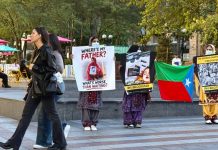
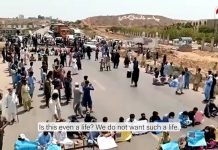
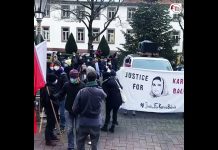
In Balochistan, families have organised in response to this prolonged agony. The most visible expression of this resistance has come from women. Every week in Quetta, and occasionally in other towns, mothers, wives, and sisters gather in public squares. They wear white shawls. They hold laminated photographs of their missing relatives. They do not chant slogans or block roads. They stand in silence. This strategy — silent, dignified, visible — has proven difficult for authorities to suppress without attracting international condemnation. One protest leader, Mahrang Baloch, a physician who left her medical practice to advocate for missing persons, has become a prominent voice. Her father remains among the disappeared. She has consistently rejected political labels, insisting that her demand is simple: adherence to Pakistan’s own Constitution and laws. During a 2023 protest, she told reporters: “We are not asking for mercy. We are asking for justice. There is a difference.” A Baloch proverb often repeated at these gatherings captures their resolve: “The mountain does not cry. It waits. And then it falls on those who hurt it.”
The legal framework in Pakistan is unambiguous on the right to liberty. Article 9 of the Constitution states: “No person shall be deprived of life or liberty save in accordance with law.” In a series of landmark judgments, the Supreme Court of Pakistan has reaffirmed that detention without charge, without judicial review, and without informing family members violates fundamental rights. The court has also established a Commission of Inquiry on Enforced Disappearances, chaired by a sitting judge of the Supreme Court. The commission has received thousands of complaints and secured the recovery of hundreds of missing persons. Critics, however, note that prosecutions of those responsible remain exceptionally rare. No senior military or intelligence official has been convicted in connection with enforced disappearances, despite repeated allegations by families and rights groups. A Baloch lawyer who has represented dozens of missing persons cases before the Supreme Court, speaking on condition of anonymity, said: “The court orders are beautiful. The implementation is a desert.”
The testimony of ordinary families is devastating in its simplicity. A woman from the outskirts of Quetta, whose husband disappeared in 2009, told a researcher from Amnesty International: “They took my son and told me he was a ghost. But a ghost has a grave. My son has nothing.” Another family member, speaking to the Human Rights Commission of Pakistan on condition of anonymity, said: “We have filed fourteen petitions with the court. We have written to the commission three times. We have visited police stations in four cities. No one has ever told us anything.” A third, an elderly father from Turbat whose son vanished in 2016, said: “I used to pray for his return. Now I pray for his body. At least then I would know where to go.” These testimonies, repeated across hundreds of households, describe a bureaucracy of silence: institutions that receive complaints but produce no outcomes, officials who express sympathy but take no action. The Baloch folk singer and poet Ishaq Shambay, whose own cousin remains missing, once sang: “The grave has a stone. The sea has a shore. My missing brother has nothing but my tears.”
International human rights bodies have repeatedly raised concerns. The United Nations Working Group on Enforced or Involuntary Disappearances conducted a country visit to Pakistan in 2012. Its final report noted that while Pakistan had taken some administrative steps, the overall response remained inadequate. The report specifically highlighted Balochistan as a region of particular concern, citing “consistent and credible allegations” of involvement by intelligence agencies and security forces in abductions. The Pakistani government rejected many of these findings as based on unverified information or hostile sources. Nevertheless, the Working Group continues to list dozens of unresolved Balochistan cases in its annual reports. The former United Nations High Commissioner for Human Rights, Zeid Ra’ad Al Hussein, whose statement on disappearances remains widely cited, said: “Enforced disappearance is not a crime. It is a factory of ongoing torture for the family.” That torture, for Baloch families, has continued for decades.
Why does this pattern persist despite judicial orders, parliamentary committees, and international pressure? Analysts point to several factors. First, the security establishment in Pakistan operates with substantial legal and practical autonomy, particularly in insurgency-affected regions. Second, the legal doctrine of “state secrets” has been invoked to prevent disclosure of detainee locations. Third, there is no effective witness protection or prosecution mechanism for security personnel accused of extrajudicial actions. Fourth, the political cost of confronting the issue has historically been low, as Balochistan’s small population and geographic distance from power centres in Punjab and Sindh limit media and political attention. The late Baloch nationalist leader Ghaus Bakhsh Bizenjo, a rare voice from within the political establishment who spoke against disappearances in the 1970s, once said in a speech: “The day Balochistan’s wounds become visible to the rest of Pakistan, that day will be too late for all of us.” That day, critics argue, has already arrived.
There have been some positive developments. The Commission of Inquiry on Enforced Disappearances, though imperfect, has helped recover several hundred individuals since its establishment. The Supreme Court has occasionally taken suo motu notice of high-profile cases. Civil society organisations such as the Baloch Yakjehti Committee and Voice for Baloch Missing Persons have kept international attention alive. A few recovered individuals have returned to their families, though many report torture and mistreatment during their time in custody. But for every recovered person, new cases continue to emerge. The fundamental pattern — abduction, denial, silence — has not been broken. A young Baloch student activist, whose brother remains missing, told this correspondent in Quetta last year: “They think if they wait long enough, we will forget. But we are Baloch. Forgetting is not in our blood.”
What is required, human rights advocates argue, is not more commissions but accountability. Criminal prosecutions of those who order or carry out enforced disappearances. Amendments to military and intelligence laws to ensure judicial oversight of detention. Ratification of the International Convention for the Protection of All Persons from Enforced Disappearance, which Pakistan has signed but not yet fully implemented. And most immediately, a public, verified list of all persons in state custody across all agencies — military, intelligence, and civilian — with access for families and lawyers. The Baloch poet and writer Atta Shad, whose work captured the pain of his people, once wrote: “The ink of the scholar is holier than the blood of the martyr.” But in Balochistan, families say, neither ink nor blood has yet brought justice.
The issue of missing persons in Balochistan is not a sectarian conflict or a separatist grievance. It is a question of whether the state will obey its own laws. The Constitution of Pakistan guarantees liberty. The courts have ordered accountability. The families have waited for years. What remains is the will to act. As a lawyer representing dozens of missing persons cases in the Supreme Court told this correspondent: “We do not need new laws. We need old laws to be enforced. That is all. That is everything.” And as a mother from a village near Khuzdar, whose son has been missing since 2018, said in a voice that broke but did not falter: “I will die waiting. But I will not die forgetting.” That is the promise Baloch families have made to each other. And until the disappeared are returned or accounted for, that promise will outlast every government, every commission, and every silence.
Disclaimer: The views and opinions expressed in this article are those of the author and do not necessarily reflect the official policy or position of The Balochistan Post or any of its editors.