







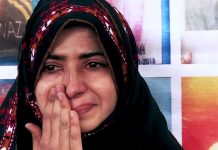

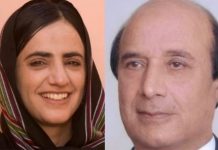


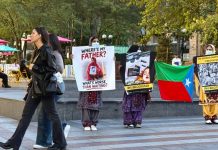
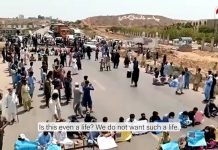
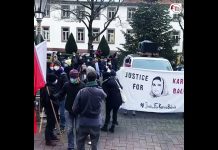
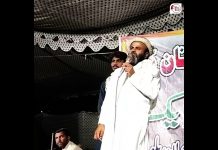
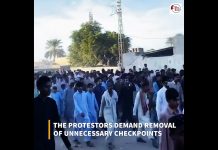


Asma Jattak, a resident of Khuzdar district in Balochistan, who was abducted in February 2025 after refusing a marriage proposal, recently appeared in a viral video holding the Holy Quran and appealing for justice against those responsible for her abduction. However, within hours of the video going viral, her father, Master Inayatullah, was killed by unidentified armed men in Khuzdar.
The principal suspect in the case is said to be a man named Zahoor Jamalzai, who has been named in the First Information Report (FIR) and is also accused of Asma Jattak’s abduction. He has not yet been arrested.
The killing of Master Inayatullah prompted protests in the Balochistan Assembly. During a session of the assembly, Younas Aziz Zehri stated that Asma’s father was killed two hours after her video went viral. He also claimed that many individuals who had spoken out against Asma Jatak’s abduction had likewise been targeted and killed. Maulana Hidayat ur Rehman alleged that those involved in the abduction and killing were associates of Nawab Sanaullah Zehri and enjoyed his patronage, which, he argued, was why the government had been unable to act against them.
For many years, nationalist and human rights circles have alleged that armed groups operate openly in Balochistan. These groups are commonly referred to as “death squads”. According to these allegations, the groups are provided with weapons, influence and protection by state institutions.
Nationalist circles maintain that these armed groups were established under the patronage of the Pakistan military and intelligence agencies to counter the ongoing nationalist movement in Balochistan, and that they continue to receive full support from state institutions. They further argue that the activities of these death squads have not been limited to targeting political activists and campaigners. The groups have also been accused of involvement in abductions, robberies, theft and other forms of criminal activities.
These groups enjoy such influence and protection that the police and other institutions are often unable to take action against them. Even when police do act, intervention by the Pakistani military or intelligence agencies results in the release of those arrested. These armed groups enjoy a level of impunity that allows them to continue their activities without fear of consequences.
The deteriorating situation in Balochistan and policies that provide state patronage to armed groups have further intensified an already complex crisis. The effects of these policies are no longer confined to the political and security spheres but have spread throughout society as a whole. Prolonged instability, fear, insecurity and uncertainty have made life increasingly difficult for ordinary citizens.