






















The Baloch Liberation Army on Saturday said its fighters had taken “complete control” of Dalbandin city and declared control over the Quetta-Taftan main highway, warning mineral transporters that convoys carrying what it called “looted Baloch resources” would no longer be allowed to use the route.
In a statement, BLA spokesperson Jeeyand Baloch said the group’s fighters carried out 10 operations across Balochistan over two days, including the takeover of Dalbandin city, attacks on Pakistani forces, highway blockades and operations targeting what it described as “exploitative networks”.
“In these coordinated attacks, 11 personnel of the occupying Pakistani army were killed and several others were injured, while multiple vehicles associated with exploitative companies were destroyed, and sarmachars maintained control over key highways,” the statement said.
‘Large-Scale Assault’ in Dalbandin
The BLA said its fighters gained “complete control” of Dalbandin city on Saturday in what it described as a “highly organised and large-scale assault”, adding that all government buildings, including the local police station, remained under its control for several hours.
“A large quantity of weapons, ammunition, and other military equipment was seized from the police station and taken into custody, while the official vehicles present there were set on fire,” the statement said.
The statement said Pakistani forces attempting to advance towards the city were attacked at the Dalbandin bypass, killing six personnel and injuring several others.
It added that two army vehicles were “completely disabled” in what it called a “successful counter-attack”, while the remaining personnel fled, leaving behind several injured personnel.
The statement said fighters seized five large trailers carrying chromite on the Quetta-Taftan main highway in the Kanak area of Mastung on May 15 and later set them on fire. It added that an “important bridge” in the Sheikh Wasil area of Mastung was destroyed with explosives on the same day, disrupting what the group called the enemy’s “supply system”.
In Noshki’s Mal area, the BLA said its fighters gained control of the Quetta-Taftan highway and conducted snap-checking for several hours, during which four “suspicious individuals” associated with the Saindak Project were detained for interrogation.
The group said Pakistani forces later attempted to advance into the area, but were targeted by fighters positioned with heavy weapons, killing two personnel and injuring several others. It claimed one military vehicle was also badly damaged.
The BLA also said its fighters seized two cargo trucks carrying minerals in Kharan’s Armagai area and later set them on fire.
On May 16, the group claimed its fighters ambushed a Pakistani forces convoy at Abad in the Kanak area of Mastung, killing three personnel, injuring several others and disabling a military vehicle.
The statement also claimed attacks on surveillance and support infrastructure in Kech district, saying fighters destroyed surveillance cameras installed at a Pakistani army post in Nasirabad, Turbat, disabled a state surveillance camera network in Hayatabad, Tump, and damaged water supply machinery used by Pakistani forces in Jabshan, Zamuran.
‘Complete Control’ of the Quetta–Taftan Highway
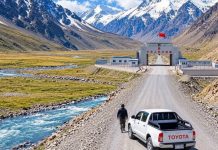
The BLA statement declared that it had established “complete control” over the Quetta-Taftan main highway, a key route linked to supply movement and mineral transport connected to the Saindak and Reko Diq projects, and warned companies and transporters involved in mineral extraction not to use the route.
“Through this press release, the Baloch Liberation Army wishes to clarify that the BLA has now established complete control over the Quetta-Taftan main highway, and this entire highway now falls within the region under BLA control,” the statement said.
“We will no longer, under any circumstances, allow trucks, trailers, or any convoys carrying looted Baloch resources and minerals to pass through here,” it added.
The group warned companies, contractors and transporters involved in what it described as the “exploitative plundering of Baloch resources” that they would be responsible for their own “life and financial losses” if they continued to be part of such operations.
The BLA said it remained committed to protecting the lives and property of ordinary commuters and the Baloch public, adding that cooperation would be extended to civilians on highways.
It appealed to the Baloch public to continue cooperating with its fighters so that what it described as the “exploitative route of plunder” could be permanently blocked without causing harm to ordinary Baloch citizens.
The group said Balochistan’s resources belonged “solely and exclusively to the Baloch nation”, describing their protection from what it called “state-sponsored plunder” as a “collective and primary national duty”.
“We issue a final and stern warning to all local and non-local companies, as well as elements involved in transporting minerals, to immediately abandon all attempts to steal Baloch resources from the soil of Balochistan. Otherwise, the next strikes by BLA sarmachars will be even more exemplary for them,” the statement concluded.
Pakistani authorities did not immediately comment on the BLA’s claims.