
















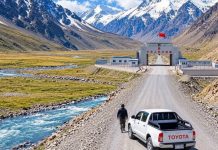










Pakistan is facing external pressures rising from increasing imports of capital goods as well as investments under the China-Pakistan Economic Corridor (CPEC), said Moody’s, the international ratings agency, on Friday.
Moody’s said Pakistan is facing elevated external pressures stemming from strong domestic demand and capital-import heavy investments related to the China-Pakistan Economic Corridor.
Moody’s issued its view on Pakistan’s economy and analysed that the external pressure has been continually mounting which may further aggravate the issue of declining foreign exchange reserves.
“We expect a current account deficit of 4.8 percent of GDP this year,” Moody’s Investors Service said in a research report.
The current account deficit was recorded at $18 billion or 5.7 percent of GDP in the last fiscal year of 2017/18 compared to $12.6 billion or 4.1 percent of GDP in the previous fiscal year. In July, current account deficit continued to swell year-on-year, up 13.87 percent to $2.2 billion, mainly due to monthly trade deficit of $3.192 billion.
The central bank’s foreign exchange reserve fell to $10 billion in June from $16.1 billion a year earlier – not enough to cover two months’ worth of imports. Economists estimated a need of $28 billion this fiscal year to make debt repayments.
Moody’s said while reserve coverage of external debt repayments remains adequate, “we expect that coverage to weaken”. “Unless capital inflows increase substantially, possibly through and in combination with an IMF (International Monetary Fund) program, we see elevated risk of a further erosion in foreign exchange reserves.”
The ratings agency said the country’s external vulnerability indicator that measures the ratio of external debt payments due over the next year to foreign exchange reserves is around 85 percent.
“Around one-third of government debt is denominated in foreign currency,” it said. “Pakistan’s gross borrowing requirements are among the highest among rated sovereigns at around 27-30 percent of GDP. This is driven by persistent fiscal deficits and the government’s reliance on short-term debt, with an average maturity of 3.8 years.”
Moody’s said Pakistan is not a major recipient of volatile capital inflows. Local currency depreciation could, however, raise inflation and prompt additional domestic rate hikes, which would pass through to borrowing costs and further weaken the government’s fragile fiscal position.
“We find that Pakistan’s debt affordability would weaken significantly from already low levels in the event of a sharp and sustained increase in the cost of debt.” Moody’s estimated Pakistan as one of the 15 countries in the world that experienced largest local currency fall against the dollar year to date.
Other countries included Argentina, Turkey, Russia, Brazil, South Africa, Sweden, Hungary, Tunisia, Poland, India, Kazakhstan, Uruguay, Botswana, and New Zealand. “From the sovereigns we identified as most vulnerable to an appreciation of the US dollar, Argentina and Pakistan’s currencies have experienced particularly marked falls against the dollar, of nearly 40 percent and around 10 percent year to date respectively,” Moody’s said. Most countries facing market pressures have twin current account and fiscal deficits.”
Moody’s has already changed the outlook on Pakistan’s rating to negative from stable and affirmed the B3 local and foreign currency long-term issuer and senior unsecured debt ratings. “The decision to change the outlook to negative is driven by heightened external vulnerability risk. Foreign exchange reserves have fallen to low levels and, absent significant capital inflows, will not be replenished over the next 12-18 months,” the ratings agency said in a statement in June.
“Low reserve adequacy threatens continued access to external financing at moderate costs, in turn potentially raising government liquidity risks.”
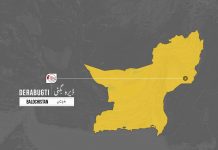
CPEC project is not only facing external pressure but internal pressure too by the locals of Balochistan, where CPEC is primarily based in.
Baloch people claim that Pakistan is exploiting their natural resources without their consent and some nationalist political parties and militant organizations protest and sabotage government and CPEC installations.
On 11 August 2018, a suicide bomber attacked the Chinese employees working in Saindak Gold and copper mines in Dalbandeen, Balochistan, killing 4 persons including 3 Chinese workers.
Later the attack was claimed by Baloch Liberation Army (BLA) a Baloch armed group. The attack was carried out by elder son of Aslam Baloch, the top commander of BLA.