

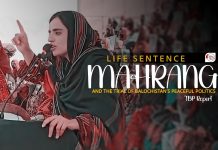




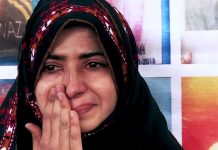
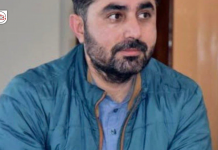

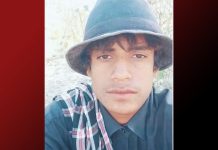





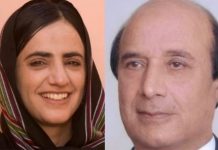




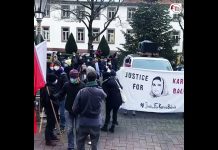
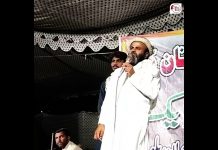



The sister and legal team of detained Baloch Yakjehti Committee (BYC) leader Dr Mahrang Baloch, along with the organisation itself, have raised concerns over the ongoing judicial proceedings against BYC leaders, describing the use of jail and video-link trials as inconsistent with the principles of transparency, public accountability and fair trial.
Speaking at a press conference, members of Dr Baloch’s legal team stated that, despite more than fourteen months of legal proceedings, Dr Baloch and her associates had not been provided effective access to what they described as a fair and open trial. They said the nature of the proceedings had repeatedly changed, ranging from administrative detention and the registration of multiple cases to extended physical remand, jail trials and, most recently, hearings conducted via video link.
The lawyers argued that justice must not only be administered fairly but also be seen to be administered fairly. According to the legal team, the transition from jail proceedings to video-link hearings has further limited transparency and public scrutiny, raising concerns regarding the fairness of the trial process.
The legal representatives said that detained BYC leaders had repeatedly voiced concerns regarding the judicial environment and conduct of proceedings during earlier jail trials. As a result, a formal application seeking the replacement of the presiding judge was filed. They claimed that no decision has been made on the request despite the passage of four months.
During the press conference, the legal team also alleged that the Prosecutor General adopted an aggressive approach during a recent hearing, which they said had heightened concerns regarding judicial impartiality.
The lawyers further claimed that efforts were under way to transfer more than fifteen cases registered under Section 144 in various districts of Balochistan to anti-terrorism courts. They argued that such a move could prolong both the detention of the accused and the legal proceedings against them.
Meanwhile, the BYC stated that its detained leaders had begun a protest inside prison against the continuation of jail and video-link trial proceedings. In a separate statement, the organisation said the shift towards what it described as “faceless” trials further undermined public oversight and restricted the legal and constitutional rights of detainees.
The organisation maintained that open court hearings, public access and judicial scrutiny are fundamental components of a fair trial. It argued that conducting proceedings behind prison walls or through remote mechanisms limits transparency and accountability.
According to the BYC, its detained leaders are demanding that all cases be heard in open court and that they be granted full access to legal counsel, family members and other protections guaranteed under the law. The organisation called for the immediate termination of jail and video-link trials, the transfer of proceedings to open courts, and an expedited hearing on the pending application seeking a change of judge.
The BYC also announced plans to launch an online campaign highlighting the issue and supporting the ongoing prison protest by its detained leaders.
The legal team appealed to Pakistan’s legal community, human rights organisations, civil society groups, political parties, media organisations and international human rights bodies to monitor the case and advocate for fair trial standards, judicial transparency and the protection of constitutional rights.
No response from the prosecution, judiciary or relevant authorities was immediately available regarding the allegations and demands raised by the legal team and the organisation.
It’s pertain to mention that Dr Mahrang Baloch, a prominent Baloch rights activist and organiser of the Baloch Yakjehti Committee (BYC), was detained along with several associates in March 2025 following a protest in Quetta. Since then, she and a number of BYC leaders, Gulzadi Baloch, Beebow Baloch, Beeberg Zehri Baloch and Shah Ji Baloch and other activists have remained in custody under various legal provisions. Authorities have accused BYC leaders of involvement in activities deemed unlawful, allegations that the organisation has consistently rejected, maintaining that its movement is peaceful and focused on human rights and political advocacy.
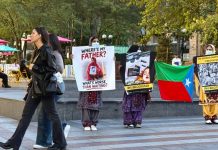
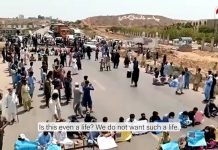
The BYC has, over recent years, emerged as one of the most visible civil rights movements in Balochistan, organising demonstrations and campaigns against enforced disappearances, extrajudicial killings and other alleged human rights violations. The group has staged long marches, sit-ins and public gatherings across Balochistan and in different parts of Pakistan, drawing national and international attention to issues affecting the Baloch population.