





















TBP Data Visual Studio Report
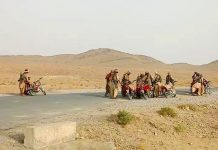
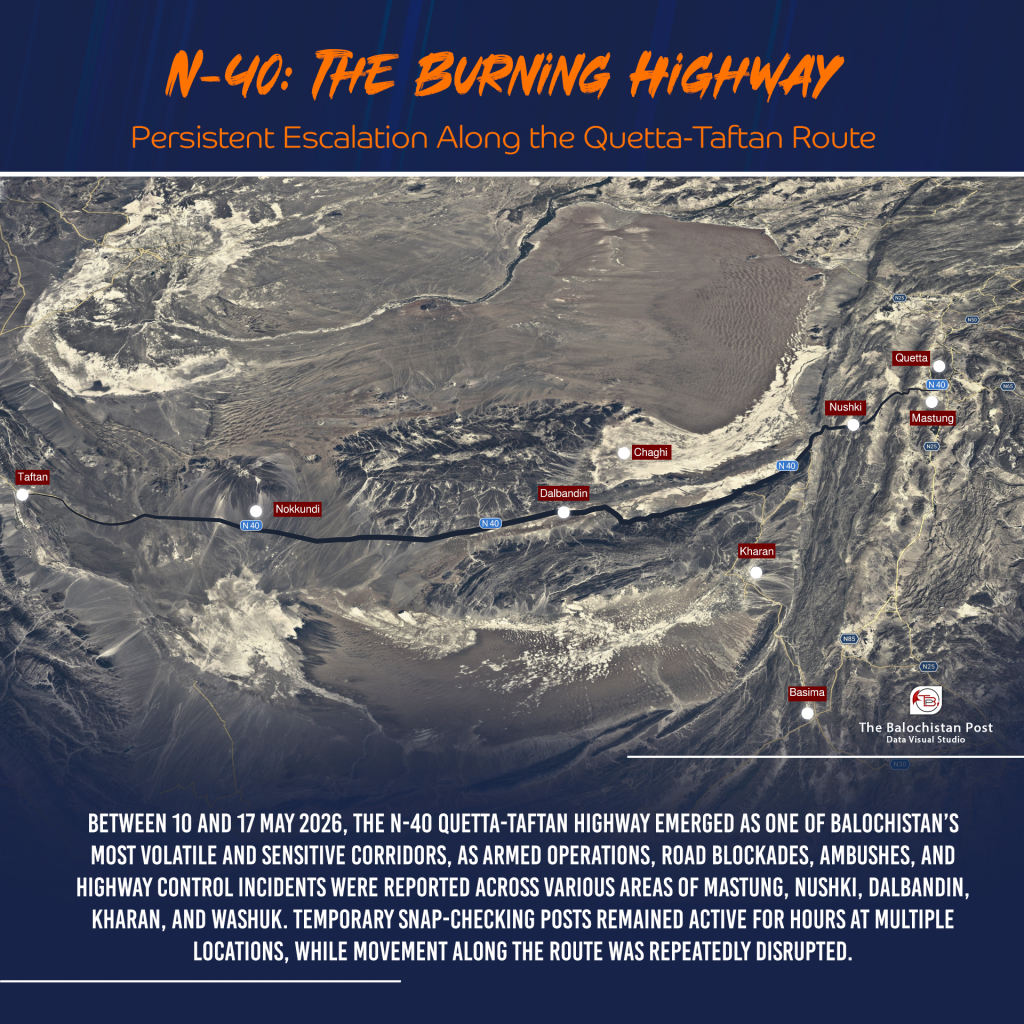
Between 10 and 17 May 2026, the N-40 Quetta-Taftan Highway emerged as one of Balochistan’s most volatile and sensitive corridors, as armed operations, road blockades, ambushes, and highway control incidents were reported across various areas of Mastung, Nushki, Dalbandin, Kharan, and Washuk. Temporary snap-checking posts remained active for hours at multiple locations, while movement along the route was repeatedly disrupted.
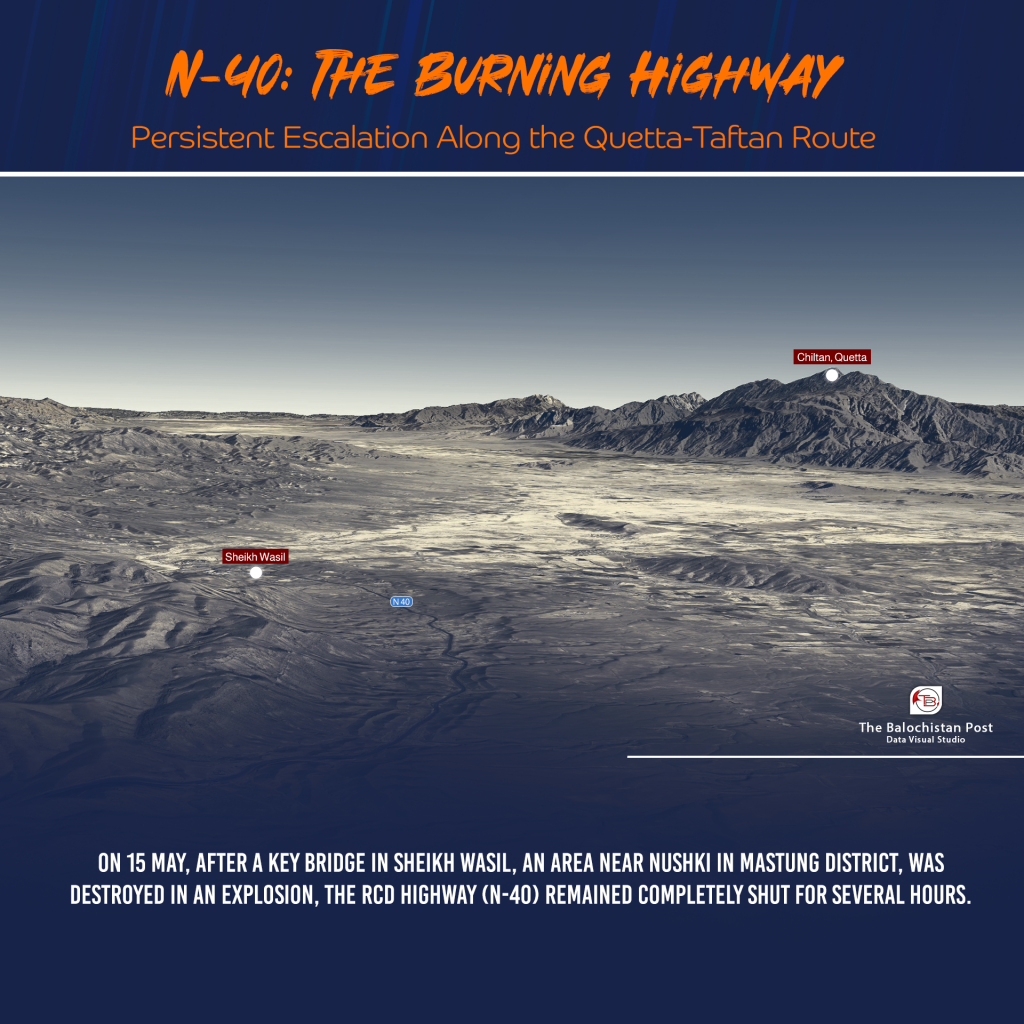
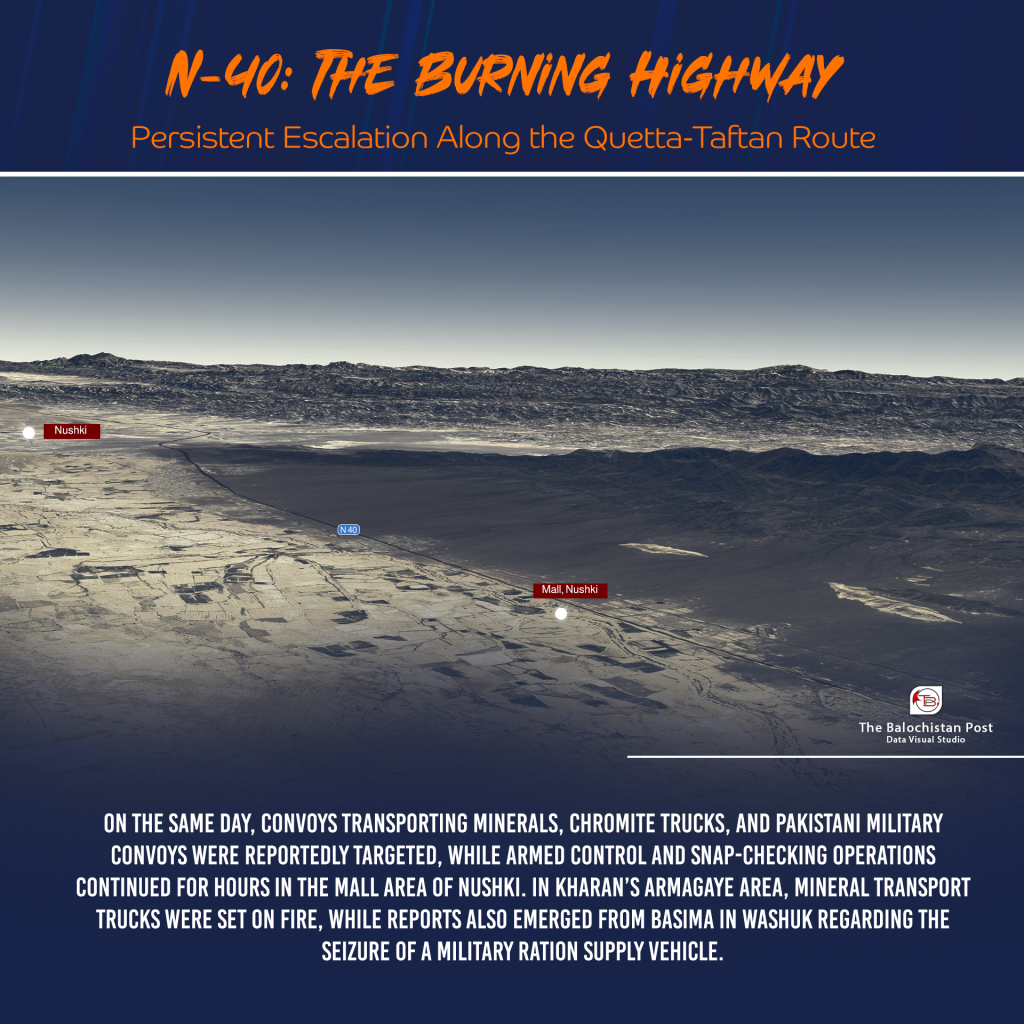
On 15 May, after a key bridge in Sheikh Wasil, an area near Nushki in Mastung district, was destroyed in an explosion, the RCD Highway (N-40) remained completely shut for several hours. On the same day, convoys transporting minerals, chromite trucks, and Pakistani military convoys were reportedly targeted, while armed control and snap-checking operations continued for hours in the Mill area of Nushki. In Kharan’s Armagaye area, mineral transport trucks were set on fire, while reports also emerged from Basima in Washuk regarding the seizure of a ration supply vehicle for Pakistani military.

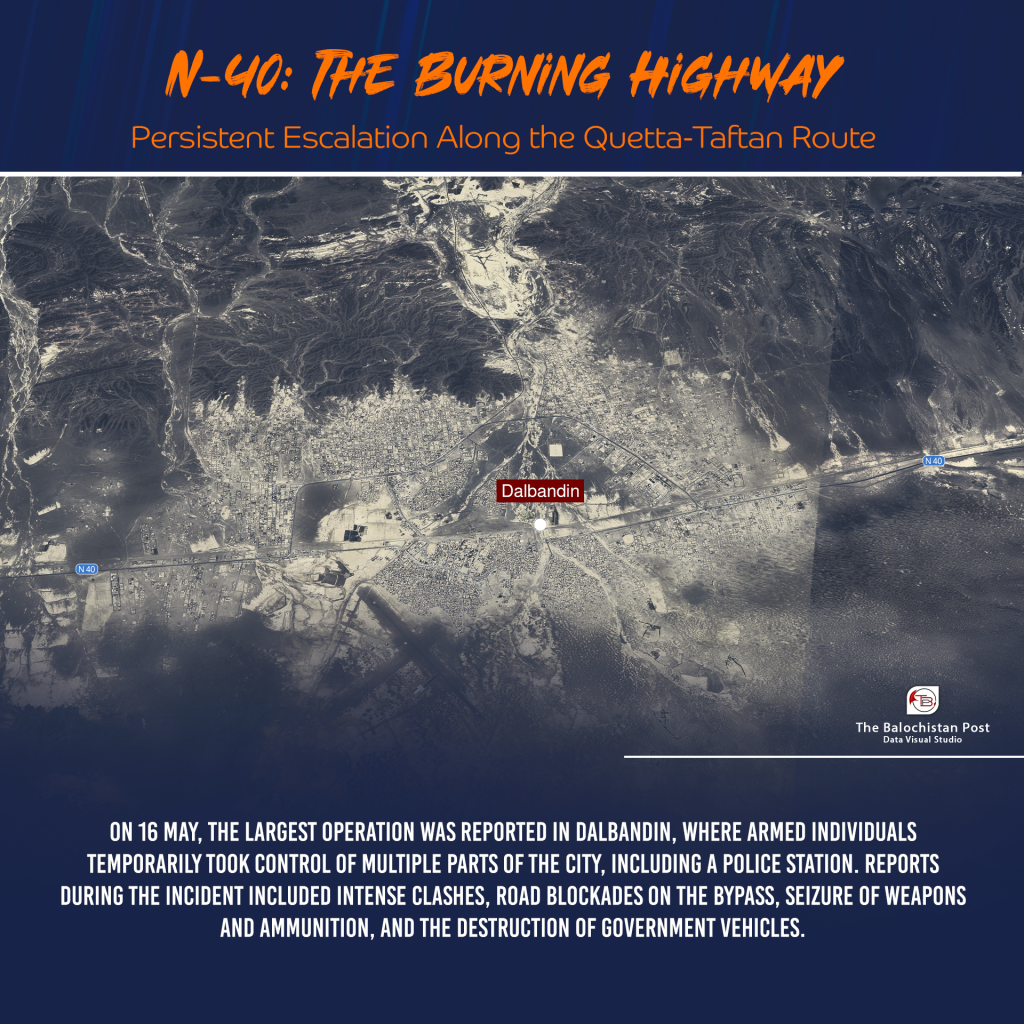
On 16 May, the largest operation was reported in Dalbandin, where armed individuals temporarily took control of multiple parts of the city, including a police station. Reports during the incident included intense clashes, road blockades on the bypass, seizure of weapons and ammunition, and the destruction of government vehicles.
Later the same day in Mastung’s Kanak area, ambush attacks targeted Pakistani military and mineral transport convoys along the Quetta-Taftan route, reportedly causing casualties and destroying at least one military vehicle. Throughout the week, convoys and supply lines linked to the Reko Diq and Saindak mining projects remained under repeated attacks.
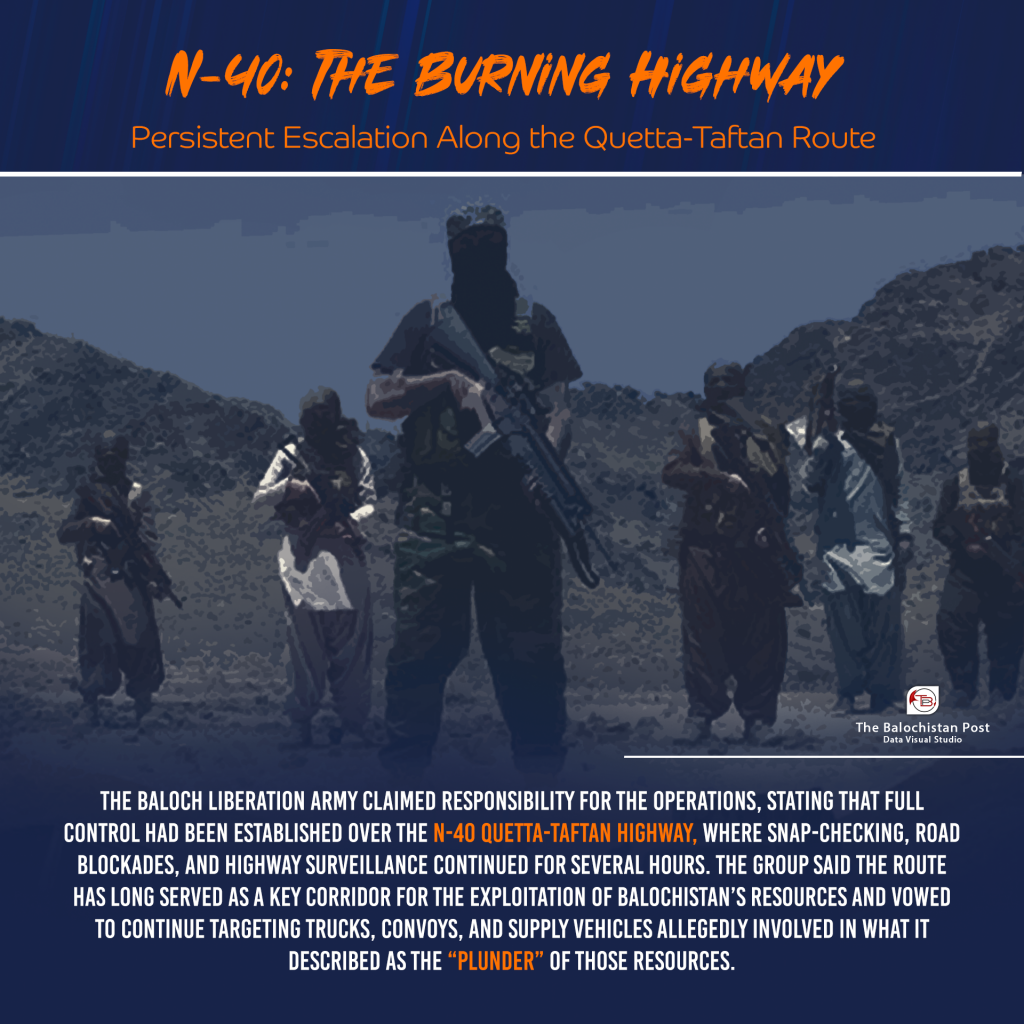
The Baloch Liberation Army claimed responsibility for the operations, stating that full control had been established over the N-40 Quetta-Taftan Highway, where snap-checking, road blockades, and highway surveillance continued for several hours. The group said the route has long served as a key corridor for the exploitation of Balochistan’s resources and vowed to continue targeting trucks, convoys, and supply vehicles involved in what it described as the “plunder” of those resources.