














The Balochistan government has announced a Rs25 billion highway security force, convoy movement and insurance for cargo vehicles after weeks of attacks on freight trucks, mineral convoys and bridges, while the Baloch Liberation Army said its “economic blockade” on resource-linked routes would continue.
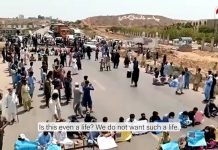
The announcement came after traders’ organisations, transporters and mine owners observed a Balochistan-wide shutter-down and wheel-jam strike last week against attacks on highways, the burning of cargo vehicles and worsening insecurity on major routes.
Business centres remained closed in Quetta and several other districts, while traffic was also suspended on highways linking Balochistan with Punjab, Sindh and Khyber Pakhtunkhwa.
More than 20 organisations took part in the protest, which was also supported by political parties and lawyers’ bodies. An indefinite strike had initially been called, but it was postponed after negotiations with the government at the Quetta Chamber of Commerce.
Transporters and traders’ organisations said dozens of cargo vehicles had been burned on Balochistan’s major highways over the past month, particularly on the Quetta-Taftan route, causing losses of more than Rs1 billion.
‘Problems Were Genuine’
Balochistan Home Minister Ziaullah Langove and Additional Chief Secretary Home Hamza Shafqaat announced the government measures after the talks.
Shafqaat acknowledged that the protest by traders and transporters was “not without reason,” saying most of their problems were genuine and steps were being taken to resolve them.
He said agreement had been reached on 15 of the traders’ 33 demands, while discussions would continue on the remaining issues. Matters linked to the federal government had been taken up with the prime minister, he said, adding that the federal interior minister and the chairman of the Federal Board of Revenue would visit Quetta after the budget.
New Force and Convoys
Shafqaat said a special force was being established to protect highways, vehicles, mines and mineral routes, adding that it would become operational within six months.
Until then, he said cargo vehicles stranded because of security concerns would be moved to their destinations in special convoys under a security cordon, with assistance from the Pakistan Army to be sought if required.
He said an insurance system would also be introduced for cargo vehicles in Balochistan, with talks under way with State Life Insurance. The provincial government, he added, would contribute its share to the scheme.
The government also announced compensation for owners of vehicles burned on national highways. Shafqaat said the process would be accelerated and that the time required for the return of vehicles affected by attacks would be reduced from months to one week.
Shafqaat said money was being taken from the development budget and spent on security, adding that the government and business community agreed on ending smuggling, while all possible facilities would be provided for legitimate and legal business.
‘Economic Blockade Will Continue’
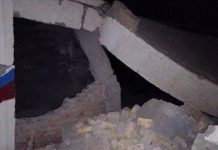
The government’s new security plan comes after a series of attacks on highways, cargo vehicles, mineral convoys and bridges, with the BLA framing the campaign as an attempt to disrupt what it called the economic lifeline of the state.
In a statement issued on June 12, BLA spokesperson Jeeyand Baloch said the group’s fighters had carried out 11 operations over 12 days, destroying more than 36 vehicles and two bridges. He said the attacks targeted vehicles linked to the Saindak project, fuel and gas transit, and other transport the group said provided economic benefit to the state.
The BLA said the campaign was aimed at making the state’s economic interests in Balochistan “insecure” and “unstable,” arguing that the cost of maintaining control over Balochistan should become greater than the profits drawn from its resources.
“Until Balochistan is transformed into an inevitable economic burden for the occupying state, it is impossible to halt its blind military adventurism and the horrific cycle of Baloch genocide,” the statement said.
The group said Balochistan’s main highways were “not merely ordinary communication or travel routes,” but “colonial trade arteries” through which, according to the group, the wealth of Balochistan was extracted and moved out.
Jeeyand Baloch said the BLA’s targeting of project-linked vehicles was “not a manifestation of public enmity,” but what the group described as a defensive response aimed at protecting Balochistan’s coast and resources.
The group warned transport owners and drivers to distance themselves from the movement of fuel, supplies and logistics for companies it described as exploitative. It also advised ordinary passengers to avoid travelling near military convoys, security forces and vehicles linked to such projects on highways.
“Our war is a war for the complete sovereignty, national dignity and unconditional freedom of the Baloch nation,” Jeeyand Baloch said, adding that the group’s “economic blockade and military resistance” would continue with full intensity and scope.