












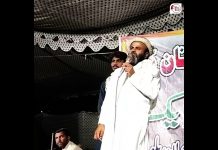



The daughter of missing Baloch poet Habiba Pirjan on Thursday said the family has faced repeated raids, harassment and a campaign of false information since her mother’s disappearance from Karachi last month.
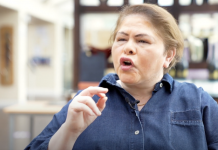
In a video statement, Hina Baloch said personnel from state institutions detained her mother and took her away, after which no information regarding her whereabouts has been made available.
Habiba Pirjan, a poet in the Balochi language, was allegedly taken away by Pakistani forces on the night of 25 May 2026 after personnel entered her home near Gulshan-e-Mazdoor, Third Street, Naval Colony, in Karachi’s Baldia Town.
According to her daughter, Pakistani forces personnel have continued to visit the family’s home since the disappearance, confiscating mobile phones and other personal devices.
She further alleged that members of the family had been subjected to harassment by officials whom she holds responsible for her mother’s disappearance.
She also accused state authorities of spreading false information about her mother through fake social media accounts and unidentified media outlets, adding that this was not the first time her mother had been subjected to enforced disappearance.
Habiba Pirjan had previously also reportedly been forcibly disappeared in May 2022 and was released days later. The disappearance and the subsequent protest for her release were also reported by The Balochistan Post at the time.
Her family, in Thursday’s statement, called for her immediate recovery, urging authorities either to present her before a court of law in accordance with legal procedures or to release her without delay.
No official statement from the relevant authorities was available at the time of reporting regarding the allegations made by the family.
‘Character assassination as a weapon’
Baloch Yakjehti Committee (BYC) leader and human rights activist Sammi Deen Baloch said the enforced disappearance of Baloch women had continued for a long time, adding that several women had been brought before the media after disappearance and forced to give statements, while others, including Mahjabeen, remained missing.
She said Habiba Pirjan’s disappearance was initially acknowledged by what she described as state-sponsored social media accounts and propaganda networks, which presented her arrest as a major success.
Ms Baloch said the same accounts later deleted their posts and claimed that Habiba Pirjan had gone into hiding, after which a bounty was placed on her and she was declared wanted.
She said the family was now being harassed through allegations and what she called an organised campaign of character assassination, describing the actions as a collective punishment of a Baloch woman and her family.
“Instead of ensuring respect and protection for women, they are being targeted, humiliated, and subjected to character assassination as a weapon,” she said.
Ms Baloch called on national and international human rights organisations, relevant institutions and rights advocates to take immediate notice of the case, raise their voices for Habiba Pirjan’s recovery and take measures to stop enforced disappearances and retaliatory actions against Baloch women.