

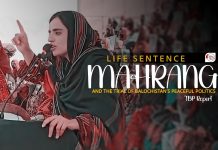














Imprisoned rights activist and chief organiser of the Baloch Yakjehti Committee (BYC), Dr Mahrang Baloch, has said the recent wave of enforced disappearances, extrajudicial killings and “forced press conferences” in Balochistan is “deeply alarming”, warning that the space for peaceful political expression and human rights advocacy is “shrinking day by day”.
In a statement issued from Hudda Jail, Quetta, on May 13, Dr Baloch said those demanding justice are being continuously silenced through intimidation and fear, while peaceful platforms are being targeted by the Pakistani state.
“Every human being has the right to raise their voice against injustice and human rights violations. But when peaceful platforms are targeted by the Pakistani state, what options are left for the people?” she said.
Dr Baloch questioned where families should go when the judicial system and state institutions fail to protect the oppressed and instead “remain silent over the suffering of the Baloch people”.
Referring to recent cases, Dr Baloch said Nazar Marri Baloch, a human rights defender and member of the BYC, was forcibly disappeared, adding that no information has been provided about his whereabouts to this day.
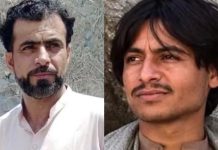
She also cited the case of Zeeshan Zaheer Baloch, whose father, Zaheer Ahmed, has been forcibly disappeared since April 13, 2015. Dr Baloch said Zeeshan grew up “carrying the burden of enforced disappearance” within his own family, but instead of receiving justice, he himself was killed on June 29, 2025.
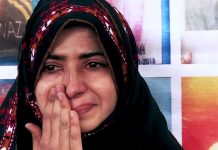
Dr Baloch said Zeeshan’s family, already “shattered by years of suffering”, continues to face harassment and pressure, adding that his sister, Adeeba Baloch, was recently forced into a press conference to publicly distance herself from the BYC.
She said such actions reflect “the extent to which families are being targeted and psychologically tortured”.
Fozia Baloch, an active member of the BYC who has consistently stood against injustice, is also being targeted repeatedly, Dr Baloch said. Her brother, writer Daad Shah, was forcibly taken by state agencies from their home on April 21, 2026, she said, adding that when Fozia demanded justice and raised her voice for her brother, she and her family were “dragged, detained, and later released”.
“The message being sent is clear: even demanding basic human rights has become dangerous in Balochistan,” Dr Mahrang said.
Dr Baloch said the “new tactics” of harassing the families of BYC members, disappearing peaceful activists and killing people in broad daylight exposed the “harsh reality” in Balochistan today.
She added peaceful activism was being “criminalised”, while those responsible continued to operate without accountability and the state was creating narratives to suppress dissent and silence voices demanding justice.
Dr Baloch said the BYC would continue its peaceful struggle, adding that “BYC was peaceful, BYC is peaceful, and BYC will continue to peacefully raise its voice against oppression, enforced disappearances, and human rights violations in Balochistan”.
In her concluding remarks, Dr Baloch urged human rights organisations and international institutions to take serious notice of the ongoing situation in Balochistan and hold Pakistan accountable for what she described as the continued targeting of peaceful activists and the human rights crisis in the region.