










By Ganjal Baloch
It’s 29 April, 2025. Another day for the world, but for us, for the Baloch, it is a day draped in the quiet mourning of countless yesterdays. The air wasn’t heavy with dust, nor the usual, unrelenting heat. No. It was a different weight: one borne of knowing, of carrying a grief that doesn’t have an end.
Beside me, a sangat—my companion, whom I call lumma, moved with the same quiet grace that always reminded me of my mother’s hands. She placed the pheeka chaa between my palms. My mind, clouded by sleepless nights and thoughts that scatter like shards of shattered glass, drifted aimlessly. But the chai, it held me. Its warmth, though fleeting, was the only thing that could pull me back together, stitch me into something resembling a human being again. Perhaps.
But today, it was different. Today, her voice quivered as she whispered, “Qurbaanaa.” A word that seemed to tremble in the air. I looked up at her. “Jee, lumma?
She held out a phone, no, a wound. A photograph. Stillness, soaked in blood. Dannuk. A body no longer breathing. Her voice cracked: “Mni dil gushi sangata…”And then, quieter, like something auspicious: “Man gosht na chush mgo.
Some truths are too heavy for the tongue. Some must be whispered into the dark, or they scorch you from the inside.
I turned to Twitter, Bahot’s feed. A tweet, but it read like a siren: Attack in Dannuk. Kech. A jaddap. “Allaah…” I breathed, the words barely escaping my lips. “Protect our sarmachars, our mountain guardians.”
But before my prayer could even rise toward the sky, a message—quick as a laugh had already fallen, crashing down like an omen: a message had already fallen back down: “Sarbaan is one of them.”
Sarbaan? I asked, “Who’s Sarbaan?” But silence answered. Because when you know his other brother, you’ve already buried a part of yourself with him.
Then another name bled into my ears: Ali- Langh. I turned to lumma. “Whose Ali Langh?” She blinked. Time seemed to slow. “Ali? The tikteer… the one who marks the enemy.”
One bullet, she said. One bullet from Ali, and the enemy’s chapter would close.
“But he was lame?” I asked. “Yes,” she said. “He was a city guerilla. A bullet took his leg years ago”
But Kech remembered.
The roads. The dust.
They knew Ali Langh.
Not by the limp, but by the precision.
His bullets never missed.
Then came the footage.
Raw.
Unfiltered.
A wound wide open,
bleeding across the glass of our screens.
Three.
Three of them.
Our sarmachars.
Our mountain-born warriors.
Lying still beneath an indifferent sky.
The image moved like a vulture.
The enemy surrounded them
uniformed, smug
Faces hidden, but cruelty never needed a face.
Their slippers…
Allaaaah…
Those sacred slippers.
Once carried across stone and thorn,
once worn by our pullen sarmachar who walked toward death with poetry in their chests.
Now lay lifeless on the burning earth.
The kalli.
The water bottle.
I could almost feel its coolness in the heat.
How many gulps were shared from it,
quiet sips beneath trees,
between the rhythm of gunfire and the silence of mountains?
But now
they lay lifeless.
Bodies broken by bullets.
Clothes soaked not by sweat, but by their own blood
red like Baloch earth,
red like sacrifice.
A small bag.
Did it carry bullets? Dates?
Both, perhaps.
An AK-47.
The close-butt.
Magazines, perhaps emptied.
A thermal scope,
night vision goggles.
A chadirr flung to the side,
like a line of poetry forgotten mid-battle.
Even the medical kit, useless now.
Too late for wounds that do not wait.
And I looked at them.
Not with pity.
But with awe.
These beautiful human beings.
Sarmachars
raised not by empires,
but by mothers
who had nothing
nothing but love, and poverty, and prayer.
Mothers who stitched revolution into shirts,
even when they feared the mountains would swallow their sons.
And now they lay there
half-bare.
But never defeated.
Never dishonored.
Even in death,
it felt like the revolution held its breath.
As if it, too, had to mourn.
What I now know:
They did not surrender.
When the enemy stormed,
they resisted
with the weight of centuries behind their rifles.
Stories rise,
like smoke over a battlefield.
Each version is a shard of the truth maybe or maybe not.
Some say they were on a mission
planting a bomb.
The enemy, they say, had seen the CCTV.
But others swear
There are no cameras in Dannuk.
That our sarmachars knew the routes like they knew their veins
and they knew which roads have surveillance.
Some say it was they who ambushed.
Others whisper of betrayal
a mukhbir,
a tongue that sold the lives of giants for a few coins.
I do not know.
This is war.
And war,
refuses to explain itself.
Another voice spoke from Dannuk.
Said the clash raged for almost two hours.
Two hours of thunder.
So fierce,
enemy had to call for a full operation.
Said our sarmachars tried to flee
but every escape route
was already strangled shut.
Still, they ran.
One scaled a wall,
leaving behind a trail of blood like a verse.
From orchard to yard.
From yard to boundary.
Their blood drew a map of resistance.
A cartography of courage.
Above, the drones circled
metal-winged vultures.
Watching.
Waiting.
That night
that merciless, iron-cloaked night
gave them no shelter.
The walls didn’t fold to hide them.
The trees couldn’t breathe for them.
Even the sky watched in silence.
Their blood still struggled
even after the bullets.
Still refused to surrender
to the hands of the enemy.
The night was witness.
The wind was witness.
The soil remembers.
That is how we lost them.
And I do not know
in what language can such loss be written?
What language can hold
both the weight of their bravery
and the wetness of their blood?
In those final seconds
what passed between them?
Did they know the circle was closing?
Did one turn to the other and say:
“You run—I’ll hold them.”
Did they cling to the last cartridge,
hands trembling not from fear,
but from the will to keep fighting?
Some say they did fight till the last bullet.
And when even that was gone,
and the enemy’s breath was in their hair,
they ran.
But not away.
Through.
They didn’t escape.
But they didn’t die either.
They crossed into something else.
Into that sacred realm
where martyrs do not end
they multiply.
And so,
they became immortal.
And then I learned
just four days ago,
Ali became a father.
A child was born into a world
that had already buried his father’s shadow.
Ali never saw that child’s face.
He will never feel the weight of those tiny fingers
curling around his calloused ones.
Never hear the music of his own blood learning to laugh.
And that child
Allaaaah…
that child will grow up
without the sound of his father’s footsteps,
without the shade of his arms,
without the warmth that only a father can offer when the world turns to ash.
This is the price
of opening your eyes
under occupation.
What a hell of a life we are forced to live.
No coffins.
No burials.
Only war.
Only blood.
Only memory.
Where every farewell is unfinished.
Today was heavy,
too heavy for the spine to hold.
So I wrote.
Because when language fails,
silence becomes betrayal.
We live in a time
where a father dies before knowing his child.
Where a child grows up
learning the shape of his father’s face
through bullet sounds,
through untold whispers,
through crumpled photographs.
who would want to live in an era
where stories like this cannot be written?
Worse;
where you realize they cannot even be written.
Because there are no words
that can carry the weight of this blood.
And literature can never chase the speed of bullets,
The ones that tear life from our bravehearts.
And maybe we, the writers,
may never write them fully.
Because to write them
we must first bleed.
It is now 30 April 2025.
Of love.
Of war.
Of the scent of martyrdom still fresh in the air.
Of agony that coils itself around the chest.
Of pain that refuses to dissolve.
Of a hopelessness that sticks to the skin like sweat in this cursed heat
I write.
It is still 30 April, 2025.
And I’ve come to know
those three sarmachars:
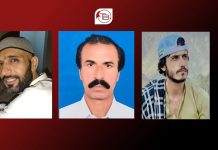
Nabeel as Ali
Zakkaulla as Zakka.
Feroz, whom we called Sarbaan.
Their bodies have not been returned.
Their mothers wait.
Their fathers wait.
Their sisters press ears to the wind, hoping to hear something
a footstep, a rumor, a lie they can hold onto.
But no word comes.
In Kech, in Turbat, the sun strikes like punishment.
Even the living feel themselves begin to rot.
And what of the dead?
Already wounded.
Now seized, held by those uniformed monsters.
They will not hand the bodies over
as if to say: Let them rot further. Let them become a warning.
But they forget
these are sarmachars.
They carry explosives in their bodies.
Not bombs
but sacrifice.
Every vein, every bone, every piece of flesh
charged with the will to fanaa.
To vanish.
To give everything.
Not to be mourned in weakness
but remembered in fire.
And in between all this
I came to know Nabeel.
From Ghokdan.
His name?
Etched into every alley there.
The children, yes, even the children
know him.
Commander Nabeel, they say.
One voice says:
“His house was raided every second day.”
Another sighs
“Ohh Nabeel… so they finally caught you?”
As if it was a prophecy fulfilled.
As if it had always been fated.
But can anyone ever truly capture a sarmachar?
Even in death,
they haunt the occupier’s breath.
Even in silence,
they speak more than cowards can scream.
1st May, 2025, 2:29 AM. Kech.
The date has changed
but this night hasn’t.
This sorrow hasn’t.
This heaviness hasn’t.
I am here, in Kech.
I am breathing the same air that once passed through the lungs of our fallen bravehearts.
But even the air resists me now
it reaches my chest like grief trying to pull me down.
Like a scream with no mouth.
That image
our heroes, lifeless.
Their bodies sprawled under open sky.
And around them, the enemy
rifles still warm, boots still arrogant, standing victorious in defeat.
I cannot shake it off.
It follows me like a shadow.
Maybe because pain doesn’t need names.
Maybe because here, pain only understands pain.
And I keep thinking
about that night.
That cruel night that didn’t shield our bravehearts.
That didn’t offer them a tree, a roof, a stone, or even a moment.
A night that turned away,
letting them bleed into its silence.
And here I am
in a place surrounded by bungalows.
Tycoons.
Luxury.
I can see the guards coming and going, a Pakistani flag, Othman house it is they say.
The kind of life built on the blood of Baloch.
These houses have guards.
And those guards
Some of them wear Baloch faces.
They serve the enemy in our tongue.
They are the same death squads,
paid to slaughter us in our own accent.
As Malcolm X said,
“They will pay one of us to kill one of us, just to say it was one of us.”
And that’s what chokes me now.
That’s the place where tears get stuck
not in the eyes,
but in the throat.
Where crying becomes a kind of breathing.
Sleep has become alien to me.
It is a foreign country I cannot cross into.
Because how do you sleep in a land
where revolution dies every night
and wakes up again with holes in its chest?
And somewhere else in this same Kech,
or perhaps in some far-off rugged village,
a mother of a sarmachar
sleeps hungry
not for food,
but for her son’s voice.
She struggles with the firewood,
with the price of wheat,
with the silence of letters that never arrive.
But she sleeps in peace.
Because her son didn’t sell the land.
Didn’t sell his soul.
Didn’t bend to their rupees.
Because her son will never be called Dallaar.
Never be remembered as Mukhbir.
Because her son was a Kungur.
A Sarmachar.
A son of the mountains.
1st May, 2025. 11:14 AM. Kech.
Still no sleep. But that’s not the issue.
I’ve learned to carry this weight. To organize it. Fold it neatly. Pack it into words.
What hurts more is what I just saw, what I just heard
Families of Nabeel and Sarbaan have blocked the D-Baloch for their bodies.
Two days. Two nights. Their boys still not returned.
Not even for a final farewell. Not even in death.
And then, just two hours later
I saw Nabeel’s sister.
Her face fierce, her voice cracked with strength.
She said:
Nabeel is of the nation. We will bury him with pride.
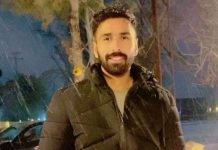
I saw then Zakka’s picture.
So handsome.
That face, clear, proud, young, full of life and flame.
I can imagine how much his sister must have adored him,
how she might have never even looked at him fully
out of reverence, out of the kind of love that is too sacred for the eyes.
And now all of their sisters standing.
After two days of silence.
After two days of rot, of waiting, of cruel desecration.
Sisters standing
for their dignity.
For their bones.
Even if they’ve been scorched by the sun,
even if the shape is no longer the same
they are fighting to give what every mother, every sister, every martyr deserves:
a grave with their name,
a handful of soil to weep into,
and a goodbye worthy of their sacrifice.
And this…
This is our war.
Not just fought with bullets.
but fought by sisters and mothers who do not own weapons,
but carry courage like fire in their veins.
Thus, in the end, war is war.
It never ends easily. Never fades quickly.
It carries its stench wherever it goes,
Seeping into breath,
Into the ground,
Into memory.It changes souls,
Damages thoughts,
Distorts dreams.
And in the silence that follows gunfire,
it does not rest.
Instead, it tests.
Tests how much a people can endure.
How long they can carry grief without breaking.
Thus, war captures the full measure of a people’s endurance.
17 May 2025
Some nights refuse to end.
April 29 was one of them.
In the scorched chest of Dannuk, three Baloch sarmachars ‘Nabeel, Sarbaan and Zakkaulla’ fell. Since then, time has not moved forward, it only circles back. Today is May 17, 2025. Seventeen days have passed, and yet I find myself still inside that night. I’ve come to believe: if I write of it now, it must mean this date carries a wound of its own.
What happens in the Baloch war for independence lives beyond the reach of ordinary thought. It begins where human logic ends, and the Baloch struggle takes over. So many names never spoken. So many heroes who die without a story, carrying the war on their backs in silence.
The sacrifices made by Nabeel’s family, and others like them, are beyond imagination, they belong to a world built on silence, courage, and blood. So many names. So many stories buried before they could be spoken.
When the people blocked the roads in Kech after the attack, I learned of Nabeel’s past. In 2010, he was wounded during a raid by the Frontier Corps. His sisters tried to save him. His elder sister, was struck twice—bullets lodged in her both legs. Nabeel was wounded too. They survived. From then on, he was known as Nabeel Alias Ali Langh, a name wrapped in resistance.
On April 29, 2025, in Dannuk, Turbat, Nabeel was shot again. Bleeding, nearly out of bullets, he called his sister, not for rescue, but to come and take his body. They say he sought shelter in a nearby house, but the family there refused. The women screamed in fear. He asked for ten minutes—just ten—but they cried louder. And so, Nabeel, who had defied the enemy all his life, turned the gun on himself before they could touch him. Even in death, he refused surrender.
This is why April 29 will never end.
Nabeel’s sister had returned from western Balochistan already carrying one grief, and now she carried another. She had buried her son within a week, lost at sea when the boat he was in got a fire. One loss folded into another, fresh sorrow laid atop older wounds. No one tells these stories, but they are the stories of many Baloch families, stacked with sacrifice, wrapped in silence. Another brother, too, was martyred, perhaps in 2021 or 2022, she said, her voice steady. And one more still lives in the mountains. May he remain safe. May the mountains protect him.
From May 1 to the night of May 4, under the merciless sun of Kech, the families sat.
For four days, they didn’t move.
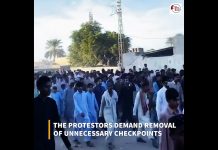
Nabeel and Zakaullah belonged to Gokhdan, and their people stood with them. Even the most remote roads were blocked in solidarity. The Deputy Commissioner of Turbat arrived and said, coldly, “These bodies cannot be returned. It is time to end the dharna.”
Nabeel’s sister looked at him and replied,
“Bring your son to us.
We’ll kill him.
We’ll bury him without your presence, without your right to mourn.
You’ll stay silent. Will that work?”
The DC said nothing. His face drained of color—turned not red, but green.
He stood up, told his team not to speak to the families again, and left. The forces that once came in waves—armed and armored—now lingered quietly. They did not attack.
Later that day, the DC also said “We have a list,” he said. “Nabeel killed more than twenty of state men. We cannot give his body.”
His sister laughed satirically.
“That’s just your list,” she said. “He killed more.”
On May 4, they performed a symbolic burial.
There were no bodies.
Only a piece of cloth. A sandal. A sliver of what once was flesh and fight.
They buried those fragments and named them graves.
Pause here. Let a tear fall.
A symbolic grave?
Again, I say it: what the Baloch have done—what they continue to do—lies beyond the reach of this world’s understanding.
In war, people may run out of coffins and graves.
But we?
We don’t get the bodies.
So what graves can we have?
We bury pieces of cloth—because that’s all we are allowed to keep of our martyrs.
The sit-in continued. On May 2, I went there.
Sarbaan’s mother was on the phone with her son.
She begged him to come home
His voice trembled as he answered,
“Amma, I was not supposed to block the road or sit here.
You told me to bring back my son’s body,
so we could mourn at home.”
She pleaded again.
A pool of tears welled in his eyes.
“I cannot end this sit-in,” he said,
“because I cannot sell your son’s blood.”
Nearby, Nabeel’s younger sister
a nurse—spoke softly,
“God, they won’t give us our other brother’s body,
and now Nabeel’s too.
What will I tell my father?
He’ll die knowing Nabeel—the brave Nabeel,
the name the enemy feared in Turbat,
the man who kept forces out of Gokhdan
has no grave.”
She broke down,
her cries raw and deep
a sound to shake any conscience,
like a body drained of life itself.
But it didn’t end there.
They held the symbolic burial, yes
but the wound stayed open.
Then they heard whispers.
New graves.
Dug quietly in Taali Qabristan,
just behind the Taleemi Chowk checkpost.
The families kept meeting the DC, the AC
men who toyed with their grief,
men who had no authority.
So on 16 May, they took it into their own hands.
Hundreds of women marched to the Qabristan.
And for the first time in my life,
I saw a woman dig a grave.
Not one.
Three.
Women digging.
Women waiting.
Women asking
do these graves belong to our brave hearts?
The forces came,
shoved them back,
refused to let them see.
Later, a picture surfaced online:
three graves.
Women in worn shawls, sitting beside them,
hands on the soil, eyes fixed on nothing.
And in that single frame,
all of Balochistan was captured.
What the Baloch have endured in this war
barely one percent has been written.
What they continue to resist
we only glimpse fragments.
It is these women.
These people.
Fighting, fighting, fighting.
I never knew Nabeel’s sister.
Perhaps we never will.
We’ve never heard her name.
We have never known that she once took bullets to save her brother
not until this war revealed its silent heroes.
She fought to keep him alive,
and when she couldn’t,
she fought again to bring him home.
A woman who guarded both his breath and his grave.
This war is built on such people
and that is why it cannot be crushed.
It lives in Sarbaan’s brother,
refusing to sell his brother’s blood,
even as the weight of fear pressed on him.
It lives in Zakka Ullah’s sister,
who still remembers how he smiled when they teased him about marriage,
how he repaired electric wires for neighbors,
how he never played an inqilabi song
because he was the inqilab himself.
So many stories like these.
So many we do not know.
Not their names,
not their stories.
But this is their war.
And they carry it
nameless,
faceless,
tirelessly.
And still,
they carry it.
Disclaimer: The views and opinions expressed in this article are those of the author and do not necessarily reflect the official policy or position of The Balochistan Post or any of its editors.