






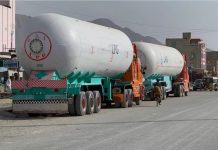






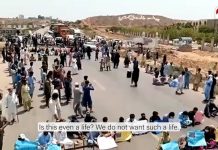





The closure of two crossings with Iran has halted liquefied petroleum gas (LPG) imports into Pakistan and pushed prices sharply higher, traders say, amid continuing attacks and roadblocks on trade routes through Balochistan.
The Gabd–Rimdan and Taftan crossings were closed on October 17. Both connect Iran with routes through Balochistan, where the Baloch Liberation Army (BLA) has claimed highway blockades and attacks on commercial vehicles under its “economic blockade” campaign.
Also Read | BLA Claims Dalbandin Takeover, Declares ‘Complete Control’ of Quetta-Taftan Highway
The Balochistan government said the temporary closures were intended to address security concerns and curb smuggling, while Iran’s foreign ministry cited technical problems.
Asked about the closures, US pressure and sanctions at an October 23 briefing, Pakistan’s Foreign Office said the country complied with “all applicable sanctions regimes in accordance with international and domestic laws”. Its spokesperson said he did not have direct knowledge of current conditions at the border.
Pakistan imports about 7,000 metric tonnes of LPG a day from Iran, according to the Pakistan LPG Association. More than 4,000 tonnes normally enter through Gabd–Rimdan alone, Shamsul Haq, former president of the Gwadar Chamber of Commerce and Industry, told Reuters.
Gabd–Rimdan reopened on Wednesday, October 21, for Pakistani exports of perishable goods, but LPG imports remained suspended, according to Reuters’ report published on Friday.
Traders said the price of a 12-kg cylinder had climbed from Rs4,500 to Rs7,000 within days. Pakistan LPG Association chairman Irfan Khokhar warned that shortages and prices could rise further if the disruption continued.
“LPG is being sold at different prices in Pakistan,” he said, putting the cost of a 12-kg cylinder at about Rs7,000 in Balochistan, Rs7,500 in Lahore and Rs8,200 in Skardu.
Khokhar said higher LPG costs were already feeding through to the prices of other goods. Consumers feared that increased winter demand would further worsen shortages, Reuters reported.
The disruption has also left hundreds of trucks, including LPG tankers, stranded on both sides of the border, Haq said. More than 1,000 Pakistani containers carrying potatoes, bananas and rice for Iran had also been held up by the closure.
The Quetta Chamber of Commerce and Industry advised members to stop placing new orders with Iran until further notice. Drivers stranded at the crossings said they had spent days in harsh conditions with limited access to basic facilities.
“We have been standing here for over a week waiting for the border to open,” Abdul Ghani Baloch, one of the affected drivers, told Reuters.
Pakistan–Iran trade totalled about $2.8 billion in the 2023–24 financial year, including roughly $684 million in Pakistani exports, according to the Federation of Pakistan Chambers of Commerce and Industry.
‘Economic Blockade Will Continue’
The BLA says its blockade targets the economic foundations of Pakistan’s control over Balochistan, including resource projects and the movement of minerals, oil and LPG. It has described major highways as “colonial trade arteries” through which Balochistan’s wealth is moved out.
Jeeyand Baloch, spokesperson for the BLA, said in a June 12 statement that the aim was to make the state’s economic interests “insecure” and “unstable”, arguing that the cost of maintaining control over Balochistan should exceed the profits drawn from its resources. The group said it sought to turn Balochistan into “an inevitable economic burden for the occupying state”.
Read More | Balochistan Govt Announces Rs25bn Highway Force as BLA Says ‘Economic Blockade’ Will Continue
The campaign has included repeated roadblocks, vehicle searches and attacks on commercial traffic. In August alone, the BLA claimed to have targeted 60 vehicles and established blockades at 32 locations.
Balochistan government officials have previously rejected the BLA’s justification for the attacks, saying commercial vehicles carrying food and agricultural goods have also been affected. The BLA, however, maintains that its “economic blockade will continue until plunder ends”.
Also Read | BLA Puts Pressure on Pakistan’s Last Major Trade Corridor — TBP Report