
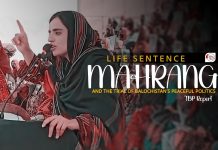





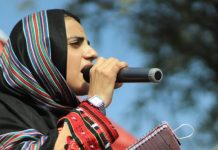


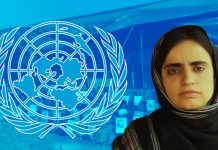


Jailed Baloch rights activist Dr Mahrang Baloch has described the reported airstrikes on civilian areas in Surab as a continuation of what she called the “Baloch genocide” and urged people across Balochistan to speak out against the attack.
In a statement issued from Hudda Jail in Quetta, the Baloch Yakjehti Committee (BYC) chief organiser said Pakistan had used repression and force to govern the Baloch people for seven decades, but that its “violent model of governance” had failed and civilians were again paying the price.
“The Baloch genocide is not merely an internal issue of Balochistan but a global humanitarian tragedy,” she said. “Until its root causes are addressed, every discussion of peace will amount to empty rhetoric and an escape from reality.”
According to Dr Mahrang, curfews, military operations, enforced disappearances and killings had increasingly become routine in different parts of Balochistan in the name of security over the past several months.
She said many of these incidents did not find a place in the narrative of state media, but Baloch people witnessed them with their own eyes every day and experienced them in their lives.
Dr Mahrang said every state policy that endangered the lives of Baloch children, women and other civilians, and then dismissed their deaths as “collateral damage”, must be rejected.
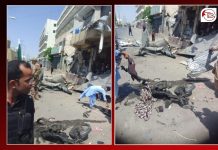
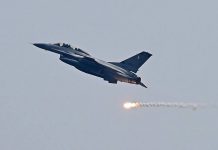
Referring to the Surab incident, Dr Mahrang said 27 people, including children, were killed or injured when Pakistani warplanes bombed civilian homes and populated areas.
She said treating the deaths of civilians, including children, caused by the bombing of homes and populated areas as a routine operation was not merely a military action, but a continuation of ongoing state repression against the Baloch people.
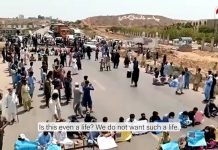
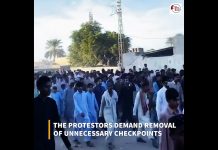
Dr Mahrang said the decision by the people of Surab to block the road and protest against the attack showed that the Baloch people would not remain silent over threats to their lives and property or the killing of civilians.
She appealed to the people of Balochistan to come out of their homes against the Surab incident, raise their voices against what she described as oppression and choose the path of resistance rather than remain silent over the killing of their loved ones.
Related News
In Pictures: Aftermath of Pakistani Airstrikes in Balochistan’s Surab