








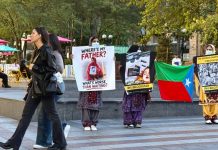
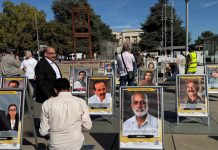


The Human Rights Council of Balochistan (HRCB) said it documented 234 cases of enforced disappearance and 87 killings in Balochistan in February 2026, warning that rights violations “escalate sharply following major insurgent attacks” and are carried out with “unprecedented brutality and impunity”.
In its monthly report, HRCB said one woman and nine teenagers were among those forcibly disappeared. It added that 233 of the victims were male, while only 37 individuals had reappeared and the majority remained missing.
The rights group said enforced disappearances and extrajudicial killings remain widespread in the region, describing them as a “daily reality in Balochistan”.
It said violations intensified after coordinated attacks carried out by the Baloch Liberation Army (BLA) on January 31 across more than a dozen cities, adding that the subsequent security response continued for about a week.
“The operation and the subsequent security response continued for a week, during which communication networks were suspended for extended periods, curfews were imposed in cities such as Nushki, and state forces reportedly carried out indiscriminate firing and heavy shelling on civilian populations, causing numerous deaths and injuries,” the report said.
HRCB alleged that Pakistani forces carried out widespread operations during this period, including raids and detentions.
“During these operations, security forces conducted house-to-house raids, demolished homes, looted valuables, and subjected women and children to assault and abuse,” it said, adding that mass detentions and enforced disappearances were carried out “often in collusion with local death squads backed and fully activated by state authorities”.
The report said many of those later killed had previously been in custody.
“Many of the victims killed in staged encounters had been reported disappeared for months, years, or even decades,” it said, describing the pattern as a “deliberate policy of impunity and reprisal”.
Breakdown of disappearances
Breaking down the 234 cases, HRCB said 100 involved individuals described by authorities as “suspects”, but added that no details had been disclosed regarding their identities or legal status.
“It remains unclear whether they have been released, formally charged, or continue to be held incommunicado, similar to thousands of others,” the report said.
The group said detention was the most common method of disappearance, followed by house raids, while a smaller number of individuals were taken from check-posts or summoned to camps.
It identified the Counter Terrorism Department (CTD) as the leading alleged perpetrator, followed by the Frontier Corps (FC) and intelligence agencies, while alleged state-backed “death squads” were also implicated.
Students were the most affected group, the report said, adding that most victims came from “ordinary civilian and working-class backgrounds”. Geographically, Quetta accounted for more than half of the cases, followed by Nushki, Kech, Hub, Gwadar and Panjgur.
The report also documented mass detentions in Quetta on February 5, when more than 100 individuals were allegedly taken into custody and transferred to undisclosed locations, while authorities claimed arrests of “suspected persons” without presenting evidence.
Killings documented
HRCB said it documented 87 killings during February, including 82 men and five women, while the identities of 15 victims could not be confirmed.
It said the largest number of killings resulted from indiscriminate firing, followed by targeted killings and custodial killings, while several cases were described as “fake encounters” and “alleged encounters”.
The group said the Frontier Corps was responsible for the majority of killings, followed by the Counter Terrorism Department and alleged state-backed “death squads”.
HRCB said 30 previously disappeared individuals were killed during the month, either in custody or in staged encounters.
“These killings were carried out by security forces and their affiliated local death squads, either in staged fake encounters or while the victims were in custody,” the report said.
It added that many of the recovered bodies showed “clear signs of torture and mutilation”.
The report also documented civilian casualties during military operations.
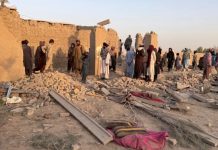
“Security forces carried out an assault on a residential compound housing labourers, killing 12 people, including women and children,” it said, adding that a child was killed in a drone strike in Nushki and others were killed in incidents involving firing and shelling.
HRCB said operations were followed by curfews, demolitions and raids in several districts, during which homes were destroyed and civilians were subjected to violence.
In a separate section, the report questioned a Counter Terrorism Department claim that an alleged BLA member had been arrested in Karachi.
It said rights groups disputed the claim, alleging that the individual had previously been forcibly disappeared and was later presented as an arrested suspect.
No response was immediately available from Pakistani authorities regarding the findings of the report.