









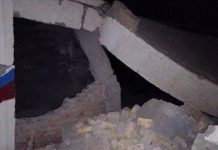
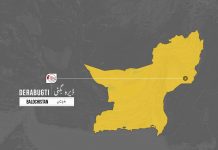

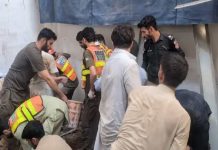






The Baloch Liberation Army (BLA) on Saturday issued a detailed statement on Friday’s attack on a joint camp of the Pakistani military, Coast Guards and intelligence agencies in Panwan, near the coastal town of Jiwani in Gwadar district, which it said had killed more than 30 personnel and seriously wounded dozens in a vehicle-borne bombing followed by an armed assault.
BLA spokesperson Jeeyand Baloch said the attack was carried out jointly by the group’s Majeed Brigade and Fateh Squad as the sixth phase of its wider military operation, “Zirpahazag”, or “Protection of the Sea”.
The BLA said the camp, located about 10 kilometres from Jiwani, housed more than 20 personnel from the Pakistan Coast Guards’ 3rd Battalion and the Punjab Regiment’s 32nd Unit, alongside operatives of Military Intelligence and the Inter-Services Intelligence.
It described the installation as a “highly sensitive stronghold” established for “espionage and strict surveillance of the coastal belt”, adding that it was used to coordinate what the group called the blockade of the Baloch coast and the plundering of its resources.
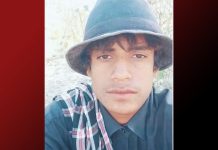
“Yesterday evening at exactly 6:32pm, a fidayee sarmachar of the Majeed Brigade, Attaullah Baloch alias Ajmal, successfully drove an explosives-laden Mazda vehicle inside the camp, breaching all military obstacles and defensive lines, and detonated it,” the statement said.
The group claimed the explosion caused fortified buildings and bunkers to collapse and destroyed military equipment inside the compound. Fateh Squad fighters then surrounded the camp and attacked personnel who had survived the initial blast, it added.
The BLA identified Attaullah as the 20-year-old son of Muhammad Azeem and a resident of Negindap in Rakhshan’s Panjgur region. It said he joined the group on 29 August 2024, served in Panjgur, Keelkaur, Paroom and Washuk, and later volunteered for the Majeed Brigade.
The group described him as an educated fighter with “high political and revolutionary consciousness” and called his death and the operation a “bright chapter in the history of the Baloch national movement”.
“At the young age of twenty, the determination and true love for the motherland demonstrated by the fidayee sarmachar stands as a milestone in the liberation wars of oppressed nations,” the statement said, adding that “the lamp lit by his blood will remain illuminated until the dawn of freedom”.
The BLA said the attack was intended to show that what it called the “military blockade” of the Baloch coast and the extraction of its resources would not be tolerated.
It claimed the assault on the Jiwani camp showed that its offensive strategy had become “deadlier than the enemy could ever conceive”.
“Until the complete independence of occupied Balochistan and the withdrawal of the last soldier of the occupying army, our attacks on military installations, espionage centres and colonial interests will continue with the same consistency and intensity, and no place on this land will be left safe for the occupying army,” the statement said.
The group also issued a “stern warning” to international powers and regional investors against entering partnerships with the Pakistani state in resource extraction and security-related projects in Balochistan.
“We issue a stern warning to all international powers and regional investors to completely refrain from partnering with the occupying Pakistani state in the exploitation of Baloch resources and security projects,” it said.
The BLA added that “thousands of conscious and determined youth” within its ranks were prepared to continue the armed campaign, warning that the coming days would be “even more horrific” if Pakistan did not withdraw from Balochistan.