










Baloch political activists and rights groups on Thursday questioned the detention timeline of a woman presented by Pakistani authorities in Quetta and rejected allegations linking Dr Sabiha Baloch to armed organizations.
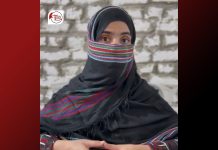
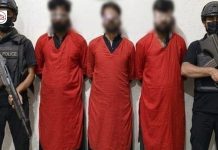
On Wednesday, Balochistan Chief Minister Sarfaraz Bugti and senior police officials presented the woman, identified as Laiba, also referred to as Farzana Zehri, and said she had been arrested in Khuzdar with the help of “human intelligence.”
Officials described her as a “would-be” female suicide bomber and said her arrest had averted “major destruction.”
Officials further alleged that Zehri had met Dr Sabiha Baloch and was to receive training after the meeting, linking the activist to the case.
In a statement titled “Urgent Call for Transparency and Accountability in the Face of Unsubstantiated Allegations,” the Baloch Yakjehti Committee (BYC) said Zehri had been forcibly disappeared from Khuzdar on Dec. 1, 2025.
The group said she had been held incommunicado for more than three months before being presented publicly.
It questioned where she had been during that period and why she was not produced before a court, adding that any statement made under custody could not be considered credible.
“There is no evidence linking Dr Sabiha Baloch or BYC to these allegations,” the statement said.
The group called on Chief Minister Sarfaraz Bugti to provide “concrete proof” or issue a public apology, adding that it would continue its peaceful political activities.
Dr Sabiha Baloch, in a separate statement, said enforced disappearances were being used as “tools of blackmail and coercion.”
She described Zehri’s public presentation as a “media trial” following prolonged incommunicado detention.
Ms Baloch said five leaders of her organization had remained imprisoned for a year “without any proven crime.”
She alleged that her family had faced continued harassment, including the detention of her father.
“I am a peaceful political activist,” she said, adding that attempts to associate her with armed groups would not silence her.
Baloch activist Sammi Deen Baloch said Zehri’s family had first made her disappearance public on Dec. 1, 2025, and asked where she had been for “three months and eighteen days.”
She said presenting individuals after prolonged detention was an “old and repeatedly exposed tactic.”
“First Dr Sabiha’s father was taken into custody, then she was declared an absconder, and soon after a woman in custody was made to name BYC and Sabiha,” she said.
“This is not a coincidence but a clear strategy to construct false narratives and discredit peaceful political activists.”
Sammi Deen Baloch also referred to the case of Fatima Baloch from Hub Chowki, who she said was detained on Feb. 13 and released on March 16 without charge.
Nadia Baloch, sister of detained activist Dr Mahrang Baloch, said linking peaceful political activists with armed groups had become “a pattern” aimed at curbing political activity in Balochistan.
Shalee Baloch, chief organizer of the Baloch Women Forum (BWF), said statements delivered after prolonged incommunicado detention were “highly questionable.”
Niaz Baloch, coordinator of the Baloch National Movement (BNM) foreign department, said Dr Sabiha Baloch had previously faced pressure, including the detention of her father.
Abdullah Abbas, executive director of the Human Rights Council of Balochistan (HRCB), said attempts to undermine platforms such as BYC risked closing avenues for peaceful civic engagement.
“Any attempt to undermine or criminalize such platforms risks closing off any prospects for a sustainable political resolution,” he added.