








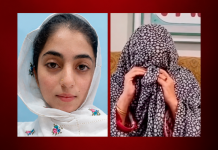


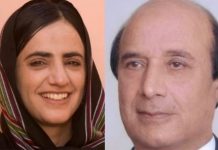







Forced displacement, the demolition of homes and restrictions on access to basic necessities in Balochistan constitute serious violations of local communities’ fundamental rights, said Sammi Deen Baloch, a central leader of the Baloch Yakjehti Committee (BYC) and daughter of forcibly disappeared Dr Deen Muhammad Baloch.
In a statement, Sammi said two decades of forced displacement in Balochistan had deprived thousands of families of their ancestral areas, homes, land and livelihoods. She added that incidents had been reported during 2026 from Mastung to Gwadar, including in Shor Parod, Nushki, Chagai and Kharan.
Residents in some areas had received notices to leave, while elsewhere homes and settlements had been demolished, forcing families to relocate, she said.
She said prolonged curfews and road closures in Zehri, Mashkay and Zamuran had disrupted access to food and other basic necessities for months, worsening the difficulties faced by local communities and making life in their own areas increasingly difficult.
Sammi said impoverished families in remote parts of Balochistan often depended on a few acres of land, crops and livestock to cover household expenses, children’s education, healthcare and other essential needs. She added that forcing such families to leave their ancestral areas at short notice destroyed the foundations of their livelihoods.
When these families left their homes for unfamiliar areas, she said, they faced serious difficulties finding employment and accommodation, continuing their children’s education and caring for their livestock.
She said that when security concerns required people to relocate, the government’s responsibility extended beyond issuing evacuation orders. Authorities also had to ensure protection, alternative accommodation, livelihoods, basic services and a safe return, she added.
People could not be left without support and expected to rebuild their lives in an unfamiliar location, she said.
Sammi said that when people were forcibly removed from their ancestral areas, deprived of their homes and livelihoods, and left uncertain about their return, the issue went beyond displacement. She described it as a denial of their right to determine their future on their own land.
For families who had lived in an area for generations, she said, land was not merely a piece of soil but the foundation of their identity, livelihood, ancestral ties, culture and way of life.
She said she had personally witnessed how a person’s or family’s life could be devastated by forced removal from their ancestral area and relocation to an unfamiliar city without protection or the support of relatives and their community.
Sammi stressed that no nation should be deprived of the right to make decisions about its life and future on its own land. If communities were forced to sacrifice their land, homes, livelihoods and identity in the name of security, such measures could not be dismissed as merely a security matter, she added.
“Forcibly displacing people from their land can neither establish lasting peace nor provide genuine security,” she said, adding that such measures instead made local communities’ lives increasingly insecure and uncertain.
Sammi called for effective protection, dignified housing, employment, education and access to other basic necessities for displaced families. She urged the authorities to address their difficulties without delay and take concrete measures to ensure their voluntary, safe and dignified return.
She emphasised that lasting peace could not be achieved without respect for local communities’ fundamental rights, dignity and right to remain on their own land.