




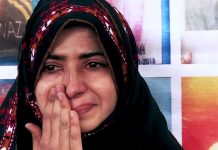



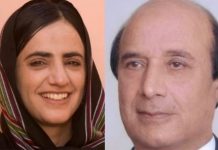
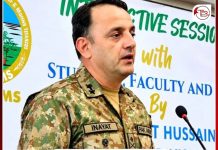





Last week, several journalists from Islamabad were taken on a visit to Quetta under the supervision of the Pakistani military. During the visit, they were briefed on the current situation in Balochistan by senior Pakistani military officials and the controversial Chief Minister of Balochistan. On that occasion, state officials presented their position on the issue of Balochistan, the ongoing armed resistance and the government’s policy. State authorities stated that the solution to the issue of Balochistan lies not in the use of force but in dialogue, negotiations and the political process. During the briefing, it was also claimed that thousands of people had been contacted and engaged over the past year, while a large number of people had also been approached during the current year. It was further claimed that Dr Mahrang Baloch had been invited to participate in the negotiation process, but had refused to become part of it. On the other hand, this claim has also been denied by Mahrang Baloch’s sister, Nadia Baloch. During the same briefing, reference was also made to a long-term plan, or approximately a ten-year roadmap, regarding the ongoing Baloch nationalist armed movement, the objective of which, according to state authorities, is to contain or eliminate the armed movement.
A fundamental question here concerns the meaning of negotiations themselves. Do negotiations simply mean meeting different people, convening jirgas or holding discussions with a few delegations? If Pakistan genuinely considers negotiations to be the solution to the issue, then what will be the scope, conditions, parties and agenda of those negotiations? Will negotiations only be held with individuals who are willing to engage with the state, or will efforts also be made to reach political forces that have profound differences with Pakistan? Will their agenda be recognised?
Another important question also arises here. According to the state’s position, if the armed movement is limited to a small number of individuals, then why is there a need for a strategy extending over an entire decade to confront it? This question is important because, on the one hand, the state describes the armed movement as limited, while on the other hand it speaks of long-term planning to address it. On the face of it, these two narratives appear to contradict one another.
There is a complete media blackout in Balochistan. In such circumstances, the purpose of a limited visit by journalists conducted under state supervision is not to present a complete picture of Balochistan, but rather to familiarise journalists with a particular narrative. The future of Balochistan will not be determined by a single press conference, a single jirga, a single political party, a single individual or a single state narrative. Nor can the future of Balochistan be decided through decisions made behind closed doors. The people of this land possess the genuine right to determine their future, because the decisions that affect their lives, identity, resources, political rights and the future of coming generations are matters in which the most fundamental right belongs to them.