





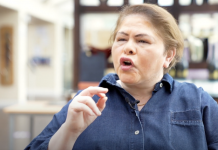


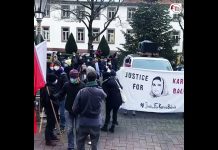
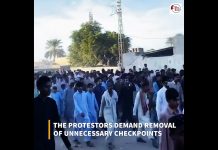


A central leader of the Baloch Yakjehti Committee (BYC), Dr Sabiha Baloch, has appealed to the Baloch people and supporters to observe 25 January as “Baloch Genocide Remembrance Day” and raise what she described as an effective voice against state oppression in Balochistan.
In a video statement, Dr Sabiha Baloch said the lives of Baloch people had reached a point “where survival itself has become a continuous struggle.” She said that across different regions of Balochistan “state repression, human tragedy and the violation of basic rights are evident everywhere.”
She said deadly diseases such as cancer were claiming lives daily in the Koh-e-Sulaiman region, while families lacked the means to save their loved ones. She added that Bolan and Jacobabad, once agricultural areas, had become “symbols of hunger and deprivation,” where malnutrition was widespread and women were dying during childbirth.
According to her, in Makran people were being deprived of livelihoods “despite having the sea on one side and a border on the other.” She accused the state of forcibly displacing residents from their lands and said those who resisted were “killed or forcibly disappeared.” She added that in Lasbela, Baloch culture was being “systematically erased.”
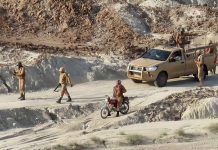
She said “death squads” were operating in the Jhalawan and Sarawan regions and alleged that women and children were also being subjected to enforced disappearances and harassment. She claimed drugs were more accessible than food and that security checkpoints were “directly complicit.”
Dr Sabiha Baloch said Balochistan had been turned into a “well of death,” where extrajudicial killings, enforced disappearances, cancer, accidents and the collapse of health and education systems continued. She said the state labelled these actions as “security,” but “destroying one’s own people is not security, it is outright genocide.”
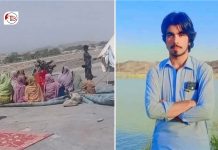
Referring to the mass graves discovered in Tootak in 2014, she said, “It is still unknown whose bodies were buried there, but it is a fact that they were Baloch, and their mothers are still searching for their loved ones.”
She said that although international voices had been raised last year about the situation in Balochistan, “the situation today is far more severe.” She alleged the state was using “killing, imprisonment and enforced disappearances to silence every voice.”
Dr Sabiha Baloch appealed to Baloch people and human rights supporters globally to raise their voices against what she described as the “Baloch genocide.”
She urged them to write letters to embassies, meet journalists, distribute awareness material, organize silent walks and protests, and use digital platforms to inform the international community.
Why 25 January Is Observed
25 January is observed by Baloch people, along with rights groups and activists around the world, as “Baloch Genocide Remembrance Day” to remember victims of enforced disappearances and alleged extrajudicial killings across Balochistan.
The date is linked to the 2014 discovery of mass graves in Tootak, Khuzdar, where more than 100 decomposed bodies were recovered. Amnesty International later confirmed at least 169 bodies were found, while local groups claim the actual number may be higher.
On 7 January 2025, the BYC held a press conference at “Dasht Kabristan” in Mastung, a site known for its unmarked graves, and declared 25 January as “Baloch Genocide Memorial Day.”
The BYC said 25 January should serve as a day of remembrance and global appeal for acknowledgement of what it described as “systematic genocide” in Balochistan.
The group said other persecuted nations had received international recognition and argued the Baloch also deserved measures to halt abuses and protect their people.
Related:
Legions of People Gather in Dalbandin to Commemorate ‘Baloch Genocide Remembrance Day’
BYC to Hold Worldwide Events on Jan. 25 for ‘Baloch Genocide Remembrance Day’