













Additional Chief Secretary for Home and Tribal Affairs Mohammad Hamza Shafqaat said on Wednesday that Pakistani armed forces had killed “more than 100 militants” in Balochistan over the past three months and conducted more than 200 intelligence-based operations in Kachhi district.
The claim was made during a high-level meeting chaired by Chief Minister Sarfraz Bugti at the Chief Minister’s Secretariat, where officials reviewed progress on national and provincial action plans, the security situation and ongoing counterterrorism measures.
Briefing the meeting, Additional Chief Secretary Shafqaat said “coordinated and effective operations” were under way against armed groups across the region.
Officials also reported that 3,561 illegal petrol pumps had been sealed in recent months, while the Customs Department conducted 2,575 operations, seizing 416 non–customs-paid vehicles.
The meeting was further informed that the registration process for religious seminaries under revised regulations was being fully implemented.
Chief Minister Bugti instructed law-enforcement agencies to accelerate operations and adopt a zero-tolerance approach against what he described as “anti-state elements,” saying decisions of the National and Provincial Action Committees must be carried out “with diligence, responsibility and continuity.”
However, the government’s claims come amid rising allegations that several recent operations have resulted in civilian casualties.
Civilian Casualties Reported in Multiple Incidents
While authorities have presented the operations as targeted, intelligence-based actions against armed groups, several incidents in recent months have raised concerns about civilian casualties during military activity, including alleged shelling, drone strikes and firing by forces.
In September, at least three people, including two women from the same family, were killed and five others injured in an alleged Pakistani military drone strike in Zehri tehsil of Khuzdar district.
The victims were identified as 40-year-old Bibi Amna, wife of Sanaullah; 41-year-old Lal Bibi, wife of Ali Akbar; and 30-year-old Muhammad Hassan, son of Muhammad Yaqoob.
On 1 October, an alleged drone strike near Noorgama in in Zehri killed four people.
On 5 October, shelling and aerial bombardment reportedly carried out by Pakistani Army drones and helicopters hit the Moola Pass area of Bel Chari in Zehri, killing at least five people, including two children.
The deceased were identified as Manzoor Ahmed, his two children, a nephew, and Bibi Raheema along with her child. Several others, including two children, were injured.
A member of the affected family said in a video message: “We have no connection with any armed group, yet we have been targeted and killed.”
In late October, a drone strike in the Chiltan mountain range near Quetta injured at least nine civilians, hospital officials confirmed. The injured were identified as Jahanzeb Muhammad Shahi, Muhammad Imran Sumalani, Maqbool Ahmed, Zahid, Manzoor Ahmed, Daulat Khan, Arbab, Rafeeq Lehri and Wajid Ali.
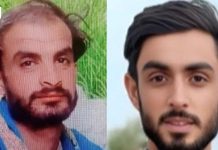
On 19 November, Pakistani forces allegedly opened fire on two young men who had gone for a picnic in Kech district. The deceased was identified as Ismail, son of Ibrahim. The second man, Nauman son of Haidar, was injured and remains in the custody of Pakistani forces.
Human rights groups and rights defenders say the rising number of civilian deaths documented in recent months raises serious concerns about the conduct, oversight and accountability of military operations in Balochistan.
Observers note that large-scale operations often intensify following attacks in which Pakistani forces suffer losses, creating cycles in which civilians frequently bear the brunt.
They add that the practice of labelling all victims as “militants,” without publicly acknowledging mistakes or offering compensation, deepens mistrust between the state and local population and fuels long-standing grievances.