




















By Yaran Diyar
In mid-November 2025, Pakistan entered a period marked by a convergence of political engineering at home, aggressive diplomatic maneuvering abroad and escalating regional anxiety. Over the span of several days, a set of developments, including a major constitutional amendment strengthening the military’s formal authority, revelations of multimillion-dollar lobbying efforts in Washington, and two major bombings in Delhi and Islamabad, defined what analysts now describe as one of the most consequential and contradictory moments for the Pakistani state in recent years.
What emerges, through analysis of public filings, reporting from The New York Times, Reuters, Dawn, Al Jazeera and regional media, as well as statements from officials on both sides of the border, is a picture of a state simultaneously trying to consolidate its internal power structure while externally seeking patronage and protection; all in a region still reeling from violent attacks and volatile rivalries.
A Sudden Diplomacy Offensive in Washington
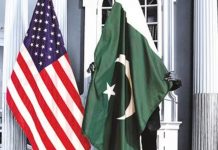
The first revelations came from a New York Times investigation published on 13 November, which exposed that Pakistan had hired at least six lobbying firms in the United States, some of them with direct personal and political ties to former President Donald Trump. According to the report, Pakistan spent several million dollars within a short span of months — an unusually large sum for its foreign influence operations — aiming to secure political backing, direct access to high-level U.S. officials, and diplomatic leniency at a time of mounting domestic and regional pressures.
Public filings under the U.S. Foreign Agents Registration Act confirm this sudden increase in lobbying expenditures. The firms involved include individuals who previously worked within Trump’s business and political circle, suggesting a calculated attempt by Islamabad to align its foreign policy with the personal ecosystem surrounding Trump rather than traditional state-to-state channels. The Times report notes that this resulted in “a quick improvement in Pakistan’s access in Washington,” including meetings that would otherwise have been difficult to secure.
Independent analysts quoted in the same article warned that such a strategy, while effective in the short term, risks leaving Pakistan dangerously exposed if the U.S. political landscape changes. The lobbying effort, they argue, reflects not just Pakistan’s desire for influence but also the fragility of its current international standing, and the degree to which it now depends on transactional relationships rather than durable alliances.
Simultaneously at Home: Expanding the Army Chief’s Power
Almost parallel to the lobbying revelations, Pakistan’s parliament passed a sweeping constitutional amendment on 12 November, the 27th Amendment, which fundamentally restructures the country’s civil–military relationship. Reuters reported that the amendment creates a new “Chief of Defence Forces” position that would be held by the sitting army chief, General Asim Munir, effectively formalising his authority over the navy and air force in addition to the army.
The amendment also establishes a new Federal Constitutional Court, transferring key functions away from the Supreme Court and raising alarms among constitutional experts that judicial oversight is being weakened in favour of greater executive, and by extension military discretion. Dawn reported that opposition parties denounced the move as “a civilian façade to cement military dominance,” announcing nationwide protests against what they described as an “authoritarian restructuring of the Constitution”.
Critics interviewed by The Guardian described the amendment as “the most significant shift in Pakistan’s power hierarchy in decades,” arguing that it codifies a system in which military leadership holds legal, political, and institutional supremacy over elected bodies. Army supporters, including government ministers, defended it as necessary for “streamlining defence coordination” and “addressing institutional gaps.” Yet the timing which pushed through rapidly amid a weak opposition presence, raises questions about consensus, transparency, and intent.
For analysts observing Pakistan’s turbulent civil–military dynamics, the coincidence is not lost: at the very moment the military is expanding its formal power internally, the state is aggressively purchasing influence abroad.
Twin Blasts and Diverging Narratives
As these domestic and foreign manoeuvres unfolded, two explosions: one in Delhi and one in Islamabad, escalated tensions further.
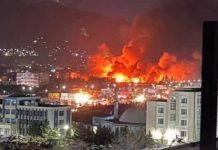
On 10 November, an explosion near the Red Fort in New Delhi killed civilians and triggered widespread panic. Indian authorities, however, took a noticeably cautious approach. According to Al Jazeera’s reporting, New Delhi refrained from naming Pakistan or any foreign actor, emphasising instead that investigations were ongoing, and “all possibilities remained open”.
Just a day later, a suicide blast outside a court in Islamabad killed more than a dozen people. Pakistani Prime Minister Shehbaz Sharif immediately accused India of orchestrating the attack through proxies, calling it “an act of state terrorism”.
India swiftly rejected the allegations. The Ministry of External Affairs issued a statement saying Sharif’s accusation was “baseless” and intended to divert attention from Pakistan’s “internal meltdown” following the 27th Amendment.
Analysts interviewed by Al Jazeera and other outlets noted the stark contrast in how both governments handled attribution. India’s restraint, they argued, appeared deliberate: by delaying its accusations, New Delhi was positioning itself as “responsible” on the global stage, likely aware that premature blame could raise expectations of retaliation in an already tense environment. One analyst described this as India “buying diplomatic space” and quietly consolidating U.S. support before taking any public position on responsibility.
That assessment gained credence when U.S. Secretary of State Marco Rubio praised India’s handling of the Delhi investigation, calling it “methodical and professional,” while refraining from endorsing Pakistan’s attribution in the Islamabad case. Reports published by Outlook India confirm that Washington publicly labelled the Delhi attack a “terrorist act” but avoided commenting on the Islamabad accusations, a diplomatic calculus that analysts say strengthens India’s narrative of restraint while sidelining Pakistan’s.
This asymmetry, one state withholding blame while the other escalates its rhetoric, has become a central point in regional analysis. Several commentators in Delhi and Doha noted that India’s caution may be part of a broader strategy: to secure international alignment before pointing to Pakistan, particularly as relations between Islamabad and Washington appear unusually personalised and politically contingent.
Intersecting Crises and a Strategic Gamble
Taken together, these developments suggest a state navigating multiple crises by relying on short-term strategies that may not align with long-term stability.
Pakistan’s constitutional changes represent a dramatic consolidation of military power at a moment when public trust in political institutions remains weakened. Its lobbying campaign abroad reveals the reliance on foreign patronage — particularly on Trump, whose own political future remains uncertain. And its rapid attribution of blame for the Islamabad blast appears to serve both domestic political messaging and an attempt to frame India internationally, even as analysts observe that New Delhi and Washington have begun showing alignment in tone and posture following the Delhi attack.
Meanwhile, Pakistan continues to face insurgencies in Balochistan, militant networks in former FATA/Khyber Pakhtunkhwa, and increasingly strained relations with Kabul. Against this backdrop, critics argue that the state’s focus on constitutional engineering and foreign lobbying may distract from more pressing governance and security failures.
Unanswered Questions
These events leave Pakistan at a crossroads. The country faces internal dissent, contested legitimacy, a resurgent military establishment, and delicate geopolitical dynamics involving India, Afghanistan, and the United States. The state’s strategies, from lobbying in Washington to restructuring the constitutional architecture, raise critical questions about sustainability and consequence.
How can Pakistan generate broad internal support when its political system now appears more centralised and military-dominated than before?
If its access in Washington is rooted in Trump’s personal network, how durable is this advantage if U.S. domestic politics shift, especially as some analysts warn that Trump may be losing political traction?
Will India’s restrained posture enable it to consolidate global backing, especially from the United States, before making any definitive claims about the Delhi blast? And if that happens, what diplomatic space will remain for Pakistan?
As regional tensions rise and internal fractures deepen, what strategic options does Pakistan have left, and how long can the current trajectory be sustained?