


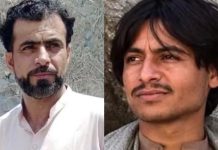
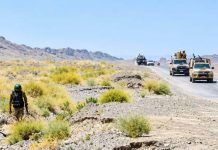





Four cases of alleged enforced disappearances involving Baloch men have been reported in Karachi and different parts of Balochistan, according to local families and political organisations.
Human rights concerns were also raised in separate statements and reports issued by the Baloch National Movement’s human rights body, Paank, and the Baloch Yakjehti Committee (BYC).
Enforced Disappearances
According to family members, Mir Baloch, son of Ghulam Jan and a resident of Faqir Colony in Karachi, was detained at Karachi airport on 7 February 2026 after arriving from Dubai. Relatives said he was taken into custody on the pretext of visa-related questioning and has not been seen since.
His family stated that he had been working as a labourer in Dubai and had returned to visit his family and for his wedding. They said airport authorities later expressed no knowledge of his whereabouts. The family has appealed to authorities for his recovery.
In a separate incident, it was reported that on 2 February Pakistani forces detained Daud Lehri, son of Muhammad Azam Lehri, from the Lak-Pass area of Mastung and transferred him to an undisclosed location.
On 9 February, Shahroz Baloch, son of Ubaidullah, was allegedly taken from his home in the Sariab area of Quetta. Meanwhile, on 8 February, Nadir Ali, son of Khair Muhammad and a resident of Jhao, was reportedly detained in Hub Chowki and subsequently went missing.
There has been no official statement from Pakistani authorities regarding these specific cases at the time of reporting.
Paank Annual Report
Separately, Paank released its annual human rights report for 2025, alleging widespread violations in Balochistan.
According to the organisation, 225 people were killed in what it described as extrajudicial killings during 2025, while 1,355 individuals were allegedly subjected to enforced disappearance. The report states that students, political activists and local intellectuals were among those targeted.
Paank further alleged the use of drone strikes, helicopter gunship operations and so-called “kill and dump” practices. It also raised concerns over the use of anti-terrorism legislation and the Maintenance of Public Order (3MPO) ordinance against political activists, including members of the Baloch Yakjehti Committee.
The report claims that 785 enforced disappearances were documented during the first half of 2025, with a decline later in the year but an increase in reported killings. It also stated that 407 individuals were later released after alleged detention in undisclosed facilities, with some said to have suffered physical and psychological harm.
Among incidents highlighted were an alleged drone strike in Balida on 29 October, an aerial bombardment in Zehri on 17 September, and an incident in the Chiltan area on 28 October, which the organisation says resulted in civilian casualties. These claims have not been independently verified.
The report also referenced concerns raised in 2025 by the European Union’s GSP+ monitoring mission regarding enforced disappearances, freedom of expression and the use of anti-terrorism laws.
Paank called for an end to enforced disappearances, extrajudicial killings, aerial operations against civilians and the use of what it described as repressive laws, as well as the release of political detainees. It stated that without international attention, the human rights situation in Balochistan could further deteriorate.
BYC Statement on Alleged Killings
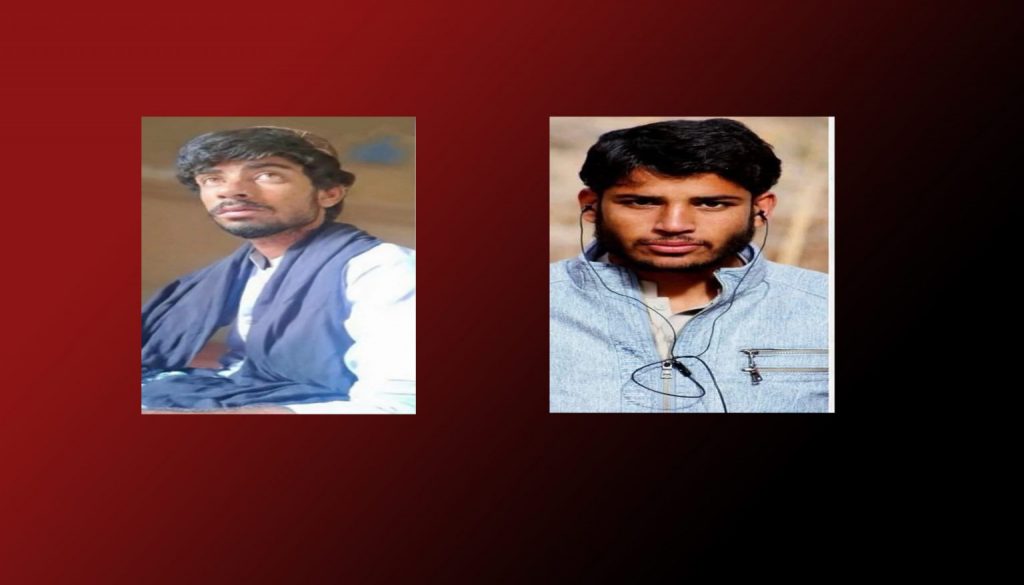
In a separate statement, the Baloch Yakjehti Committee alleged that two young men — 20-year-old Malang Baloch from Panjgur and Yasir Lehri, a tailor by profession — were forcibly disappeared and later killed.
The group claimed that Malang Baloch had been taken into custody by what it described as a state-backed “death squad” before being killed. It further alleged that Yasir Lehri was killed by security forces and that his body has not yet been returned to his family.
The BYC characterised the incidents as violations of international human rights law, including Article 6 of the International Covenant on Civil and Political Rights (ICCPR), which protects the right to life. It also cited the Fourth Geneva Convention in relation to collective punishment.
Pakistani authorities have not publicly responded to the specific allegations made by the BYC at the time of publication.