








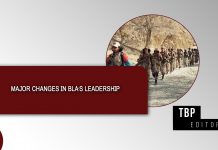


















The Baloch Liberation Army (BLA) announced a major change in its organisational structure on November 3, stating that Bashir Zeb was no longer serving as the organisation’s Commander-in-Chief following a decision by its High Command Council. According to the announcement issued by the organisation, all command powers have been transferred to the Supreme Commander Council until a new leader is appointed. During this transitional period, the council will be responsible for organisational affairs and leadership-related decisions.
This change in the BLA’s leadership can be viewed not merely as a change in position but in the context of the organisation’s ongoing institutional and organisational evolution. Over the past eight years, this is the third time that a significant change has taken place at the highest level of its leadership. A review of past developments suggests that changes in the BLA’s top leadership have been followed by notable shifts in its political narrative, organisational priorities and activities.
On previous occasions, changes in the BLA’s senior leadership were followed by an intensification of its activities and the emergence of new approaches. In particular, the first internal leadership transition and, subsequently, the killing of Ustad Aslam Baloch were followed by significant changes in the organisation’s direction and activities. An important aspect of the latest development is that, following Bashir Zeb’s departure, authority has been transferred to the Supreme Commander Council rather than being entrusted to a single interim leader. This suggests that the organisation is managing its key affairs through a collective institutional mechanism rather than relying solely on individual leadership.
Overall, the BLA’s latest leadership change needs to be viewed in the context of its organisational history over the past eight years. Three changes at the highest level of leadership, the absence of key figures at different stages and the continued existence of its organisational structure suggest that the organisation is increasingly operating through a broader internal system rather than remaining dependent on a single individual. The decision to transfer authority to the Supreme Commander Council following Bashir Zeb’s departure is another example of this continuity. This development has once again highlighted that the organisation’s future should be assessed not only through the identity of its leader but also through its internal system, leadership transitions and institutional structure.