











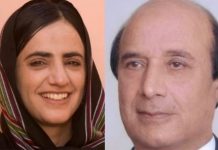






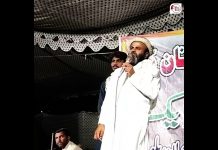



Prominent Baloch nationalist leader Dr Hakeem Lehri passed away in Karachi on 7 October. His death is not merely the loss of a political leader, but marks the end of an era in Baloch nationalist politics, one built on ideological commitment, political perseverance, the struggle for national rights, and the determination to remain steadfast in one’s position under the most difficult circumstances. Dr Hakeem Lehri was among those political figures who maintained their association with Baloch nationalist politics from their youth until their final breath and dedicated their entire lives to the struggle for Baloch national rights.
Dr Hakeem Lehri belonged to the generation of Baloch nationalist politicians who did not regard politics merely as a means of attaining power or pursuing temporary political interests. Rather, they linked it to national identity, political consciousness, collective rights and the future struggle of the nation. For him, Baloch politics was not a temporary pursuit, but a lifelong commitment. This was why, despite changes in political circumstances, the difficulties faced by the movement in different periods, the rise and decline of political forces, and the numerous obstacles placed in the path of the struggle, Dr Hakeem Lehri never abandoned his political commitment.
He was a representative political activist and leader of the generation that witnessed Baloch nationalist politics pass through various historical phases. He witnessed state repression, military operations, the arrests and imprisonment of political activists, enforced disappearances, and the killings of political figures. He saw his comrades face hardships for their political struggle, witnessed his contemporaries endure various ordeals, and closely experienced the ups and downs that emerged within Baloch politics throughout this period. These events were not merely part of his personal memories, but living experiences of the political history through which his generation passed and which profoundly shaped the direction, character and nature of Baloch nationalist politics.
The significance of his personality lay not only in the fact that he was a recognised name in Baloch nationalist politics, but also in that he was a witness to a long political era. He carried memories, experiences and observations of a political struggle that influenced generations. Such individuals serve as the historical memory of any political movement, because their lives bring together its different periods, achievements, failures, disagreements and sacrifices. When such figures pass away, it is not merely the loss of an individual; the movement is also deprived of a witness who observed its history at close quarters and played a role in its various stages.
Dr Hakeem Lehri is no longer among us, but his life and political commitment will remain part of the history of Baloch nationalism. He will be remembered as a member of the generation that maintained its political identity even under difficult circumstances and remained committed to the struggle for national rights until the end, rather than abandoning it. His death marks the end of an era, but the political memory and historical significance of that era will continue to form part of the study of Baloch politics in the years to come.