






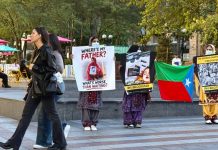
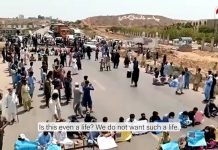


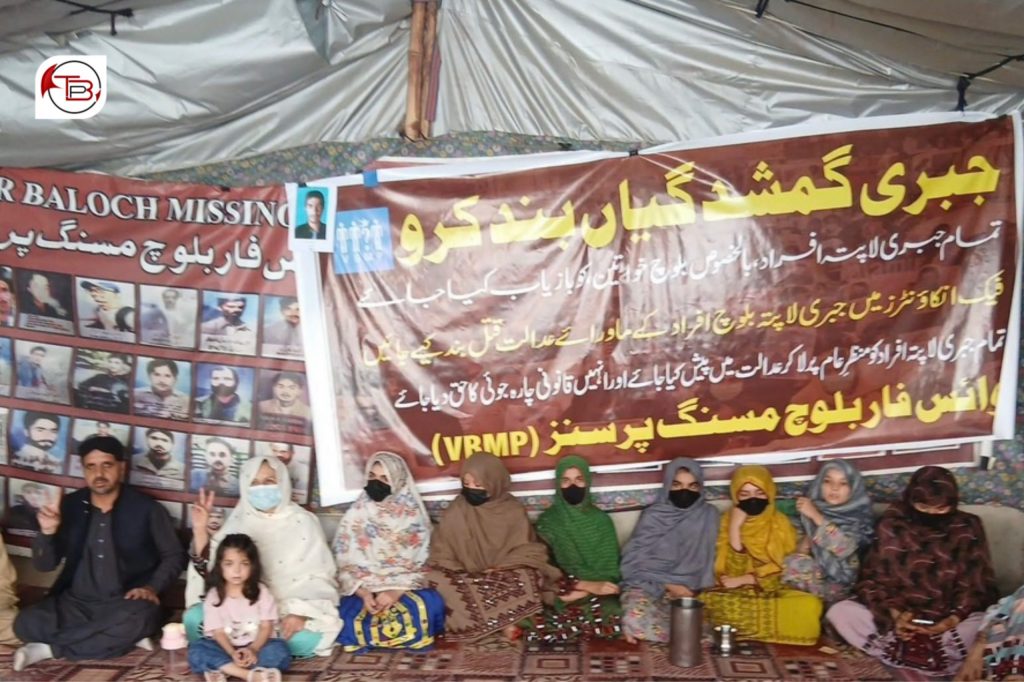
The protest camp of the Voice for Baloch Missing Persons (VBMP) against enforced disappearances continued outside the Quetta Press Club for the 6,353rd consecutive day on Tuesday. During the camp, people from different walks of life visited to register their protest against enforced disappearances and express solidarity with the families of missing persons.
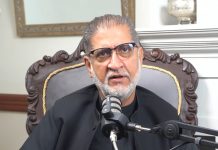
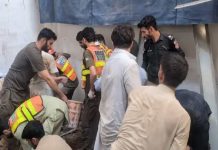
Speaking at the camp, VBMP Chairman Nasrullah Baloch said reports that bodies found in Mastung the previous day had been buried without their identities being disclosed were deeply concerning. He said the lack of identification had left families of missing persons in severe distress, as they feared the bodies could belong to their missing loved ones.
Nasrullah Baloch noted that the bodies of people who had previously been subjected to enforced disappearance had also been recovered from different parts of Balochistan, adding that the latest incident had intensified concerns among families of missing persons.
He said that even if the individuals found in Mastung had been killed in an alleged encounter, the relevant authorities had a constitutional and legal responsibility to immediately disclose their identities and ensure the identification process was conducted transparently.
He demanded that the identities of all bodies recovered from Mastung be disclosed without delay so that the uncertainty and distress among families of missing persons could be alleviated and families could learn the fate of their loved ones.
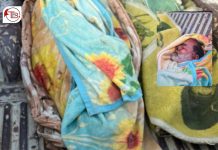
Meanwhile, the Baloch Yakjehti Committee (BYC) said that 17-year-old FSc student Irshad Baloch, son of Mohammad Younis and a resident of Lasi Goth, Malir, Karachi, died in police custody, allegedly as a result of torture.
According to the BYC, Irshad Baloch was forcibly taken from his home by police and intelligence personnel on 29 August 2026 and subsequently went missing.
The organisation said that just one day later, on 30 August, his family received his body at Jinnah Hospital in Karachi. The family was reportedly told that Irshad had died from an electric shock. However, because he had allegedly been in police custody at the time, his death raised serious concerns about possible torture, custodial abuse and the alleged use of electric shocks.
The BYC said the circumstances surrounding his death require an independent investigation and accountability for those responsible.
The organisation said that when Irshad’s parents arrived at the hospital and saw their son’s body, they were left devastated. According to the BYC, they questioned authorities about why their son had been forcibly disappeared, why he died in custody and what crime he had committed, but received no answers.
The BYC further stated that no family should have to endure such unbearable suffering, emphasising that the right to life, freedom from enforced disappearance, protection from torture and custodial abuse, and the right to justice are fundamental human rights.
The group called on human rights organisations and the international human rights community to take immediate notice of the case and what it described as ongoing human rights violations against the Baloch people.