



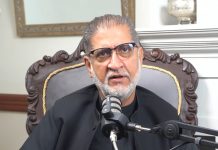




Public policy and development expert Rafiullah Kakar has said the government’s writ has “effectively ended” outside Quetta, while growing insecurity on major highways has severely restricted travel and economic activity across Balochistan.
Speaking during a podcast with journalist Farzana Ali, Kakar described the current situation as the gravest and most critical in Balochistan’s modern history.
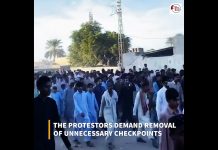
He said armed men were stopping travellers and carrying out checks on major highways, making road travel increasingly difficult. Airfares from Quetta to Karachi and Islamabad had risen to as much as Rs100,000, he added.
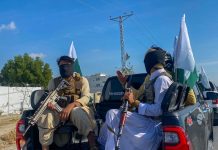
According to Kakar, the Baloch Liberation Army (BLA) effectively holds sway in the Baloch belt, while the influence of the Tehreek-e-Taliban Pakistan (TTP) is increasing in Pashtun-majority areas.
He said trade in Balochistan and Pakhtunkhwa depended heavily on cross-border routes, but repeated attacks on containers and trucks travelling towards Iran over the past five months had brought much of that activity to a halt.
“At present, Quetta has become an ‘open-air prison’, and economic activity has effectively come to an end,” he said.
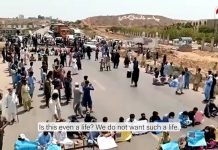
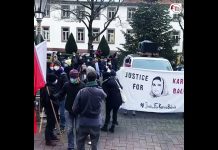
Asked about peaceful political movements such as the Baloch Yakjehti Committee (BYC) and the Pashtun Tahafuz Movement (PTM), Kakar accused the state of pursuing an “extremely misguided policy” that was pushing nonviolent movements towards violence.
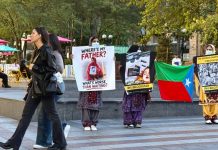
He said the PTM had advocated peace, highlighted the human consequences of war and raised its voice against Talibanisation. Similarly, he said, the BYC had campaigned against enforced disappearances and for the rights of missing persons and their families.
“The state sent a message that any movement seeking its rights through peaceful politics would not only be ignored, but would also be punished,” Kakar said, referring to the imprisonment of BYC leaders and the punishment of its workers.
He said Baloch youths who had sought to protest for their rights through the BYC were being given a clear message that there was no path available for peaceful struggle.
“You are pushing them in that direction,” he said.
Kakar also rejected the argument that the state could be treated as supreme while the people who constituted it became irrelevant or secondary, saying the state was created for the welfare of its citizens.
Addressing accusations of treason frequently levelled against political movements in Balochistan and Khyber Pakhtunkhwa, Kakar questioned why such accusations were concentrated in conflict-affected regions.
“If this is about treason, why do people not become traitors in Lahore, Islamabad or Karachi? Punjab also shares a border with India. If India were supporting this, it would be easier there. Then why, according to the state’s nominal narrative, are ‘traitors’ emerging in Waziristan, Quetta, Turbat and Awaran?”
He said the state was labelling people as traitors instead of correcting its conduct and changing its policies, adding that the movements had emerged as a consequence of those policies.