






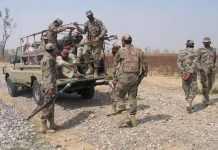

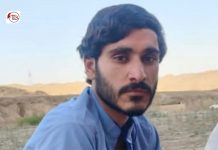
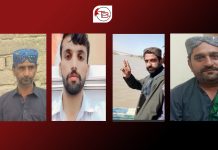









Whenever armed groups fighting for independence in Balochistan inflict losses on the Pakistani military, Pakistan’s security institutions routinely respond by killing previously forcibly disappeared persons in extrajudicial circumstances and then claiming they were killed during armed encounters. Following the losses suffered by the Baloch Liberation Army during Operation Herof, police in Balochistan and Sindh killed twenty-seven forcibly disappeared individuals in Karachi, Barkhan, Panjgur, and Quetta, later describing them as armed militants. However, one of them, Hamdan Baloch, had already been produced before the Sindh High Court, and he was scheduled to appear in court on the very day he was killed.
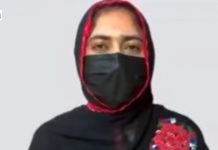
For more than two decades, Baloch youths have been subjected to extrajudicial killings in Balochistan, and the state is now also targeting their families as a form of collective punishment. Hamdan Baloch was in the custody of Sindh Police and had been presented twice before the Sindh High Court. Despite this, authorities have claimed he was killed in an armed encounter, while his family has reportedly been subjected to continued harassment in an apparent effort to silence them.
The practice of systematically killing Baloch youths by Pakistan’s military and powerful state institutions has continued for years. The killing of twenty-seven forcibly disappeared individuals in February is not the first incident of its kind in Balochistan. Rather, the pattern of killing forcibly disappeared persons in alleged encounters has persisted for more than a decade. Due to restrictions on media access and state pressure in Balochistan, only a limited number of such cases reach the outside world, while the region currently faces a severe human rights crisis.
Pakistan’s powerful institutions appear to believe that enforced disappearances, state repression, collective punishment, and custodial killings can suppress the Baloch insurgency. However, the ground realities in Balochistan suggest that such policies are further weakening the relationship between Balochistan and Pakistan. The grief of Hamdan Baloch’s mother, along with the collective lament of other mothers affected by state repression, continues to erode the state’s legitimacy in the region. Increasingly, a perception is taking root within the Baloch collective memory that the survival of the Baloch nation within Pakistan is not possible.