





















Pakistan has called on the United Nations Security Council (UNSC) to designate the Baloch Liberation Army (BLA)as a terrorist organisation, while China has reiterated its support for Pakistan, pledging cooperation on security as attacks by Baloch armed groups escalate in Balochistan.
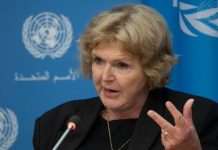
Addressing a recent UNSC briefing on threats posed by what termed as “terrorist activities to international peace and security”, Pakistan’s Permanent Representative to the UN, Ambassador Asim Iftikhar Ahmad, urged the Council to take immediate action against the BLA. He alleged that the group operates as a “terrorist proxy” supported by external actors and funded from abroad.
Ambassador Asim Iftikhar claimed that recent attacks in Balochistan had resulted in the deaths of 48 civilians, including women and children. He further alleged that groups such as the BLA and Tehreek-e-Taliban Pakistan (TTP) operate from Afghan territory with backing from Pakistan’s “eastern neighbour,” an apparent reference to India.
According to the ambassador, Pakistani forces killed 145 alleged BLA members during counter-operations following the attacks. These figures and claims could not be independently verified.
The UNSC last week issued a statement condemning the recent attacks carried out at multiple locations across Balochistan.
Escalation of attacks in Balochistan
Earlier this week, the BLA announced the launch of coordinated attacks across Balochistan, targeting government offices, Pakistani military installations, police stations and a prison. The group said the attacks were part of a wider, organised campaign.
Pakistani officials say several senior police officers have been killed during the assaults, while dozens of personnel were reportedly taken into custody by armed groups.
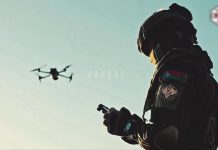
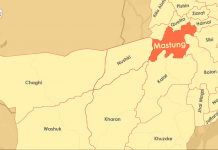
Separately, local sources and civil society groups allege that around 25 civilians have been killed in Noshki, Gwadar and Kech as a result of firing and drone strikes carried out by Pakistani forces. The authorities have not issued official casualty figures regarding civilian deaths.
China reiterates support for Pakistan
Amid the deteriorating security situation, Pakistan’s Interior Minister Mohsin Naqvi met Chinese Ambassador Jiang Zaidong in Islamabad to discuss counterterrorism cooperation and the protection of Chinese nationals and projects.
The Chinese ambassador condemned the attacks on security forces in Balochistan and expressed condolences to the families of those affected. He stated that China stands in full solidarity with Pakistan during what he described as a difficult period and reiterated Beijing’s opposition to terrorism in all its forms.
Minister Naqvi said that militancy in Balochistan was organised and premeditated, adding that Pakistani forces had responded in a timely and effective manner. He briefed the ambassador on ongoing military operations and said that special measures were being taken to ensure the safety of Chinese citizens and projects.
He further announced that a dedicated protection unit for Chinese nationals was being established and said that advanced Chinese technology and equipment would assist Pakistan in coordinated counterterrorism operations. The minister also briefed the ambassador on his recent visit to China.
Both sides discussed cooperation on counterterrorism, internal security, intelligence sharing and cybercrime, reaffirming their commitment to strengthening the Pakistan–China strategic partnership.
The Chinese ambassador thanked the Pakistani government for the security arrangements made for Chinese nationals, while Minister Naqvi expressed appreciation for China’s continued diplomatic and political support.
Targeting of Chinese interests
Pakistani officials note that the BLA has repeatedly targeted Chinese economic and strategic interests since 2018, including projects linked to Gwadar Port, the China–Pakistan Economic Corridor (CPEC) and mining operations such as Saindak.
Deadly attacks on Chinese engineers and workers in Balochistan have heightened security concerns for Islamabad, as Pakistan seeks to reassure Beijing of its ability to protect Chinese investments and personnel amid a widening insurgency and growing international scrutiny.