

















Pakistani authorities have initiated legal measures and diplomatic efforts in response to increasing international attention on the human rights situation in Balochistan, raising questions among observers about whether the country is moving towards a deeper systemic crisis.
According a report published on a Norwegian platform, Balochistan, Pakistan’s largest province, has for decades experienced conflict, uneven distribution of power and allegations of serious human rights violations. In recent years, reports indicate that the situation has further deteriorated, with an increase in cases of enforced disappearances, including reports involving women, while peaceful human rights activists have increasingly faced criminal charges.
Analysts say these developments must be understood both within the framework of domestic power structures and the growing international focus on the province.
International Recognition and State Response
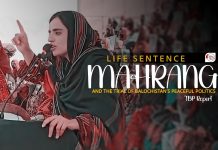
In 2024, Baloch rights activist Mahrang Baloch was included in Time magazine’s list of the “100 emerging leaders shaping the world”, which brought international attention to civil society activism related to Balochistan.
In the same year, she was also included in the BBC’s list of 100 influential women. In 2025, she was reportedly nominated for the Nobel Peace Prize. Following this international recognition, observers say there has been a visible response from the Pakistani state.
According to human rights advocates, authorities have increased efforts to control the narrative through political, legal and media channels. Analysts note that when a human rights activist receives international recognition while facing legal proceedings in their own country, it highlights a visible gap between civil society documentation and the state’s diplomatic messaging.
Arrests and Concerns Over Civil Liberties
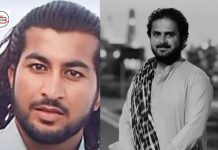
During the same period, several prominent voices have faced legal action. Human rights lawyer Iman Mazari and her husband Hadi Ali Chatha, who have been involved in documenting cases of enforced disappearances and alleged state abuses in Balochistan, have been detained.
Activist Hadi Chatha, known for highlighting minority rights issues and working to strengthen civil society, has also reportedly been arrested.
Observers say these arrests appear to form part of a broader pattern in which individuals challenging the official narrative regarding security issues are increasingly targeted through legal proceedings.
Delegation Visit to Norway
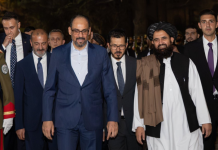
Between 15 and 17 February 2026, a delegation from Balochistan visited Norway under arrangements made by Pakistan’s embassy.
The delegation was led by former caretaker prime minister Anwaar-ul-Haq Kakar, and included senator Dinesh Kumarand Saleem Ahmed Khoso. Balochistan Chief Minister Sarfaraz Bugti was formally part of the delegation but did not attend for unspecified reasons.
Analysts note that Balochistan has historically seen strong influence from military institutions, and Kakar worked closely with the security establishment during his tenure. In that context, some observers argue that the composition of the delegation reflected an attempt to present the state’s narrative rather than representing the broader spectrum of Balochistan’s civil society.
For international actors, analysts say the key question is not only who they meet, but which political and institutional structures those individuals represent.
Concerns About the Judicial System
Reports have also raised concerns about pressures on Pakistan’s judicial system. Leaders of the Baloch Yakjehti Committee, including Dr Mahrang Baloch, have pointed to what they describe as biased proceedings in anti-terrorism courts.
These concerns include allegations of hostile attitudes by judges and the refusal to transfer cases to other courts despite formal objections.
In addition, Pakistan’s Supreme Court has reportedly reserved decisions on several bail cases for months without issuing rulings. Legal observers say prolonged delays in decisions related to personal liberty can undermine public confidence in judicial independence and the rule of law.
Broader National Context
Observers say the situation in Balochistan cannot be viewed in isolation. The imprisonment of former prime minister Imran Khan, along with increased media censorship, restrictions on digital platforms and legal cases against political opponents, has contributed to growing political polarisation and institutional instability in Pakistan.
Criticism of the military and security institutions has increasingly been met with legal actions, while journalists have reported pressure and growing self-censorship.
Analysts say these factors collectively point to a concentration of power within the security establishment and a continued weakening of civilian institutions, narrowing the space for democratic politics in Pakistan.
In this context, Balochistan is often viewed as a magnifying lens through which broader national trends can be observed, with policies first implemented in conflict-affected regions later becoming more widespread across the country.
Concerns Over a Potential Systemic Crisis
Analysts warn that a political system that responds to criticism through delayed judicial processes, expanding censorship and criminal cases against activists risks both international isolation and domestic instability.
Pakistan is already facing significant economic pressure, political divisions and declining institutional credibility, creating what observers describe as a fragile political environment.
Without stronger legal protections, independent institutions and an open civic space, analysts warn that the country could gradually move towards a more authoritarian form of stability — a trajectory that historical experience shows rarely leads to long-term stability and can instead result in deeper systemic crises.
The article was originally written in Norwegian by journalist and columnist Arash Moradi for the Norwegian platform “Utrp” and has been translated into English and republished by The Balochistan Post for its readers.