









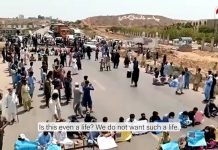
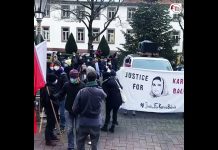
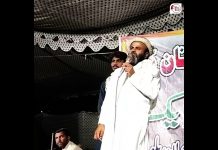



People across Balochistan held seminars, vigils and awareness campaigns on 25 January to mark what the Baloch Yakjehti Committee (BYC) calls “Baloch Genocide Remembrance Day,” commemorating victims of enforced disappearances, extrajudicial killings and other alleged human rights abuses.
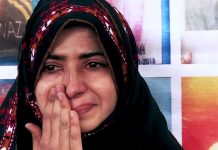
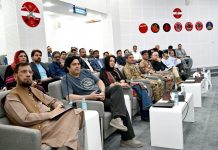
In Quetta, the capital of Balochistan, a seminar organized by the BYC recalled the discovery of mass graves in Tootak in 2014, which activists describe as a defining symbol of the suffering of thousands of families of the forcibly disappeared. Relatives of missing persons shared accounts of prolonged uncertainty and hardship.
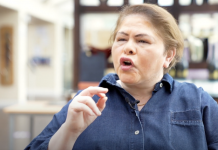
Families of detained BYC leaders also addressed the event, alleging that the state was “weaponizing the law” to silence dissent. The seminar highlighted the arrests of Dr Mahrang Baloch, Beebow Baloch, Gulzadi Baloch, Shaji Baloch and Beebarg Baloch. Speakers, including Dr Sabiha, said the pattern of enforced disappearances, harassment and restrictions on peaceful protest reflected a worsening human rights situation.
The seminar ended with the message that “the more we are persecuted, the stronger we will rise,” urging international attention to what organizers described as continuing abuses.
In Taunsa, Koh-e-Sulaiman, a peaceful demonstration was held to commemorate those described by the BYC as “victims of state projects, uranium mining and environmental devastation.”
Photographs of people who died from cancer were displayed alongside flowers and candles. Organizers said the event highlighted long-standing concerns over the impact of nuclear-related activities and the absence of basic healthcare facilities.
Participants said Koh-e-Sulaiman, despite being in Punjab province, had been “deliberately deprived” of hospitals, schools and essential services because it is a Baloch-populated region. They described cancer-related deaths as the “result of systemic neglect.”
A seminar was also held in Dalbandin, where speakers discussed enforced disappearances, extrajudicial killings and what they described as the suppression of peaceful political expression.
Participants said the neglect of health, education and economic development had left communities marginalized, urging youth to remain “politically conscious” and committed to peaceful struggle.
In Turbat, Kech, residents gathered to remember victims of enforced disappearances and to call for justice. The event also recalled the Tootak graves, where more than 100 unidentified bodies were found in 2014.
In Surab, BYC activists distributed awareness pamphlets from the main bazaar to remote settlements, including Killi Dumb, Killi Surkh, Killi Azizabad, Dun, Hajika and Nighar.
Organizers said the campaign sought to ensure that “every household” received information about “ongoing genocide, disappearances and systemic repression.”
A similar drive took place in Mastung, where pamphlets were distributed in bazaars and residential areas. The materials said the Baloch were being targeted “because of their identity” and called on national and international organizations to take notice.
In Khuzdar, pamphlets were distributed across Arbab Complex, Farooq Chowk, Sadabahar Market and Hospital Road, which organizers said aimed to broaden public understanding of alleged human rights violations.
Why 25 January Is Observed
25 January is observed by Baloch people, along with rights groups and activists around the world, as “Baloch Genocide Remembrance Day” to remember victims of enforced disappearances and extrajudicial killings, as well as highlight alleged systematic human rights abuses.
The date is linked to the 2014 discovery of mass graves in Tootak, Khuzdar, where more than 100 decomposed bodies were recovered. Amnesty International later confirmed at least 169 bodies were found, while local groups claim the actual number may be higher.
On 7 January 2025, the BYC held a press conference at “Dasht Kabristan” in Mastung, a site known for its unmarked graves, and declared 25 January as “Baloch Genocide Remembrance Day.”
The BYC said 25 January should serve as a day of remembrance and global appeal for acknowledgement of what it described as “systematic genocide” in Balochistan.
The group said other persecuted nations had received international recognition and argued the Baloch also deserved measures to halt abuses and protect their people.