



















The Balochistan Liberation Front (BLF) has released what it describes as its annual operational report for the period January to December 2025, claiming to have carried out 581 armed actions across Balochistan during the year. According to the report, these operations resulted in alleged human and material losses to Pakistani security forces totaling 929 casualties, including 647 killed and 282 wounded.
In a media statement the BLF spokesperson Major Gwahram Baloch said that the group characterized 2025 as a decisive and exceptional year for what it termed the ongoing “national resistance struggle” in Balochistan. The spokesperson claimed that BLF activities during the year went beyond sporadic or reactive actions and were instead conducted under what he described as an organized, multidimensional, and long-term strategic framework.
According to the statement, BLF operations during 2025 were conducted across a wide geographical spread, including coastal regions, urban centers, highways, mountainous terrain, and remote areas of Balochistan. The spokesperson said the actions were part of a coordinated strategy aimed at state military structures, security forces, surveillance systems, and what the group described as economic interests linked to the state.
The report claims that these operations resulted in significant losses to state forces and affiliated networks. Major Gwahram Baloch stated that the alleged 647 fatalities included personnel from the police, intelligence networks, the Coast Guard, special forces, and individuals described by the group as belonging to “death squads.” He added that these deaths occurred during armed clashes, ambushes, and direct confrontations in different parts of Balochistan.
Details regarding injuries were also provided in the statement. According to the BLF’s figures, 282 army and Frontier Corps personnel were wounded during the year. The group further claimed that eight intelligence operatives, four police personnel, 30 individuals described as “death squad” members, and 10 Coast Guard personnel were also injured. The spokesperson described these figures as evidence of sustained pressure on state forces throughout the year.
The BLF report further claims that installations associated with state authority were repeatedly targeted. According to the spokesperson, more than 33 police and Levies checkpoints or police stations were temporarily overrun or attacked at different times. In addition, two Frontier Corps check posts and five customs camps were also targeted. The group described these actions as practical proof of its claims regarding operational reach and control.
Providing a breakdown of the nature of the alleged operations, the BLF stated that during 2025 it carried out 36 ambushes, 33 hand-grenade attacks, 13 improvised explosive device (IED) blasts, and 33 sniper attacks. The group also claimed to have conducted seven intelligence-based operations. According to the statement, 163 attacks involved heavy weapons, rockets, and light machine guns.
The report further states that small arms were used in multiple engagements, including 28 grenade launcher attacks and 33 hand-grenade attacks. The BLF also claimed responsibility for targeting a bank and a bridge during the year.
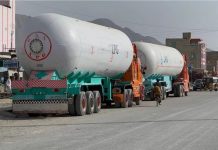
Major Gwahram Baloch stated that during 2025, 17 military vehicles were destroyed or disabled, including two armored vehicles. He further claimed that more than 15 bulldozers and construction machines were set on fire, while over 67 vehicles allegedly used for the transportation of gas, minerals, and military supplies were destroyed. According to the statement, three police vehicles, six trucks, and four tractor-trolleys were also damaged in these actions.
The spokesperson also claimed that surveillance and intelligence infrastructure was targeted throughout the year. According to the BLF report, 26 “spy towers” were destroyed, 15 surveillance cameras were rendered inoperative, and 10 quadcopters were targeted. These actions were described as efforts to weaken state surveillance, information control, and intelligence networks.
The statement further claimed that, alongside limited-scale actions, the BLF carried out what it described as strategic operations during the year. Among these was an operation referred to as “Operation Baam,” which, according to the spokesperson, targeted military forces and associated economic interests across Balochistan.
Major Gwahram Baloch also claimed that the group’s “Saddo Operation Battalion” carried out a deadly attack in Nokkundi targeting foreign investors. He said these actions were part of a long-term military strategy aimed not only at causing immediate damage but also at challenging state military pressure, mobility, and control in specific areas.
On the media and ideological front, the BLF spokesperson stated that during 2025 the group published 12 issues of Asper magazine and three issues of Sarmachar magazine. These publications were described as part of what the group termed its intellectual, ideological, and informational struggle.
Concluding the statement, the BLF spokesperson said that the operations carried out between January and December 2025 reflected the intensity, scale, and organizational evolution of the group’s activities. He described 2025 as a key reference point for shaping future strategy, organizational decisions, and the direction of what the group calls its resistance movement, while reiterating the BLF’s stated resolve to continue its activities on multiple fronts in the coming year.