

















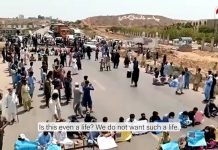





Iran has witnessed an unprecedented surge in the use of the death penalty during 2025, with Iran-controlled Balochistan emerging as one of the most severely affected regions, according to human rights organisations.
Rights groups report that at least 1,500 people have been executed across Iran so far this year, marking the highest number of executions recorded in the past 35 years. The Norway-based organisation Iran Human Rights has described the figures as deeply alarming.
Mahmood Amiri Moqaddam, Director of Iran Human Rights, said that such a large number of executions has not been seen in over three decades. He noted that the sharp increase in death sentences has become particularly evident since the nationwide protests that began in September 2022.
According to the organisation’s data, more than 500 people were executed in Iran in 2022. The number rose to over 800 in 2023, increased further to at least 975 in 2024, and has now reached a minimum of 1,500 executions in 2025. Of these, more than 700 individuals were executed on charges related to narcotics.
Human rights sources say that a significant proportion of those executed this year belong to the Baloch ethnic community from the province of Sistan and Balochistan. Reports indicate that in the first six months of 2025 alone, at least 70 Baloch prisoners were executed in various Iranian prisons, particularly in Iranshahr and Zahedan.
Multiple Baloch prisoners were reportedly among those executed in March 2025, while further executions were carried out quietly in prisons across western Balochistan during June and October. In many cases, families were neither informed in advance nor allowed a final visit with the condemned prisoners.
Human rights organisations allege that most executions in Sistan and Balochistan follow opaque judicial processes, often involving forced confessions and the denial of adequate legal representation. They argue that the proportion of Baloch prisoners facing the death penalty is disproportionately high compared to Iran’s overall population, pointing to systemic ethnic and regional discrimination.
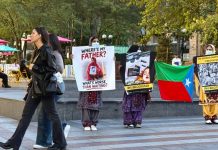
Human rights activists and Baloch organisations have urged the international community, including the United Nations and global human rights bodies, to take serious notice of the escalating use of capital punishment in Iran, particularly in Iran-controlled Balochistan. They have called for independent investigations into alleged abuses against Baloch prisoners, warning that if the current trend continues, the human rights situation in the region could deteriorate further.