
















The Baloch Yakjehti Committee (BYC) and Baloch Students Organization Azad (BSO-Azad) have strongly condemned the ongoing military siege and aerial bombardments in Zehri, Khuzdar district of Balochistan, calling it a grave humanitarian crisis and an assault on innocent civilians.
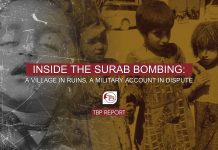
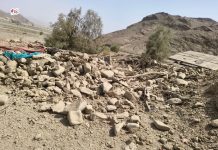
In a statement, BYC said that Pakistani security forces have carried out indiscriminate bombings, enforced disappearances, and targeted ordinary Baloch civilians. Verified reports indicate that on 5 October, Pakistani forces conducted a series of blind aerial strikes in Zehri, killing at least five innocent civilians, including women and children, and injuring three others.
Among the victims were two sons and a nephew of Manzoor Ahmed, as well as Bibi Rahima, an elderly woman, and her son, both of whom were killed in the bombing. Rahma’s daughter and another son were critically injured and taken to hospital.
BYC added that due to the complete military blockade and communication blackout in Zehri, details of these incidents only emerged more than a week later. The humanitarian situation, the committee warned, is rapidly deteriorating, with residents facing severe hardship under the ongoing siege.
The organization further noted that on 1 October, a similar airstrike claimed the lives of five more civilians, identified as Amna Bibi (40), wife of Sanaullah Baloch, Lal Bibi (41), wife of Ali Akbar, and Mohammad Hasan (30), son of Yaqoob. Five others were injured in that attack.
Echoing the concerns, a spokesperson for BSO-Azad stated that the relentless bombardment and enforced disappearances have turned daily life in Zehri into a nightmare. “A strict curfew has trapped civilians under constant fear, while continuous drone strikes and raids have subjected them to collective punishment,” the spokesperson said, describing the attacks as part of “a systematic campaign of genocide” against the Baloch people.
BSO-Azad also alleged that a week ago, twenty unidentified bodies, believed to be of Baloch civilians, were brought to the Civil Hospital in Quetta without any DNA testing and were later buried secretly in Dasht, Mastung—a site reportedly used by state forces to dispose of those killed in staged encounters.
Both organizations warned that unless the operations are immediately halted, Zehri could face “a large-scale humanitarian catastrophe.” They called on the international community, human rights bodies, and global media to urgently investigate the situation and hold Pakistan accountable for “ongoing war crimes and human rights violations” in Balochistan.
“The occupying forces must remember that bombing our towns and murdering our children will never crush the Baloch spirit,” the BSO-Azad spokesperson said. “Every act of brutality only strengthens our resolve and fuels our struggle for freedom, dignity, and the liberation of our homeland.”