









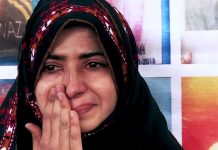

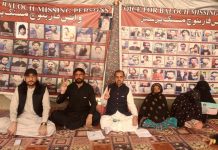






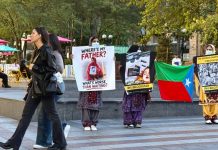




It has been one month since the enforced disappearance of Baloch student Mahjabeen Baloch, yet her whereabouts remain unknown and she has not been presented in any court, the Voice for Baloch Missing Persons (VBMP) said on Sunday.
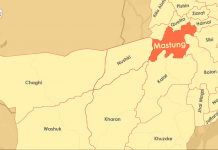
In a media statement, VBMP Chairman Nasrullah Baloch said Mahjabeen was forcibly disappeared on 29 May by personnel of state agencies from Civil Hospital Quetta. Her family, he added, reported the incident to the VBMP and said she had been detained without any legal warrant and taken to an undisclosed location.
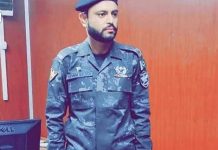
He further stated that the family had also informed the organization that a week prior to Mahjabeen’s disappearance, her brother Younus Baloch was detained by security forces from their home in Basima. His whereabouts also remain unknown.
“Neither Mahjabeen nor her brother has been presented in any court so far, which constitutes a grave violation of human rights,” Nasrullah Baloch said. He appealed to the Balochistan government and federal institutions to take immediate steps to ensure their safe recovery.
If either sibling is accused of any wrongdoing, he added, they should be brought before a court and dealt with under the law rather than being held incommunicado.
Dr Sabiha Baloch, a central leader of the Baloch Yakjehti Committee (BYC), also voiced concern on social media.
“It has now been exactly one month since Mahjabeen’s enforced disappearance. What is astonishing is that no one in power in this state has even asked the authorities the simple question: where is Mahjabeen?” she wrote on X, formerly Twitter.
She said that even if Mahjabeen were wanted in any terrorism-related case, she should be in court or prison, not forcibly disappeared.
“Enforced disappearances are nothing short of thuggery and fascism. No law in the world permits such injustice. And to abduct a 24-year-old girl, affected by polio, from her hostel reflects the reality of how Baloch people are being forced to live under conditions akin to slavery.”
Dr Sabiha further condemned the state’s reaction to those who raise their voices.
“When we dare to ask these questions, all the powerful ones start calling us terrorists and instigators. But if, in the dictionary of these oppressors, we are terrorists, then what are those who abduct people, extort money, deal in narcotics, fire upon unarmed civilians, suppress media and judiciary, and steal electoral mandates?”
It is worth noting that both local and international human rights organizations have condemned Mahjabeen’s abduction and called on Pakistani authorities to produce her in court.
Amnesty International said the case reflects a broader pattern of enforced disappearances and “runs contrary to Pakistan’s international human rights obligations.” The organization urged authorities to conduct “prompt, thorough, and effective investigations,” disclose her whereabouts, and ensure her immediate release.