






















According to reports from the Kolwah region of Balochistan, a young man detained by Pakistani security forces has died as a result of severe torture, with his body found dumped late at night. The incident has once again brought to light the ongoing crisis of enforced disappearances and custodial abuses in Balochistan.
According to local sources, Pakistani forces carried out an operation in the Rodkan area of Kolwah on Monday, detaining several residents and transferring them to a nearby military camp, locally known as “Jirk Camp.” While most of those arrested were later released, one individual, identified as Nawab, son of Noor Bakhsh and a resident of Rodkan, was not returned to his family.
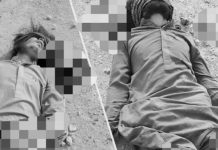
Nawab’s body was discovered hours later. Witnesses and local residents reported that the corpse bore clear signs of brutal torture. Villagers described the body as being severely burned, consistent with the effects of electric shocks, suggesting that the young man was subjected to intense physical abuse during his time in custody. His body was allegedly dumped during the night under the cover of darkness, a practice often reported in cases involving extrajudicial killings in the region.
There has been no official comment or explanation from Pakistani authorities regarding Nawab’s detention or subsequent death.
The incident is part of a larger pattern of human rights violations in Balochistan, where international human rights groups have repeatedly documented enforced disappearances, torture, and extrajudicial executions. For years, Baloch activists and organisations have accused the Pakistani state of using collective punishment and systematic violence in its attempt to quell the Baloch nationalist movement. Thousands of Baloch have reportedly gone missing over the past two decades, with many later found dead under suspicious circumstances, often showing signs of torture.
Despite widespread condemnation and calls for accountability, Pakistani state institutions have largely remained silent or dismissive of these allegations. Investigations, if conducted at all, are rare and seldom lead to prosecutions. Families of victims have often reported facing harassment and intimidation when seeking justice.