





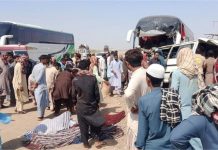


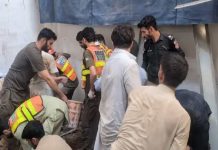







The bodies of four men were discovered on Thursday along the Sanjawi Road in the Harnai district of Balochistan. The deceased bore clear bullet wounds, with security forces claiming they were “armed militants” killed during an intelligence-based operation. However, human rights activists and local sources have raised serious concerns, alleging the men were victims of an extrajudicial killing.
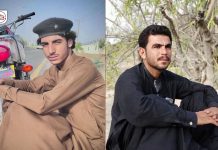
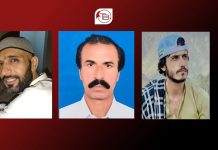
According to reports, the bodies were recovered from the Thor Khan area. Among them was Saeed Marri, a previously forcibly disappeared individual. Saeed had been reportedly abducted alongside his two young sons. His elder son, Abdul Nabi Marri, was found dead on April 18 in Dukki, while his younger son, Waris Marri, was similarly killed, with his body recovered from Sanjawi on May 1. In both cases, authorities claimed they were killed in armed encounters, though rights groups insist they were already in custody at the time of death.
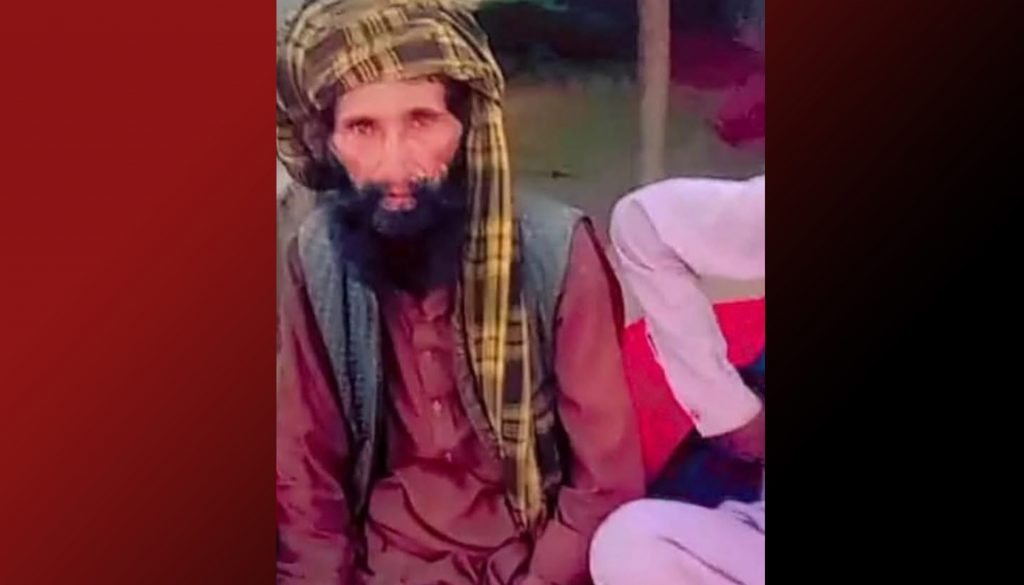
Another of the four bodies recovered on Thursday was identified as Eid Muhammad Marri, who had reportedly been forcibly disappeared three months ago from Harnai. His family maintains he was arrested by security personnel and held incommunicado. His body, like the others, bore bullet wounds, suggesting he too was executed and later falsely presented as killed in an exchange of fire.
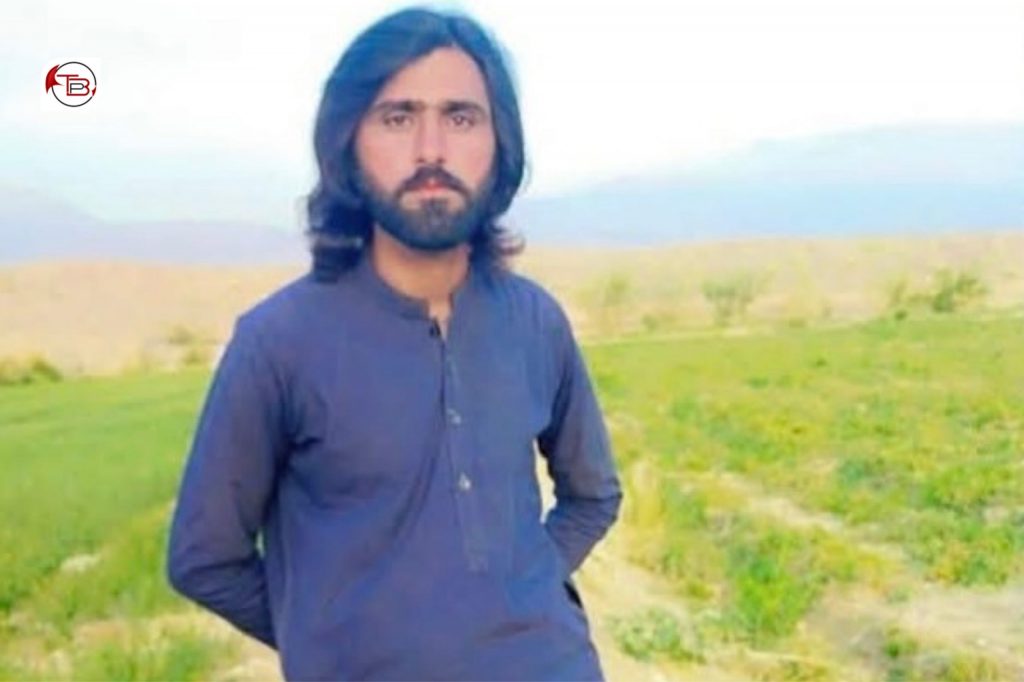
These incidents appear to follow a pattern frequently observed in Balochistan, where missing persons are later found dead under similar circumstances. Numerous families across the region have accused security forces of detaining individuals without warrants or due process and later staging “fake encounters” to justify their deaths. The recovery of multiple bodies from the same family over weeks further fuels suspicions of systematic targeting.
Adding to the outrage, on Thursday, Sayed Manzoor Shah, a resident of Mastung, held a press conference at the Sarawan Press Club. He alleged that his son, Sayed Ihsan Shah, was shot dead by Frontier Corps (FC) personnel near Lakpass. “My son had travelled to Quetta for Eid shopping and was staying at a relative’s place. The next evening, I was informed he had been injured in a road accident. Upon arrival, I learned that he was shot dead by FC,” said Shah, demanding justice and an independent inquiry.
Balochistan has long grappled with human rights violations, particularly enforced disappearances, custodial deaths, and extrajudicial killings. Rights groups, both national and international, have documented hundreds of such cases, often implicating Pakistani security agencies. The passage of a recent Anti-Terrorism Act by the Balochistan Assembly, which grants sweeping powers to law enforcement, has intensified fears among locals. Critics argue that the legislation effectively grants impunity to the security forces, making it easier to detain and eliminate suspects without judicial oversight.
While Pakistani authorities routinely deny allegations of abuse, claiming counter-insurgency operations are necessary to maintain law and order, the repeated emergence of dead bodies, often of previously disappeared individuals, has only deepened mistrust and resentment among the Baloch population.
International human rights organisations have called on Pakistan to ensure transparency, hold those responsible for unlawful killings accountable, and address the longstanding grievances of the Baloch people. Without meaningful reforms, analysts warn, the cycle of violence and retaliation in the region is likely to persist.