












By Mehrzaad Baluch
As Pakistan clings to its control over Balochistan through militarization and resource exploitation, the Baloch Liberation Army (BLA) continues to assert itself as the most formidable indigenous resistance force in the region. The BLA’s recent attacks on May 11, 2025, declared military exercises for the anticipated Operation Herof 2.0, underscore its strategic evolution and growing capacity to strike at the heart of the Pakistani state and its foreign collaborators. The name “Herof,” which means “Black Storm” in Balochi and Brahui, reflects the symbolism of the operation as violent, sweeping, and unpredictable. These military exercises were aimed at testing enemy responses, gathering intelligence, and preparing for Herof 2.0, demonstrating the BLA’s preparedness for sustained conflict. If Operation Herof was a storm, the next might well be a deluge, heralding a more intense and coordinated campaign.
The BLA’s twin statements on May 11 not only laid out the operational details of these attacks but also conveyed a broader political and military message. The organization claimed responsibility for over 71 coordinated attacks across more than 51 locations in Balochistan, targeting Pakistani military convoys, checkpoints, intelligence agencies, mineral transport vehicles, and death squad (Pakistan military–backed militias) agents.
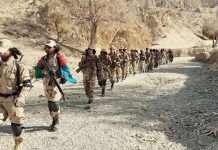
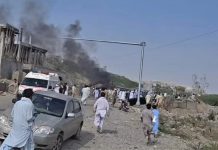
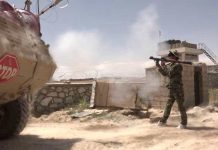
In one of the most significant operations, BLA fighters seized control of the Hoshab area in Kech, taking over the Levies police station and NADRA office, confiscating weapons, and burning both buildings after positioning themselves along the highway for snap checking. Similarly, in Bonistan, Panjgur, fighters held control for over four hours, engaging in combat, continuing snap checking on the main highway, and targeting a fleeing death squad vehicle with heavy gunfire, resulting in serious losses. The third major assault took place in Majboorabad, where a military convoy was ambushed, killing 14 personnel, injuring others, and destroying three vehicles along with a surveillance drone, according to the BLA’s May 11 statement.
These coordinated, systematic, and decisive attacks not only caused significant casualties and property losses to the Pakistani forces but also demonstrated the BLA’s readiness and military capabilities for Operation Herof 2.0.
As part of these exercises, BLA carried out seven more attacks across Ornach, Panjgur, Kalat, Noshki, and Sibi districts. These included road blockades, IED blasts, and armed assaults on Pakistani military outposts. According to the BLA, these attacks form part of its long-term strategy to destabilize the occupying forces and prepare for more extensive engagements in the future.
But these attacks are more than just battlefield victories; they reflect a broader military build-up for Operation Herof 2.0, the sequel to the August 2024 Operation Herof, the largest insurgent offensive in Balochistan’s modern history. That operation targeted 13 districts, destroyed 44 military and economic targets, and resulted in the deaths of at least 130 Pakistani soldiers, according to the BLA’s spokesperson. Centered around coordinated Fidayeen missions, sabotage of infrastructure, and short-term territorial control, Herof marked a new phase in the BLA’s warfare—more sophisticated, more disciplined, and far more difficult for Islamabad to suppress.
A Legitimate War of Liberation
Despite Islamabad’s relentless branding of BLA as a terrorist group, the movement has repeatedly proven that it functions not as a scattered band of militants but as a highly disciplined national liberation army. The BLA’s fighters undergo structured military training, operate under a centralized command, and follow a coherent ideological framework rooted in the Baloch people’s right to self-determination. The organization’s legitimacy comes not from external validation but from the mass support of the Baloch nation, its historical grievances, and its consistent demand for independence following Pakistan’s 1948 annexation of Balochistan.
In a powerful segment of its May 11 statement, the BLA reiterated its appeal to India and other regional powers to recognize its status as a national liberation movement and to support its fight against Pakistan’s colonial occupation. This is a calculated call that underscores the widening regional scope of the Baloch liberation struggle. The BLA argues that helping Balochistan regain its sovereignty would serve not only the Baloch people but also regional stability by weakening a militarized Pakistan that continues to nurture extremist proxies across South Asia.
Operation Herof’s Strategic Impact
The first Operation Herof was not merely symbolic. Launched in August 2024, it marked a transformation in the BLA’s approach—away from hit-and-run ambushes and toward prolonged, multi-layered campaigns involving dozens of strategic points. One of the most high-profile actions of the operation occurred in Lasbela district of Balochistan, where BLA’s self-sacrificing unit Majeed Brigade Fidayeen stormed a paramilitary base with vehicle-borne explosives and automatic weapons, killing 68 soldiers and occupying the compound for over 20 hours.
Simultaneously, the BLA’S elite units, Special Operation Tactical Squad (STOS) and Fatah Squad executed highway blockades, targeting Pakistani convoys and effectively shutting down logistics in several areas. The BLA’s use of surveillance technology, real-time intelligence through its intelligence wing ZIRAB, and locally supported logistics made Operation Herof one of the most successful guerrilla offensives in South Asia in recent decades.
But perhaps even more telling was the Zehri Control, conducted earlier in 2024, which BLA described as a “military exercise” for Herof 2.0. Fighters from the STOS seized control of government buildings, police stations, and banks in Zehri without harming civilians, remaining in control for hours before voluntarily withdrawing. This act was not only militarily significant, it was also deeply symbolic, demonstrating BLA’s capability to govern and its commitment to a disciplined liberation ethic.
Fidayeen Warfare and Asymmetrical Supremacy
Since its inception, the BLA’s Majeed Brigade has led the charge in self-sacrificing or Fidayeen warfare, a tactic designed to maximize impact on high-value military and economic targets. Rather than chaotic violence, these attacks are the result of deliberate planning and strategic calculation, carried out with a precision that speaks to the depth of the conflict and the determination behind it. From the 2018 attack on the Chinese consulate in Karachi to the 2022 bombing at the Confucius Institute, the BLA’s Fidayeen operations have struck at the core of Pakistan’s strategic partnerships, especially with China.
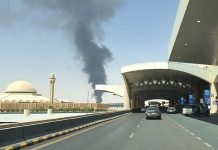
The 2024 Fidayee attack on Jinnah International Airport in Karachi, targeting Chinese investors and engineers, the attack on a military train in Quetta killing more than 30 personnel, and the attack on military convoy bus in Noshki, killing 90 personnel, further displayed the BLA’s capability to strike in the heart of urban Pakistan. These are not the actions of a fragmented militant group but of a liberation army with a clear chain of command, battlefield discipline, and strategic foresight.
Operation Dara-e-Bolan And Expansion
Another key milestone in the BLA’s recent military history was Operation Dara-e-Bolan, initially carried out between January 29 and 31, 2024. Involving 385 fighters from four specialized and elite BLA units, the offensive resulted in the control of a 70km radius, including Mach town and the NH-65 highway. According to BLA’s media wing, over 78 Pakistani security personnel were killed, with minimal BLA casualties—only one fighter from the Fatah Squad was martyred, along with 12 Fidayeen in Majeed Brigade-style suicide operations. It was one of the rare offensives where the BLA successfully held territory for several days, underscoring its evolution into a structured liberation force.
More recently, between March 11 and 18, 2025, the Baloch Liberation Army (BLA) launched the second phase of Operation Dara-e-Bolan on a broader scale. According to the organization’s official statement, the hijacking of the Jaffar Express near Bolan district and a Fidayeen attack on a military bus convoy in Noshki resulted in over 354 enemy fatalities, 214 captures, and more than 100 injuries. The VBIED Fidayeen strike in Noshki, which targeted a military convoy of eight buses, killed over 90 army personnel and wounded dozens more. Together, these operations mark a significant escalation in the organization’s operational capacity, territorial ambition, and strategic coordination, signaling a potential shift from guerrilla-style insurgency to a more organized and territorial confrontation.
What to Expect from Herof 2.0
The upcoming Operation Herof 2.0 promises to surpass its predecessor in scale, coordination, and impact. Given the May 11 exercises, it’s evident that the BLA is preparing for a campaign of attritional and symbolic attacks across both military and economic domains. As the Pakistani state deepens its reliance on foreign investment, particularly from China, BLA’s operations have increasingly targeted the infrastructure and personnel associated with such ventures.
The message is clear that CPEC will not proceed without resistance, and any development on Baloch land without the consent of its people will be met with force. The BLA’s focus on infrastructure sabotage, oil and gas pipelines, and Chinese convoys reflects a larger anti-colonial ethos that opposes foreign exploitation masked as development.
Push for Diplomatic Recognition
The Baloch Liberation Army (BLA) has made a decisive push for regional and international recognition, declaring that a “new order has become inevitable in the region.” In its recent statement on May 11, 2025, the organization emphasized its independent political and military standing, rejecting all claims that the Baloch resistance is a proxy movement. The BLA stressed that it is not a silent spectator but a key actor in the emerging strategic formation of South Asia.
The organization specifically called on India and neighboring states to re-evaluate their policies towards Pakistan, warning that Islamabad’s repeated peace gestures are nothing more than deceptive war tactics. “Every promise from Pakistan is soaked in blood,” the BLA stated, accusing the country’s military and intelligence agencies of sponsoring extremist groups like Lashkar-e-Taiba, Jaish-e-Mohammad, and ISIS. With nuclear weapons in the hands of what the BLA described as a fanatical and failing military regime, the risks to regional and global peace are growing more dangerous by the day.
Positioning itself as a stabilizing force, the BLA asserted that its armed resistance in Balochistan, conducted without any foreign support, has successfully challenged one of the world’s nuclear powers. With diplomatic and defense support, particularly from India, the Baloch struggle could dismantle what it calls a “terrorist state” and pave the way for a peaceful, independent Balochistan that actively contributes to regional security.
The BLA offered a direct alliance to India and other powers, pledging readiness to strike from the western front if a broader regional initiative is taken to neutralize Pakistan. Drawing a historical parallel, it urged India to view the Baloch struggle the same way it supported Bangladesh’s liberation in 1971, framing the moment as a rare convergence of moral duty and strategic interest. In the BLA’s view, ignoring Pakistan’s military dominance today risks not only regional instability but the perpetuation of state-sponsored terrorism across borders.
Calling itself the guarantee of a progressive and terrorism-free Balochistan, the BLA urged the world to recognize its long-standing resistance and legitimate status. For South Asia to move toward lasting peace, the organization argued that supporting the Baloch freedom movement is no longer a political option—it is a strategic necessity grounded in regional stability, justice, and self-determination.
This appeal reflects a notable shift in the BLA’s strategic posture, from a primarily guerrilla movement to one that seeks to define the geopolitical landscape. By linking its cause to broader concerns about regional terrorism, nuclear security, and stability, the BLA is framing its resistance not just as a local liberation struggle but as part of a larger fight against militarism and extremism. Its outreach to India and other powers also signals a move toward more overt political diplomacy—an attempt to break out of isolation and enter international security discourse. While such appeals may not immediately result in formal recognition, they indicate a growing political maturity and an acute understanding of regional fault lines that the BLA is now seeking to influence.
BLA Redefining Armed Resistance
As the dust settles from the May 11 attacks and the region anticipates the arrival of Operation Herof 2.0, it is evident that the BLA is no longer a marginal force, it is a central actor in South Asia’s security matrix. Its ability to combine tactical brilliance, ideological legitimacy, and disciplined military strategy makes it a unique liberation army in the 21st century.
Pakistan’s continued repression—disappearances, mass killings, and demographic engineering will only push more Baloch youth into the arms of the BLA. And as long as the Baloch people’s demands for sovereignty remain unaddressed, the BLA’s relevance will not diminish; it will expand.
Operation Herof 2.0 might just be the blow that shakes the foundation of Pakistan’s control over Balochistan, signaling to the world that the age of passive resistance is over, and that the Baloch nation has chosen the path of self-determined liberation by all necessary means.
Disclaimer: The views and opinions expressed in this article are those of the author and do not necessarily reflect the official policy or position of The Balochistan Post or any of its editors.