







The Baloch Yakjehti Committee (BYC) has described the deaths on the Makran Coastal Highway as part of what it called the state’s “slow violence and structural genocide” against the Baloch nation, following a collision that killed at least 11 people and seriously injured 33 near Ormara.
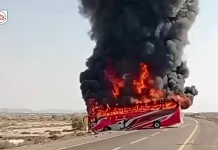
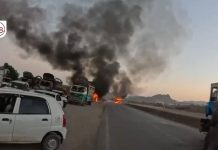
In a statement, the BYC said the highway had “once again been stained red with Baloch blood”. A passenger coach travelling from Turbat to Karachi collided with a liquefied petroleum gas (LPG) tanker near Basol on 19 November. Both vehicles caught fire. A woman and three children were among those killed.
“The state and its institutions want to call it another road accident and close the file,” the BYC said. “But the Baloch Yakjehti Committee makes clear that this is not an accident. It is another link in the chain of slow violence and structural genocide that has been imposed on the Baloch nation for years.”
The BYC cited three other fatal crashes this year. It said 10 people were killed when a coach overturned at Hud Goth near Ormara in January, seven people including a child died in a collision involving a broken-down gas tanker at Manjhi in March, and six people including two women and two children died when a car collided with a gas tanker near Ormara in August. It also cited official rescue figures showing that 532 road crashes were reported on sections of the highway in Lasbela and Gwadar in 2024.
The group said the 653-kilometre highway, also known as the N-10, remains a single carriageway shared by passenger coaches, fuel tankers and other heavy vehicles. It said people who suffered severe burns in the Basol crash were taken to hospitals in Ormara and Pasni, where facilities for treating such injuries were inadequate.
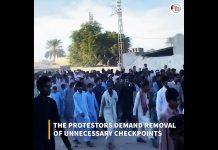
“The state has the resources to monitor the Baloch, but not to save Baloch lives,” the BYC spokesperson said. The group pointed to security checkpoints along the route and said ambulances and specialist burns facilities were scarce. It cited Article II(c) of the 1948 UN Genocide Convention in support of its characterisation.
The BYC demanded that the authorities immediately convert the highway into a dual carriageway and announce a deadline. It also called for strict safety regulations, speed monitoring and vehicle fitness checks for tankers carrying hazardous materials, as well as trauma centres, burns units, ambulances and emergency rescue centres along the route. The group demanded full and free treatment for the injured and compensation for bereaved families.
“Baloch lives are not merely statistics to be recorded in a news report every few months and then forgotten,” the BYC said. It urged the public, transport operators and civil society to speak out against what it called “criminal negligence” through “peaceful, organised and sustained struggle”.