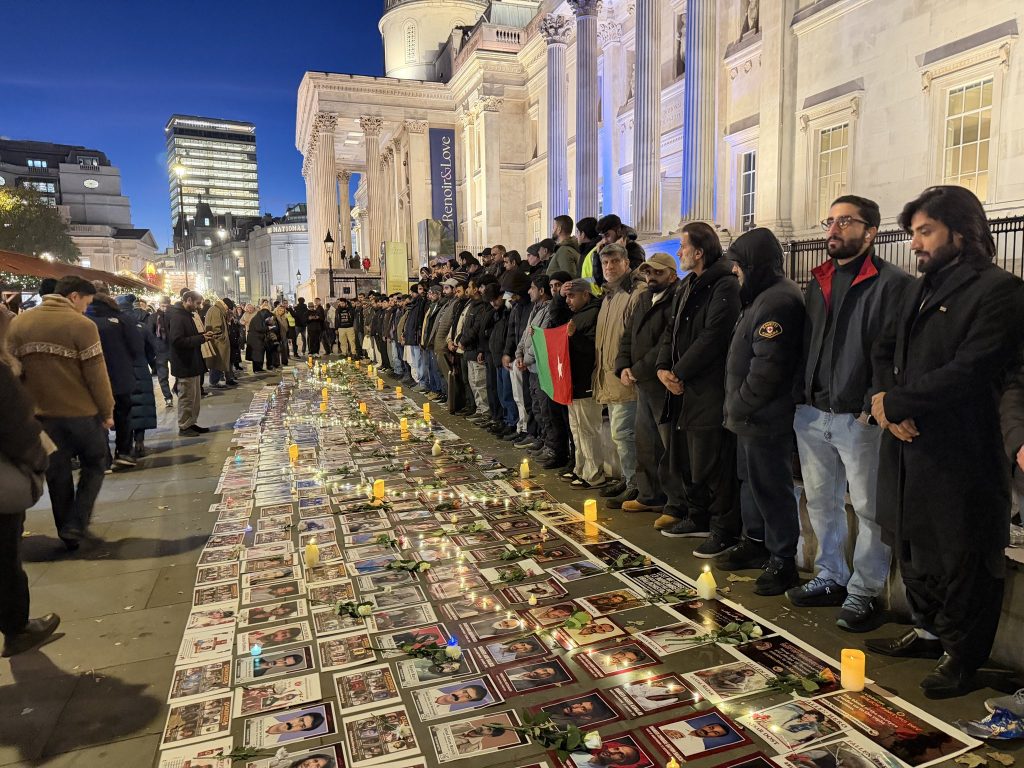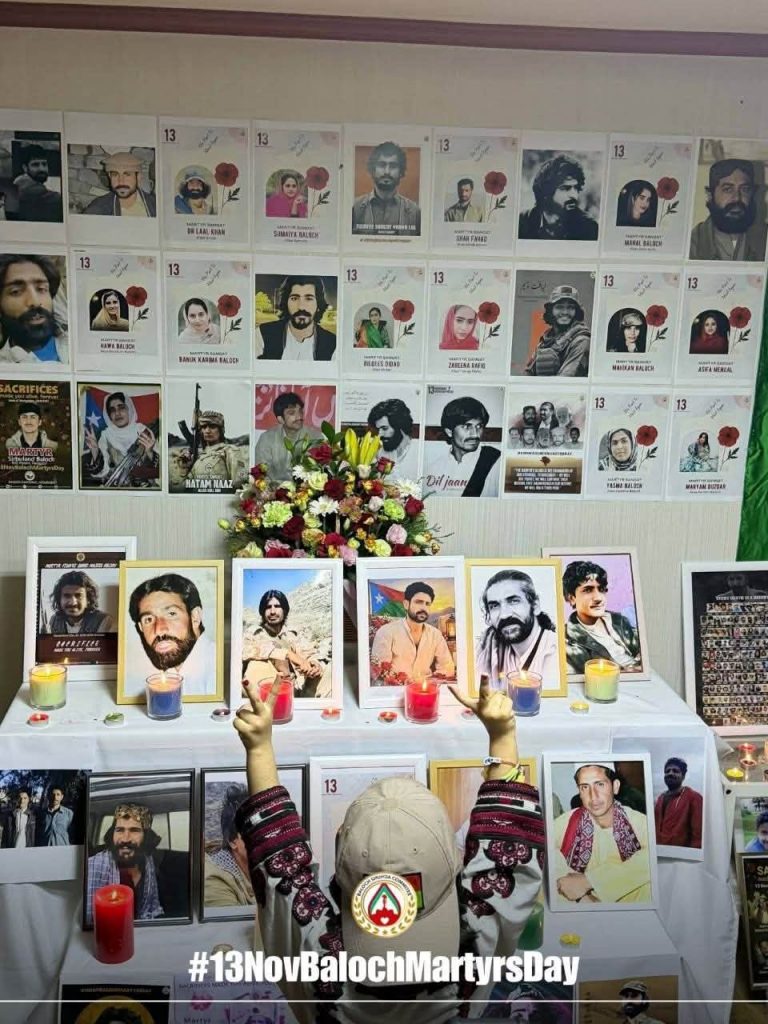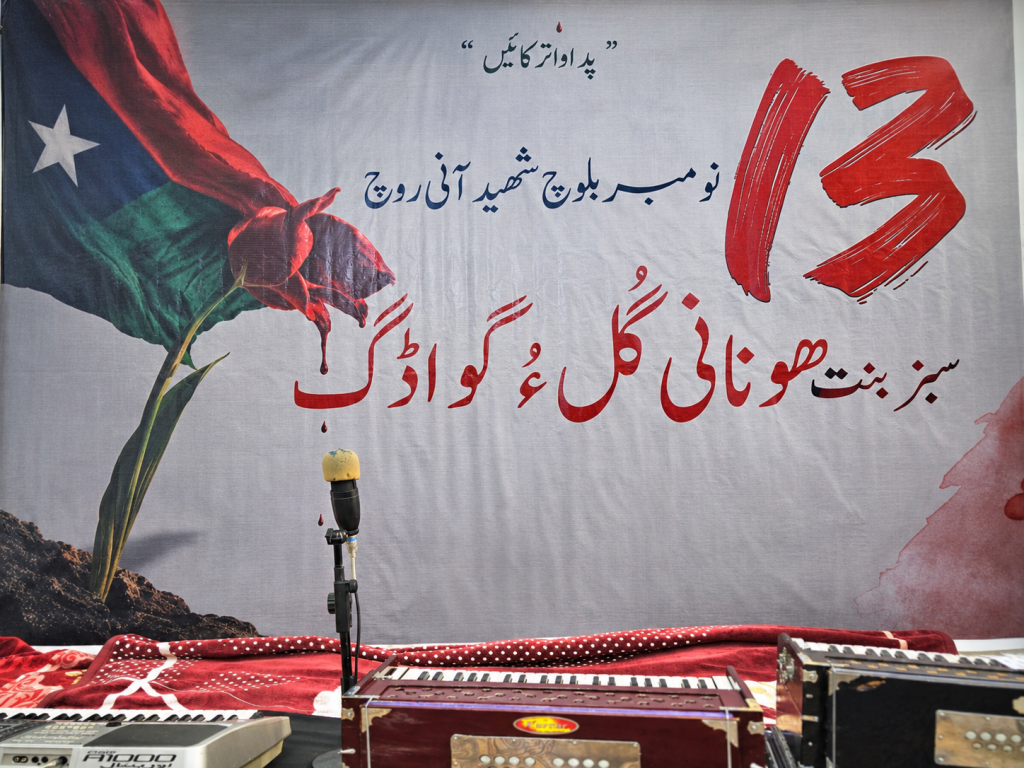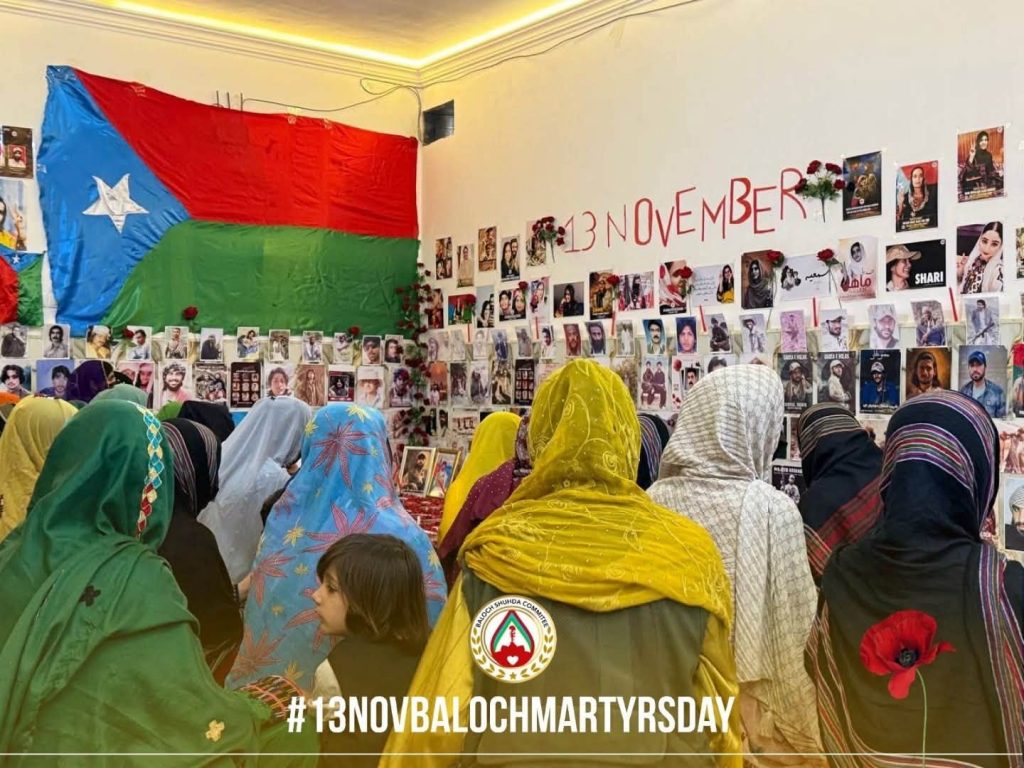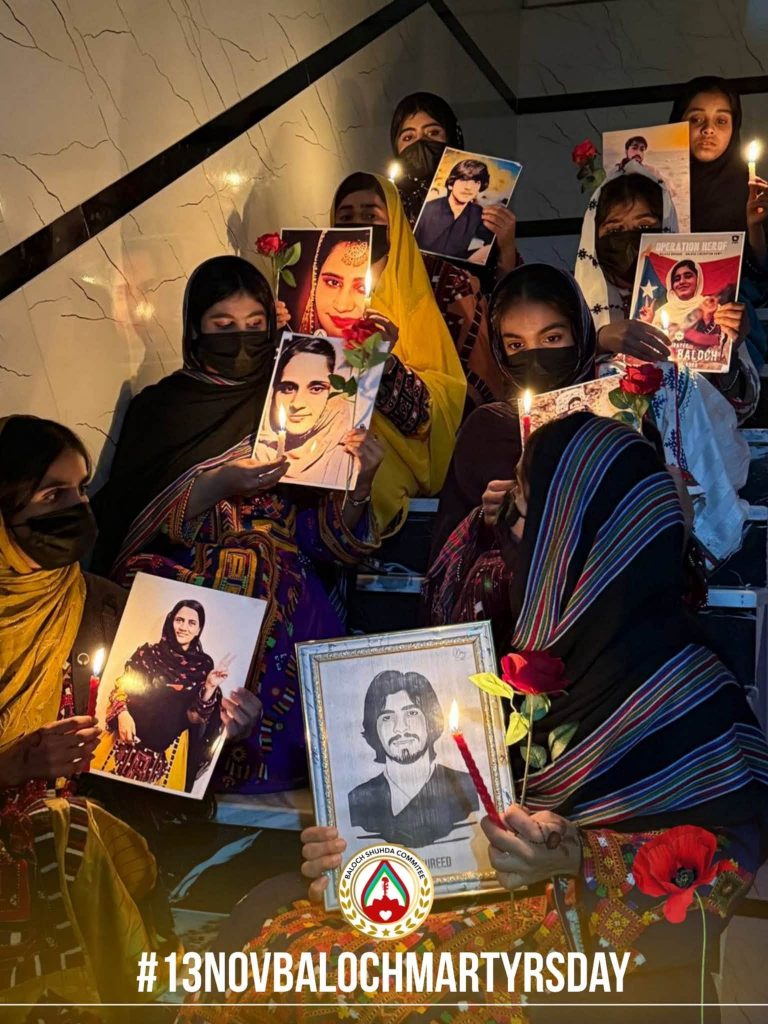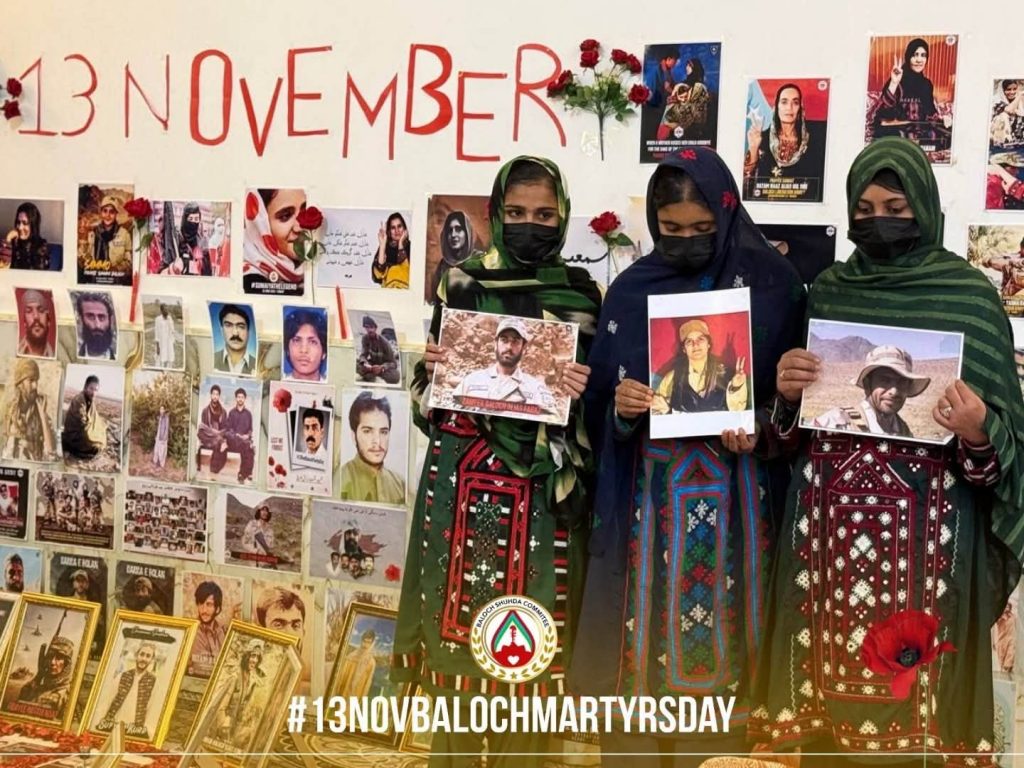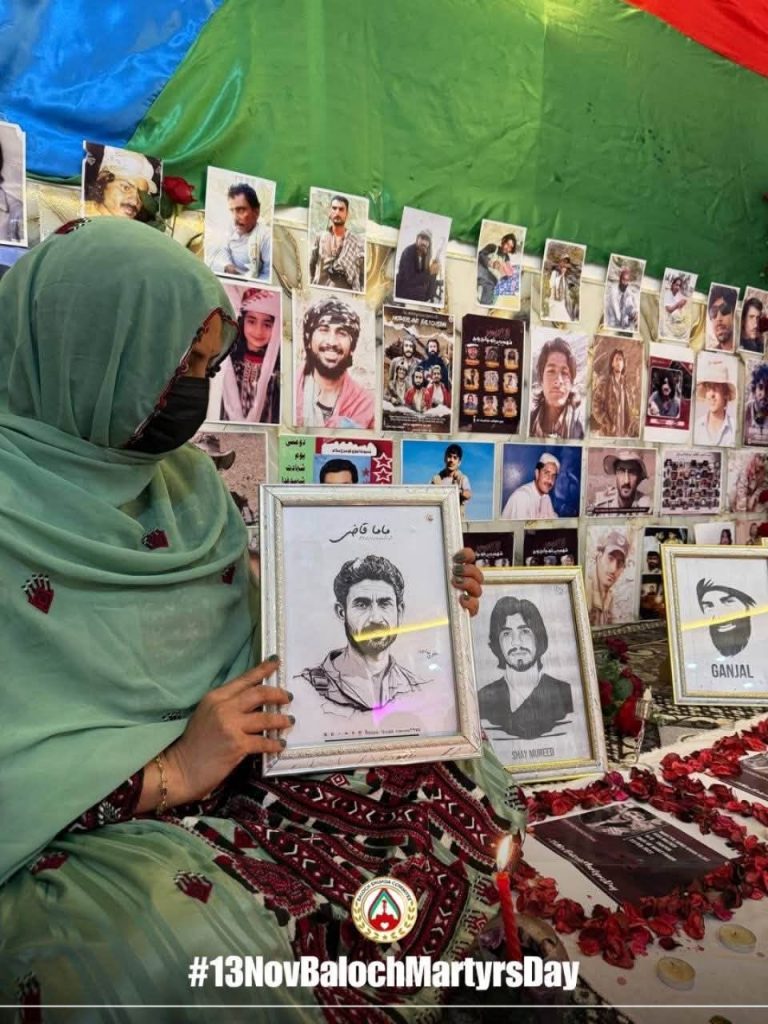





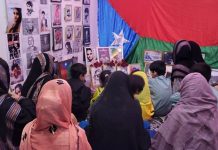







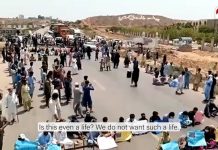
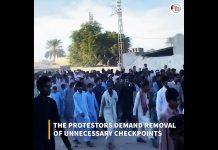


Baloch people across Balochistan and abroad observed November 13 as Baloch Martyrs’ Day on Friday, with commemorative gatherings, cultural performances and a candlelight vigil in memory of those they said had lost their lives in the struggle for national independence, identity and rights.
The date marks the death of Mir Mehrab Khan, the Khan of Kalat, who was killed alongside his companions while resisting a British assault on Kalat in 1839. The Baloch Students Organization (Azad) designated November 13 as an annual day of collective remembrance in 2010.
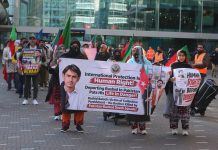
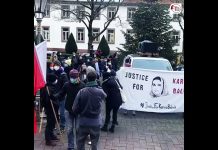
In London, the Baloch National Movement’s (BNM) UK chapter held a candlelight vigil and laid floral tributes at Trafalgar Square. Members also spoke to the public about the political and human rights situation in Balochistan and the significance of the anniversary, the party said.
The party also announced a conference in Hanover, Germany, for Saturday, November 14, as part of its commemorative activities.
At a seminar organised by the Baloch Martyrs Committee, speakers said the occasion should be used to teach younger generations about their history and the ideas of those who had sacrificed their lives.
A generation unfamiliar with its past would struggle to understand the present or make informed decisions about its future, they said.
They credited those sacrifices with sustaining the national movement and said Baloch youth and women continued to give their lives in defence of their homeland and the Baloch people’s collective ownership of its land and resources.
They described Pakistan as an “occupying power” and accused its representatives of using military force to impose decisions while claiming the situation was under control. No decision concerning Balochistan would be acceptable without the will and consent of the Baloch people, they said.
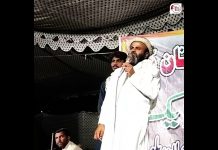
A Balochi diwan was also held in memory of the fallen, with Mir Ahmed Baloch, Sawal Kandeel and Sarfraz Wahid performing Balochi and Brahui poetry.
‘A History of Sacrifice and Resistance’
In a social media tribute, Baloch Yakjehti Committee (BYC) leader Sammi Deen Baloch said the stories of those who had died would never be forgotten, from the mass graves of Tutak and bodies abandoned in Dasht to mutilated remains returned to families.
“We belong to a generation that has heard news of a new martyr almost every day. We have grown up in the shadow of graves, carrying in our hearts the weight of grief for those who never returned home,” she wrote.
Ms Baloch described the martyrs as “the pride of a nation, its conscience and its enduring legacy”, and expressed hope that future generations would find the “peace for which generations have longed”.
Dr Shalee Baloch, chief organiser of the Baloch Women Forum (BWF), recalled mothers whose sons never returned and parents denied a final farewell. In a post on X, she said those who had died had left behind families, dreams and futures, but “their dignity and convictions were never theirs to surrender”.
“Their blood must never be forgotten, their stories must never be silenced and their sacrifices must never be reduced to a date on the calendar,” she wrote.
“Our responsibility is to know our history, preserve their legacy and rise above our differences to stand together as one nation.”
The National Democratic Party (NDP) said the anniversary of Mehrab Khan’s resistance to British forces remained a lesson in the defence of freedom and national sovereignty.
Its central spokesperson said the occasion should remind Baloch people not to compromise their national honour and dignity, whatever the circumstances. The party called for unity against colonial domination and paid tribute to those who had subsequently died defending Balochistan.
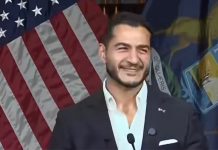
Pashtun nationalist leader and human rights activist Dr Syed Alam Mehsud paid tribute to the sacrifices of the Baloch people in a video message marking the occasion and expressed admiration for their national movement.
Referring to the past two decades, Mehsud said educated Baloch youths had been taken from universities and workplaces and their mutilated bodies left in streets and fields.
He described the disappearances and killings as “state terrorism and barbarity” and argued that resistance was a response to repression. He also criticised the state and media for portraying Baloch pro-independence activists as enemies or terrorists.
The Baloch Liberation Army (BLA), which released details of 31 fighters to mark the occasion, said November 13 was a day to renew its pledge to those who had died for national freedom and survival.
The statement said “the blood of our martyrs will never go in vain” and reaffirmed the BLA’s goal of an “independent, sovereign, and prosperous Balochistan”.
In Pictures: Baloch Martyrs’ Day Commemorations